Simple Wedding Decor: What Actually Works
Simple wedding decor is the thing almost every couple says they want and then quietly abandons somewhere around month four of planning, usually after a Pinterest board gets out of hand. I understand the pull. You start with “we just want it to feel like us, nothing fussy,” and six weeks later you’re debating whether you need eleven different signs. So let’s talk about what simple actually means, because it isn’t the same as plain, and it definitely isn’t the same as cheap.
Simple wedding decor means using a limited number of intentional elements rather than decorating every surface you can reach. Clean lines. Practical layouts. Negative space that’s allowed to just sit there, doing nothing, which is harder for people to accept than you’d think. Simple can still be elegant, rustic, modern, romantic, bohemian, coastal, or garden-led — the style is flexible. What stays constant is restraint.
Minimalist Isn’t the Same as Budget-Friendly
Here’s something that trips people up early: minimalist decor is not automatically cheap. Often it’s the opposite. Fewer, higher-quality pieces can cost more per item than a room full of fairy lights and paper pom-poms from a discount shop. If your actual goal is saving money, that’s a budget decision — rentals, reuse, seasonal flowers, a bit of DIY, items that pull double duty. If your goal is a pared-back look, that’s a style decision. They often overlap, but not always, and conflating them leads to disappointment when your “simple” florist quote comes back higher than expected.
The approach that tends to work best combines both: a small number of elements that each do several jobs. One good arrangement that moves from ceremony to top table. Candles bought once and reused at every table setting for the next decade of dinner parties, frankly.
The “Less But Better” Approach
Pick one or two focal points and let them carry real weight. An arch. A tablescape. A lighting moment at dusk. Everything else should support that choice rather than compete with it.
Let the venue do some of the work too. I officiated a small autumn wedding in a converted barn a few years back — stone walls, huge old beams, the kind of place that doesn’t need help. The couple had originally ordered swathes of drapery to soften the walls. We talked it through two weeks before, standing in the empty barn at about four in the afternoon with the light coming through sideways, and they cancelled half the order. What was left was a long table, repeated glass jars with single dahlias, and that light. It looked considered rather than bare. The drapery would have fought the room, not flattered it.
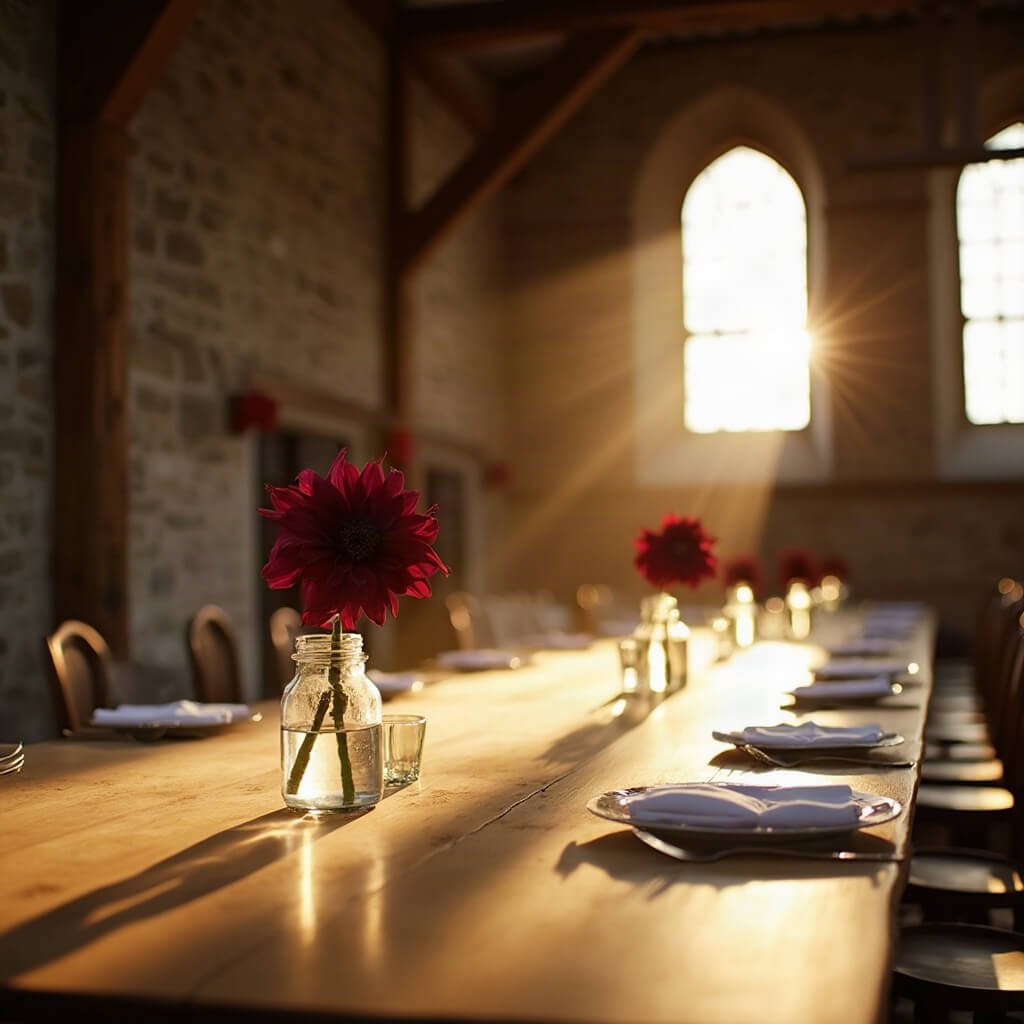
Repetition is doing a lot of the heavy lifting in good simple decor. Identical vases along a table, the same candle holder repeated down an aisle, matching chairs rather than a mismatched vintage collection — it reads as intentional even when the individual pieces are inexpensive.
Why Keep It Simple at All
The cost argument is the obvious one. Fewer flowers, fewer signs, fewer installations — the bill goes down. State Farm’s wedding planning guidance makes a similar point: choosing seasonal florals, repurposing ceremony flowers at the reception, renting rather than buying, and swapping some fresh stems for paper, dried, or fabric alternatives all reduce spend without gutting the look [1].
But cost isn’t the only reason, and I’d argue it’s not even the most interesting one. Simple decor is also just less to manage. Fewer items to buy, transport, assemble, place correctly, and then strip down again at eleven at night when everyone’s tired and the venue needs the room back by midnight. If you’re relying on a friend or parent to help with setup — and most couples are, whether they admit it or not — a smaller pile of decor is a kindness to that person.
There’s a design argument too, and it’s the one I find myself making most often to couples who are nervous that simple will mean forgettable. When you’re not drowning a room in objects, the few things you do include get noticed. A grandmother’s cake stand. A reading chosen because it was read at your parents’ wedding. Current design commentary around 2026 weddings has landed on the phrase “minimal clutter, maximal intention” — every object earning its place in the story of the day rather than filling space [2]. That’s a reasonable description of what works, even if it sounds like something off a mood board.
And practically, guests benefit. Open sightlines mean people can actually see the ceremony, hold a conversation at the reception without leaning round a candelabra, and move through the room without detouring around furniture nobody needed.
Simple Doesn’t Mean Empty, and It Doesn’t Mean Generic
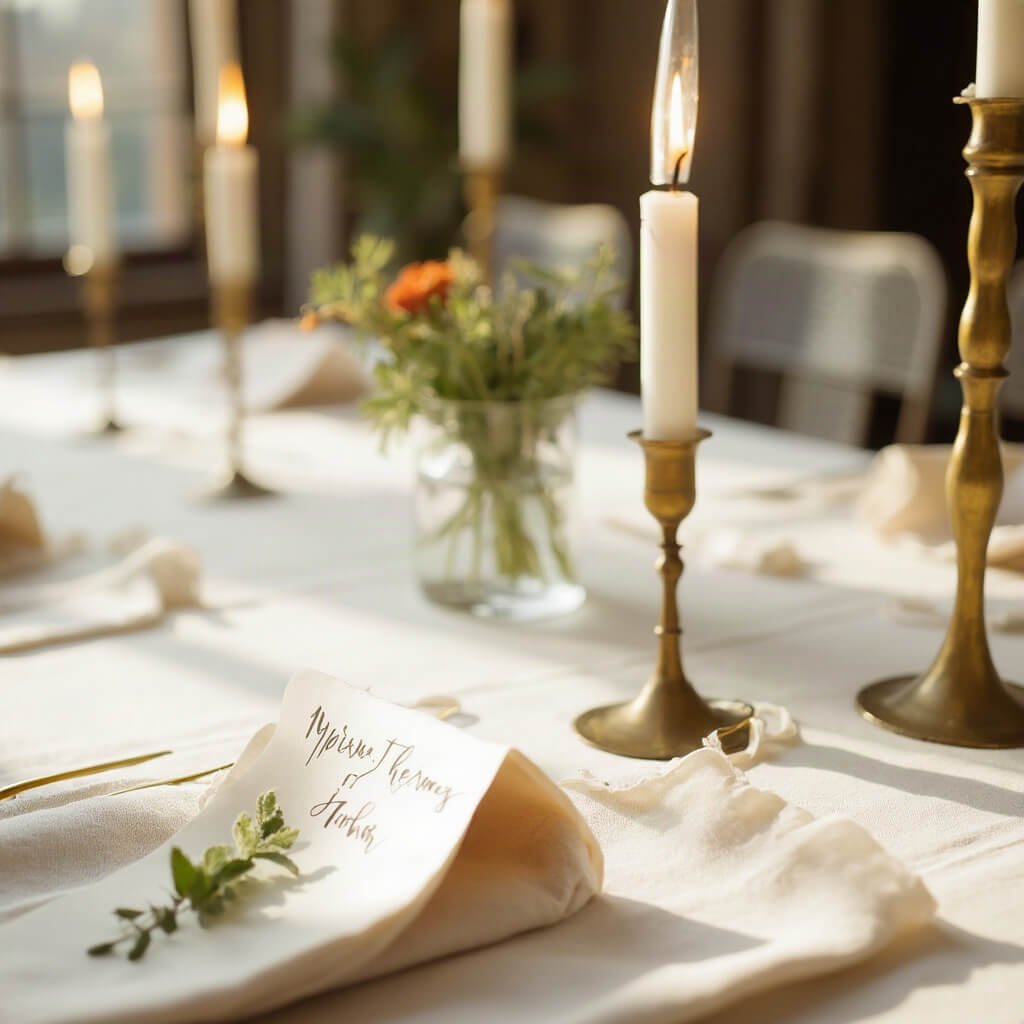
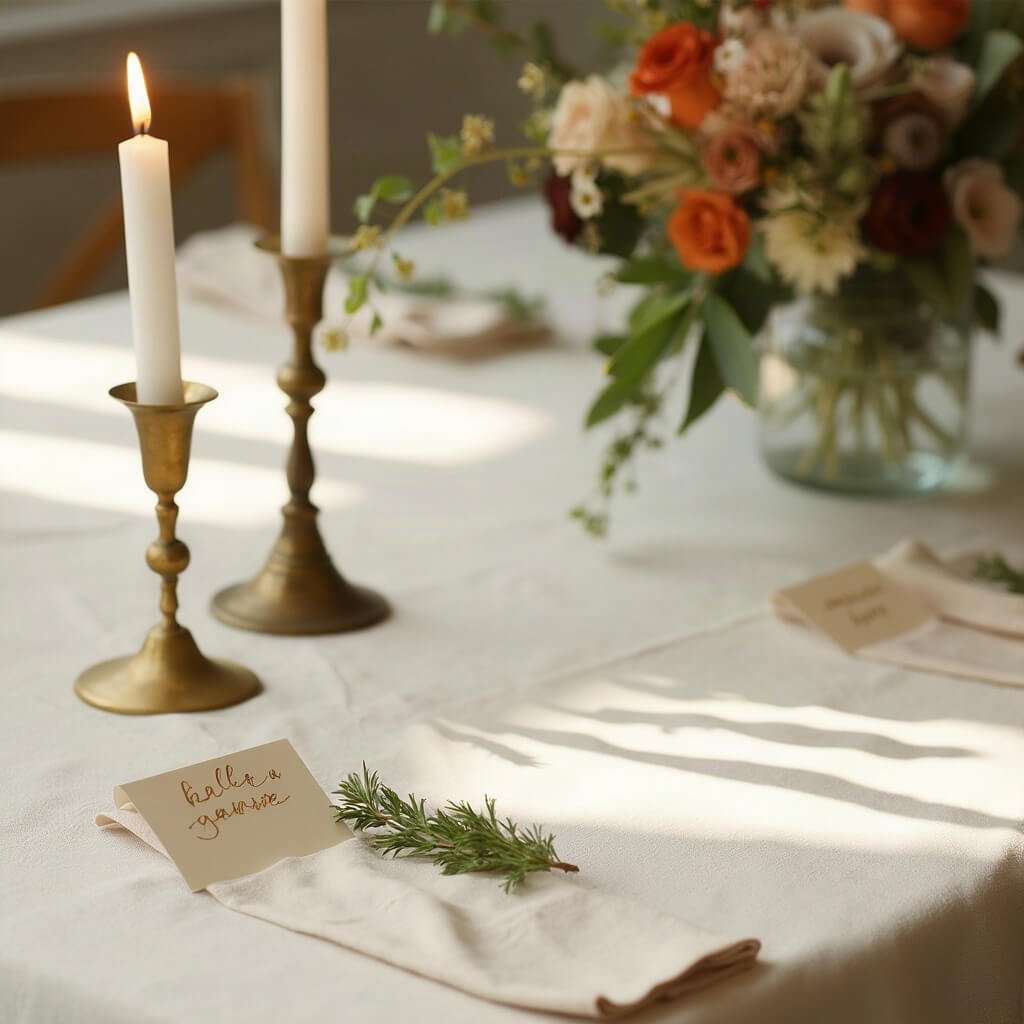
I want to push back gently on the idea that “simple” is a euphemism for “bare.” Texture does a huge amount of work that colour and quantity usually get credit for. Linen, raw wood, stone, glass, brushed brass, a bit of trailing greenery — put those together and a room feels rich even with very few individual pieces in it.
Nor does simple have to mean generic, which is the other worry I hear. A clean, restrained foundation is actually what makes personal touches land. Family photographs, handwritten stationery, a locally sourced flower that only grows for three weeks a year near the venue — these stand out because there isn’t competing clutter around them. Strip away the noise and what’s left gets looked at properly.
DIY Looks Easy on Paper
One honest word of caution, because I see this go wrong often: DIY decor is not automatically the easier or cheaper option, even though it feels that way when you’re scrolling through tutorials at eleven at night three months out. Handmade items still need materials bought, hours spent assembling, a way to transport them without crushing them in the boot of a car, and someone sober and un-stressed to set them up on the day. General wedding planning guidance recommends limiting DIY projects to things that can be finished well in advance, and keeping the couple themselves off the hook for any day-of installation [18]. I’d go further — if a DIY project needs doing on the morning of the wedding, cut it. You will not want to be gluing paper fans to a trellis at 9am while your hair appointment is at 9:30.
Choosing a Simple Wedding Style
Simple isn’t one look. It’s a principle applied to whichever aesthetic you’re drawn to, and the style choice shapes almost every decision that follows.
Modern minimalist
— neutral tones, clean geometric shapes, acrylic or glass, sculptural rather than full florals. Works well in lofts, galleries, rooftop venues, and contemporary restaurants where the architecture is already doing something interesting.
Warm minimalist
— cream, taupe, sage, muted terracotta, softened with candlelight, linen, timber, and brushed brass. Design coverage heading into 2026 frames this as the gentler alternative to stark monochrome minimalism, and I think that’s accurate — it’s the version that reads as inviting rather than austere [8].
Rustic simple
— timber, linen or burlap, branches, potted plants, understated signage. The trap here is overdoing the “country” props until it stops feeling cohesive and starts feeling like a theme park.
Simple garden or outdoor
— the landscape is your backdrop. Add ceremony chairs, one modest arrangement, some candles or lanterns, and signage pointing people where to go. Plan properly for shade, wind, rain, and where on earth the restrooms are.
Simple bohemian
— a little macramé, dried grasses, woven textures, low arrangements. Keep the palette tight, because boho textures multiply fast and a crowded palette undoes the “simple” part within about an hour of setup.
Coastal or beach-inspired
— pale blue, sand, ivory, driftwood, airy fabric. One or two shell references, not a bucketful. I’ve seen coastal weddings tip into kitsch purely through seashell overuse.
Classic and romantic
— white or ivory blooms, taper candles, soft fabric, traditional tableware. This one leans on proportion and candlelight rather than big installations, and it’s often the easiest simple style to execute well because the rules are long established.
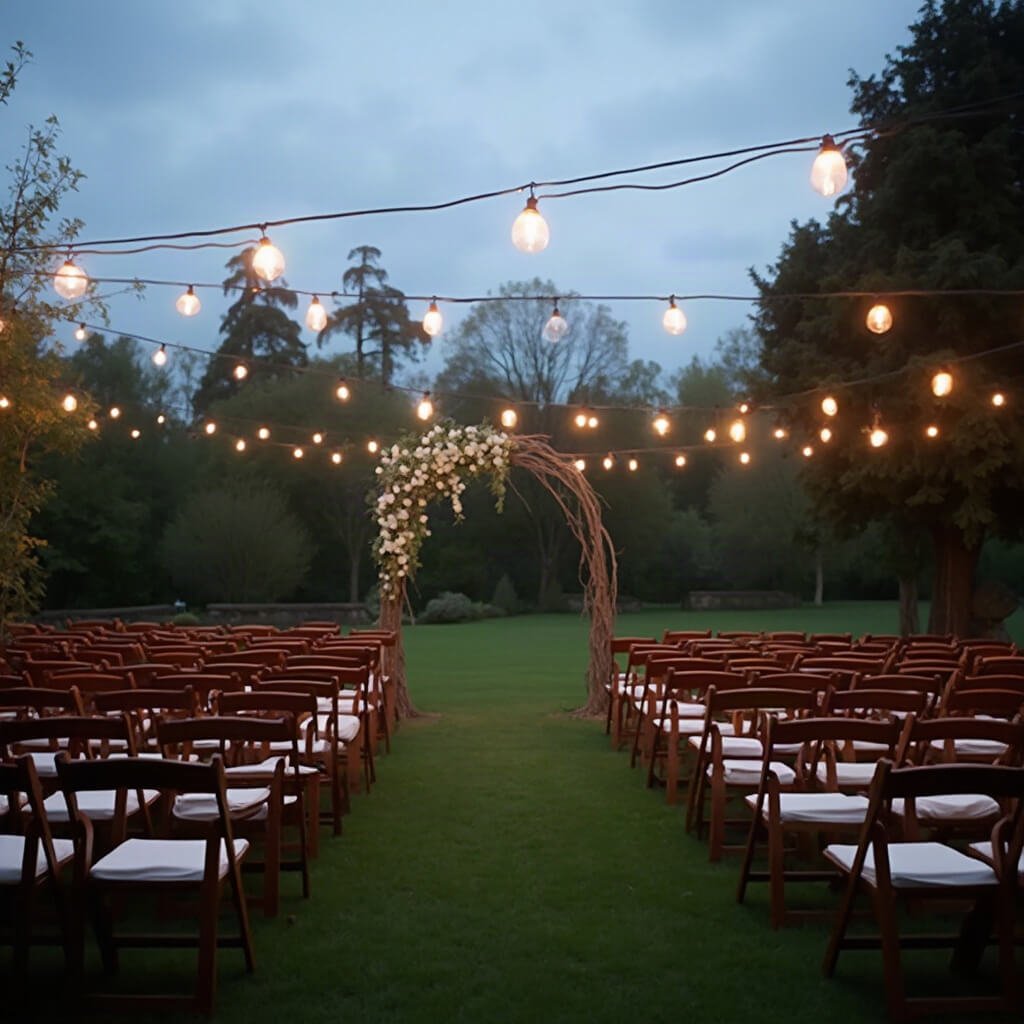
For more inspiration, explore minimalist wedding decor ideas for an elegant celebration.
Building a Controlled Colour Palette
Pick two or three primary tones and stop there. Ivory, sage, and natural wood. White, black, and brass. Beige, dusty rose, olive. A tight palette is forgiving — it makes mismatched chairs, borrowed vases, and secondhand frames look coordinated rather than accidental.
Then choose one accent — a single metal or a single bold colour — and use it consistently across candleholders, menus, napkin ties, or signage. Current trend reporting on weddings keeps circling back to monochromatic or tightly colour-led schemes built around one defined aesthetic rather than a scattergun of seasonal favourites [11]. It’s good advice, mostly because restraint photographs better than people expect.
Season can guide the palette too, though it shouldn’t dictate it rigidly.
Save this article
Enter your email and we'll send it straight to your inbox.
👇Shop the Look Here👇
Spring tends to favour ivory, blush, sage, and pale blue. Summer leans into white, citrus, terracotta, coastal blue. Autumn wants rust, plum, olive, caramel. Winter suits white, evergreen, burgundy, charcoal, and a touch of metallic. These aren’t rules so much as starting points — I’ve seen a winter wedding done entirely in warm terracotta and it worked beautifully precisely because nobody felt obliged to reach for burgundy velvet.
Materials and Texture Do the Quiet Work
Once the palette’s settled, think about material rather than more colour. Natural materials — wood, stone, rattan, cotton, linen, a few branches, potted plants — suit outdoor, rustic, garden, and warm minimalist weddings particularly well. They feel grounded without needing much styling effort.
Reflective and polished materials sit at the other end: glass, acrylic, mirror, chrome, a bit of metallic trim. These read as contemporary and crisp, but they need balancing. A room full of mirror and acrylic with nothing soft in it starts to feel cold, almost clinical, so pair reflective surfaces with matte linen or loose greenery to take the edge off.
And repeat yourself. The same vessel shape down every table. The same linen colour throughout. The same candle style at the ceremony and the reception. This is, genuinely, the single easiest way to make a modest budget look deliberate rather than thrown together — far more effective than buying twenty different “pretty” objects and hoping they cohere on the day.
Working Out the Decor Budget
Before you buy anything, split your decor list into three honest categories. Must-haves: seating, tables, basic linens, a ceremony backdrop, lighting, signage — the things the day genuinely can’t function without. Nice-to-haves: favours, lounge furniture, upgraded chargers, a photo display. Optional: ceiling installations, elaborate escort walls, oversized floral arches, custom props that look wonderful in photos and contribute nothing to the actual experience of the day.
Then pick one focal point and let your budget favour it disproportionately. A ceremony arch. The top table. An entrance moment. The reception tablescape. Dance-floor lighting, or even just one well-made statement sign. Trying to make everything a focal point is how budgets quietly double.
The “one item, multiple functions” trick is worth taking seriously, not just as a cost-saving gimmick. Move the ceremony arrangements to flank the top table afterwards. Let the welcome sign do a second job as the bar sign or guestbook sign later in the evening. Budget wedding guidance specifically recommends repurposing bridesmaid bouquets as cocktail-hour or dinner-table arrangements rather than letting them sit in a bucket backstage for six hours doing nothing [1]. It’s such an obvious idea once someone says it out loud, and almost nobody thinks of it unprompted.
Buy, Rent, Borrow, or Make
- Buy items you’ll genuinely reuse — candles, frames, table numbers, vases, linen napkins — plus anything with real sentimental weight.
- Rent tables, chairs, linens, tabletop pieces, arches, lounge furniture, and specialty lighting. Renting sidesteps storage and the grim task of working out what to do with forty glass vases after the wedding, though you should factor in delivery, cleaning, and damage-deposit costs before assuming it’s the cheaper route.
- Borrow vases, frames, baskets, candlesticks, quilts, and serving pieces from family. Make an actual list — a spreadsheet, a notebook, anything — and label each item, because borrowed decor has a habit of vanishing into the wrong car boot at the end of the night.
- Make menus, place cards, table numbers, welcome signs, and simple paper flowers if you enjoy that kind of project and have the time. Don’t DIY structural installations, fresh florals, or anything electrical that really needs a professional eye on it [16]. For inspiration, explore DIY Wedding Decor Ideas for a Simple, Stunning Look.
A handful of other cost-saving moves are worth keeping in your back pocket: choose flowers that are in season locally, lean on greenery and branches rather than dense blooms, swap large centerpieces for candles or books or bud vases, and use whatever the venue already has — chairs, tables, lighting, even planting — rather than bringing in a full replacement set. Pick a venue that already looks good and needs minimal transformation; it’s the single biggest lever most couples overlook. And set aside part of the budget, not an afterthought but an actual line item, for delivery, setup, breakdown, and damage deposits, because that’s where “simple” budgets quietly blow out.
Ceremony Decor That Doesn’t Need Much
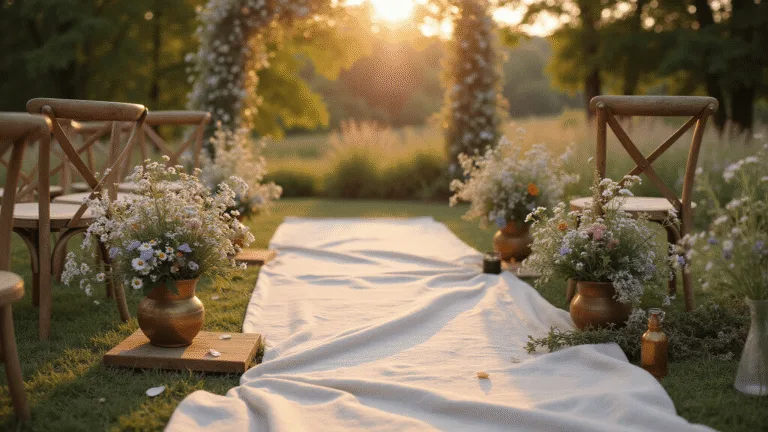
The ceremony is usually twenty minutes long, which is worth remembering when you’re pricing up a backdrop. A minimal floral arch — one geometric frame, greenery concentrated to one side, a single flower variety rather than six — does the job without needing to be enormous. A plain wooden or bamboo structure left mostly exposed, with just a small cluster of flowers or a length of fabric, has the same effect for less money.
Fabric backdrops work well too, provided the venue actually allows hanging anything from the ceiling or walls — check this before you order metres of linen, because I’ve seen couples find out the hard way on the morning of. And sometimes the best backdrop is the one you don’t build at all: a stone wall, a staircase, a garden view, a museum interior. Add ceremony chairs and a small arrangement and leave the rest alone.
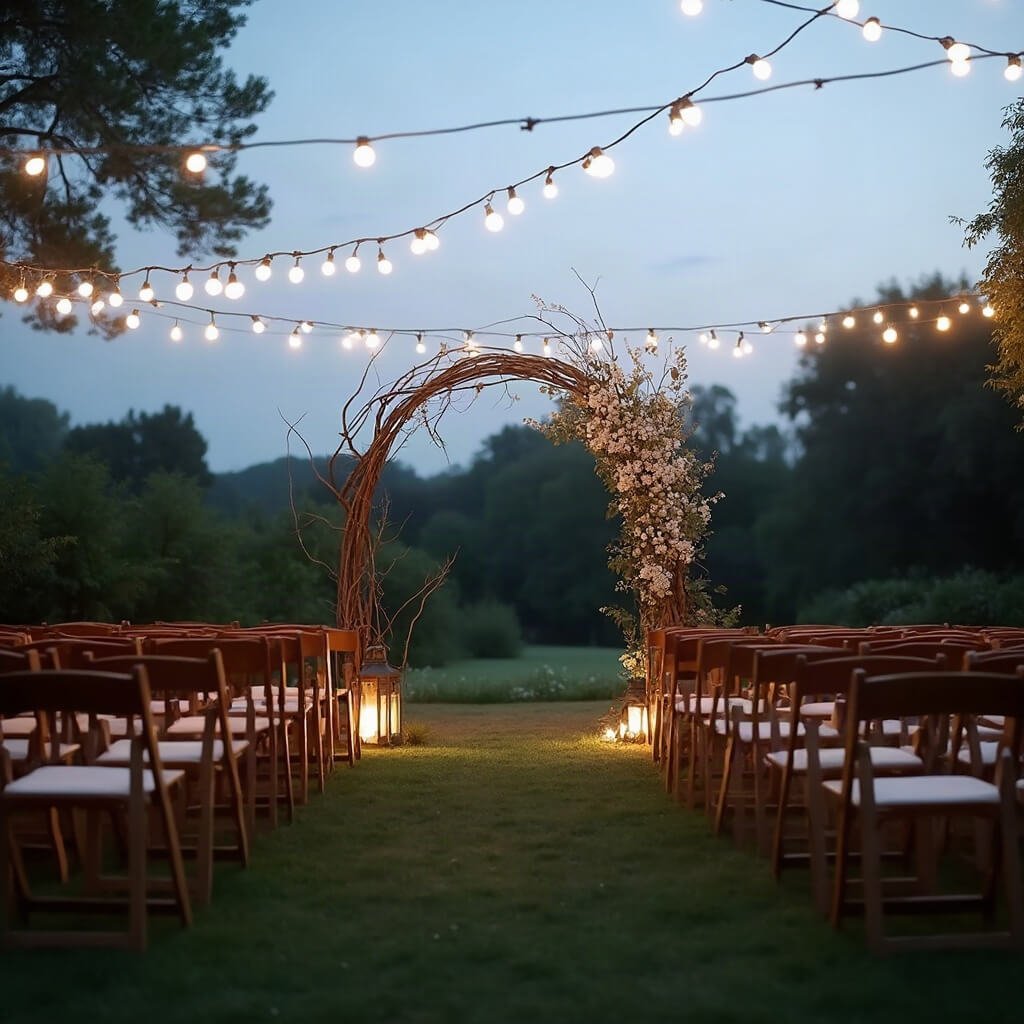
Aisle decor should be sparse by default — small clusters every few rows rather than something at every single seat, or no aisle decor at all if the setting is already doing the visual work. Use the venue’s existing chairs wherever you can, and only add markers or reserved signs where they’re actually needed, not as decoration for its own sake. Reserved accessible seating deserves real thought here too: clear sightlines, enough room to manoeuvre a wheelchair or walker, and a path that doesn’t require squeezing past candle stands. Wedding accessibility guidance is consistent on this point — clear paths and proper space matter more than how pretty the chair markers look [25].
On signage, you rarely need more than a welcome sign, an unplugged-ceremony notice if you want one, reserved seating signs, and a few directional signs towards restrooms and the reception. Five signs, well made, beats twelve signs competing for attention at the entrance. For more inspiration, see these simple porch wedding decoration ideas.
Reception Tables Without the Overload
This is where most couples either nail “simple” or quietly lose it, because reception tables are where guests spend the most time looking at your decor up close. Browse simple round table wedding decor for more ideas, or explore minimalist wedding table decor ideas.
Single-stem arrangements — one flower per small bud vase, repeated down the table — give you a graphic, slightly modern look for very little cost, and they photograph better than people expect. Low greenery works as an alternative: olive branches, eucalyptus, herbs, kept low enough that guests can actually see each other across the table, which sounds obvious but gets ignored constantly by florists chasing a dramatic centerpiece shot. Clustered candles at varied heights, same holder throughout, fill the same visual role as flowers for a fraction of the cost, provided you leave proper clearance between flame and napkin.
I’d also put in a word for non-floral centerpieces generally — books, old bottles, fruit, framed photographs, a small lamp. They tend to say more about the couple than a florist’s standard order ever could, and they don’t wilt by the time the speeches start.
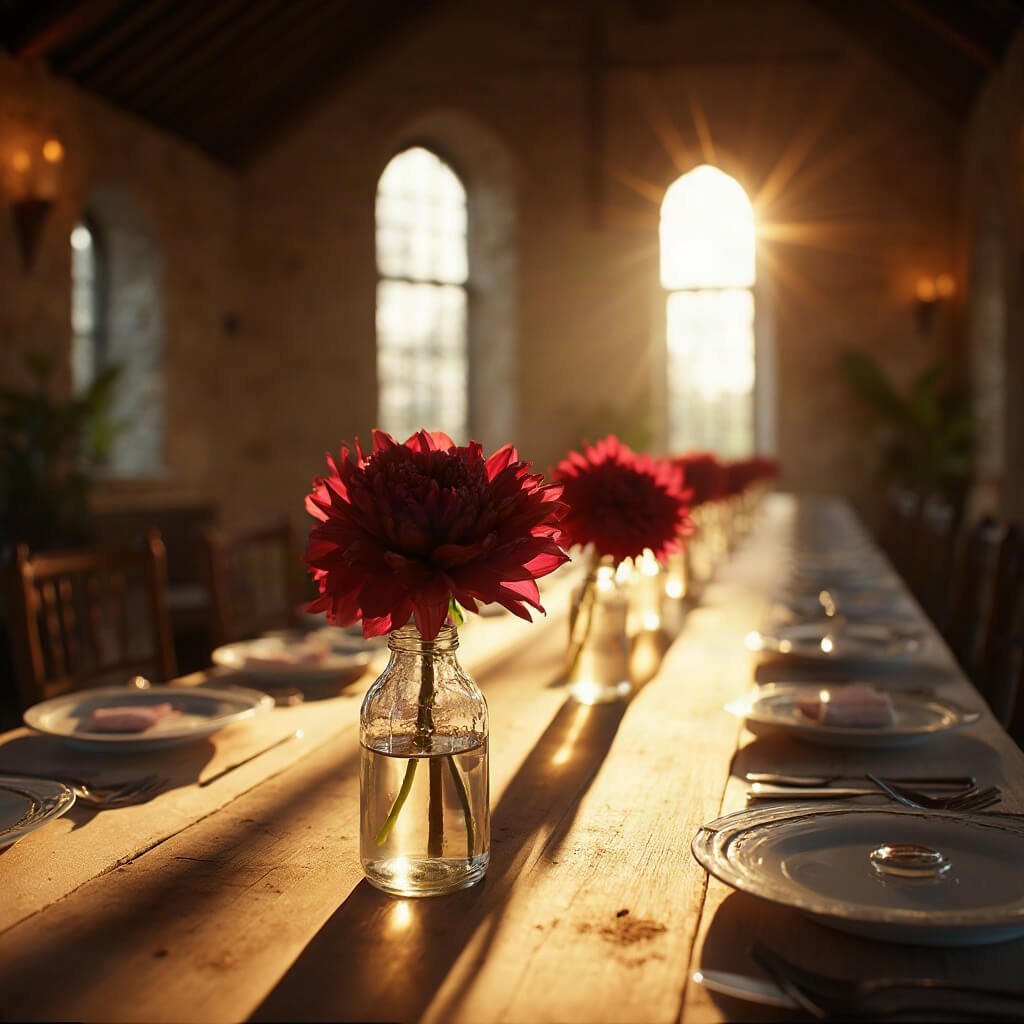
Whatever sits on the table, the actual tableware matters more than people assume. Simple plates, clear or neutral glassware, understated flatware, a properly folded linen napkin — that combination can look considerably more expensive than it is, which is really the whole point of simple decor done well [3].
Floral Choices and the Sustainability Question
If I had one piece of advice on flowers specifically, it would be to ask your florist what’s actually in season locally during your wedding month before you fall in love with a Pinterest image of peonies in November. Seasonal flowers are cheaper, more reliable, and tend to look more at home in the setting than something flown in from across the world.
Single-variety arrangements — all tulips, all ranunculus, all one colour family — give you impact through repetition rather than through complexity, which suits the whole “simple” ethos better than a mixed bouquet ever will. Dried and preserved materials are worth considering too, particularly for autumn or bohemian weddings, since they can be made weeks in advance and don’t wilt under marquee heat.
On sustainability: ask for foam-free arrangements using chicken wire or pin frogs rather than floral foam, which doesn’t break down and isn’t something any florist should still be reaching for by default. Consider where the flowers go afterwards — donating arrangements to a hospice or care home is a genuinely easy thing to arrange and almost nobody thinks to ask [10]. Potted plants as centerpieces solve the same problem from the other direction: give them to guests at the end of the night, or take them home yourselves, and nothing goes in a skip on Monday morning.
If you’re weighing fresh against dried against silk, it mostly comes down to timeline and tolerance for imperfection. Fresh flowers are expensive and perishable but unmatched for scent and natural variation. Dried flowers are durable and can be prepped early, though they can look dusty in a humid marquee. Decent silk flowers are reusable and consistent, but cheap ones look cheap, and guests do notice. There’s no universally correct answer here — only the one that suits your timeline and your florist’s honesty about what they can actually source.
My actual recommendation, if you’re starting from scratch: pick your one or two focal points first, choose a two-tone palette you can commit to without wavering, and build everything else — flowers, signage, lighting — around reinforcing those choices rather than adding to them. Simple wedding decor works when restraint is a decision made early and stuck to, not a budget line you arrive at after everything else has already got out of hand. For more inspiration, browse Minimalist Wedding Decor Ideas That Actually Work and simple white wedding decor inspiration.
👇Shop the Look here 👇
Want to keep this one?
We'll email you the link so you can find it again later.