Minimalist Wedding Table Decor — A Practical Guide
Minimalist wedding table decor is one of those phrases that gets thrown around a lot without anyone quite agreeing on what it means. Does it mean bare tables? Three flowers in a jam jar? White everything? I get asked about it constantly, usually by couples who’ve seen a gorgeous Pinterest board and want to recreate the calm of it without their reception looking like they ran out of budget halfway through. So let’s sort out what minimalist actually means, because the answer isn’t “less decor.” It’s more intentional decor.
What Minimalism Actually Means on a Wedding Table
Minimalism, properly done, is a “less is more” approach built on clean lines, simple shapes, and restraint. It’s not an absence of design. It’s a very deliberate kind of design where every item on the table has to earn its place. If a piece doesn’t add something — texture, light, a sense of occasion — it doesn’t go on the table.
The goal is a calm, uncluttered atmosphere that feels considered rather than sparse. A big part of this comes down to how you treat empty space. In maximalist styling, empty space is a problem to solve. In minimalist styling, it’s the point. The gaps between objects matter as much as the objects themselves, and that’s honestly the hardest thing for most couples to trust — the instinct is always to add one more candle, one more sprig of something, just in case it looks “too empty.”
Here’s where I’ll be blunt: minimalism is not the same as a low budget. I’ve seen couples confuse “we didn’t have money for flowers” with “minimalist,” and the two read very differently to guests. Minimalist styling often uses fewer pieces, yes, but they tend to be better quality — a single good ceramic vase instead of six mismatched ones, a proper linen runner instead of a plastic tablecloth with a ribbon on it. Quality over quantity, every time. Styling is about harmony between palette, material and proportion, not just stripping things away.
The Principles That Actually Hold a Minimalist Table Together
A few rules keep cropping up whenever minimalist tablescapes work well, and they’re worth treating as genuine principles rather than loose suggestions.
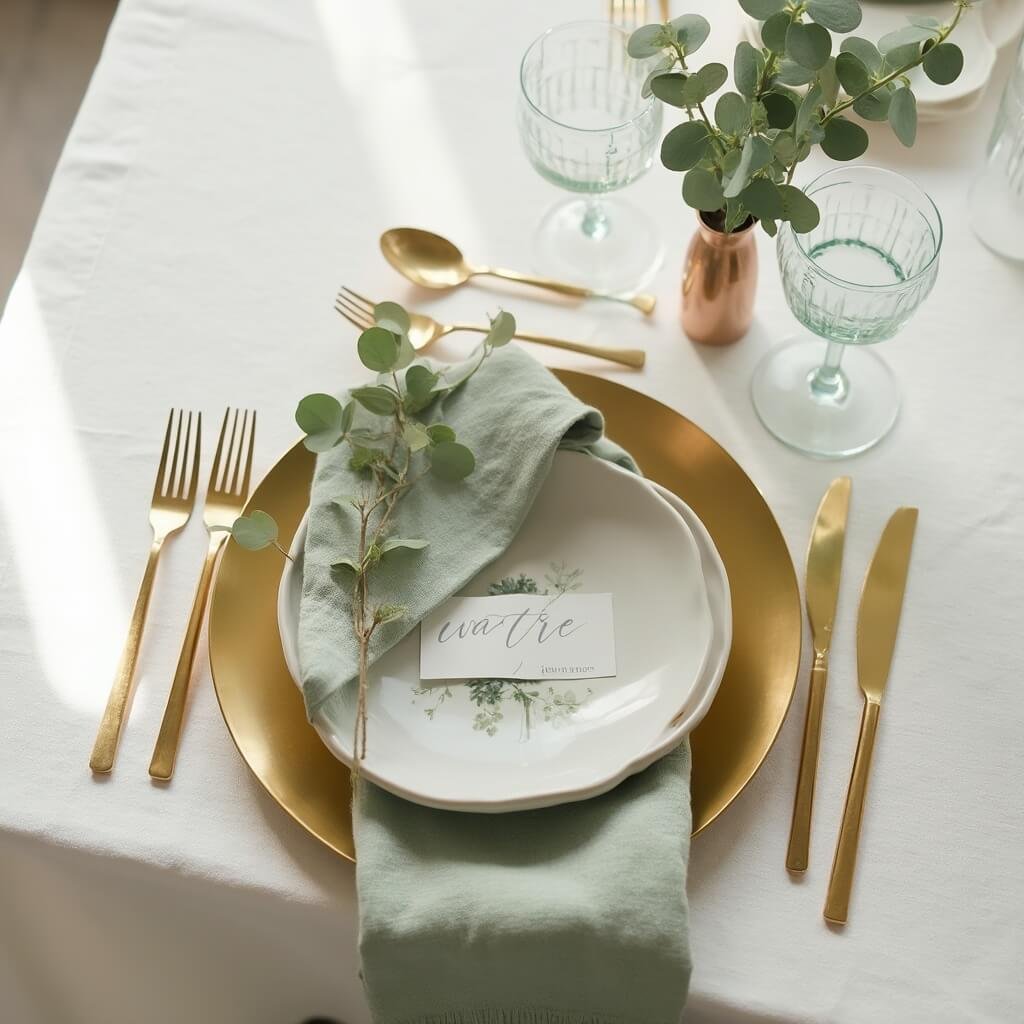
Restraint in colour comes first. Limit yourself to two or three tones across linens, florals, stationery and tableware. Monochromatic schemes — white-on-white, or beige running into stone — are the classic minimalist move, and they photograph beautifully because nothing is fighting for attention.
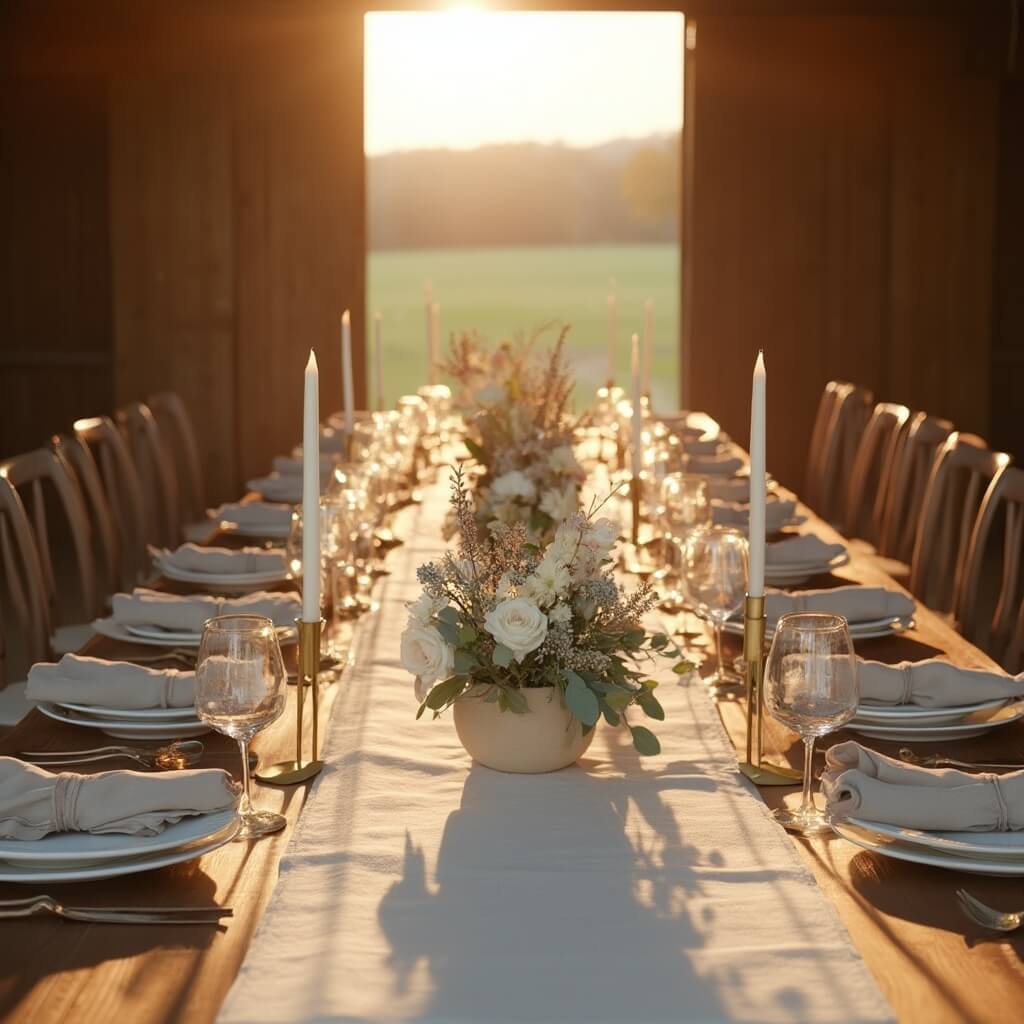
Consistency and repetition come second. Reuse the same materials and textures across the whole tablescape — linen paired with brushed brass, say — so the eye reads it as one considered setting rather than several unrelated choices bolted together. On long tables, repeat simple elements like bud vases or tapered candles at even intervals. The rhythm itself becomes part of the design.
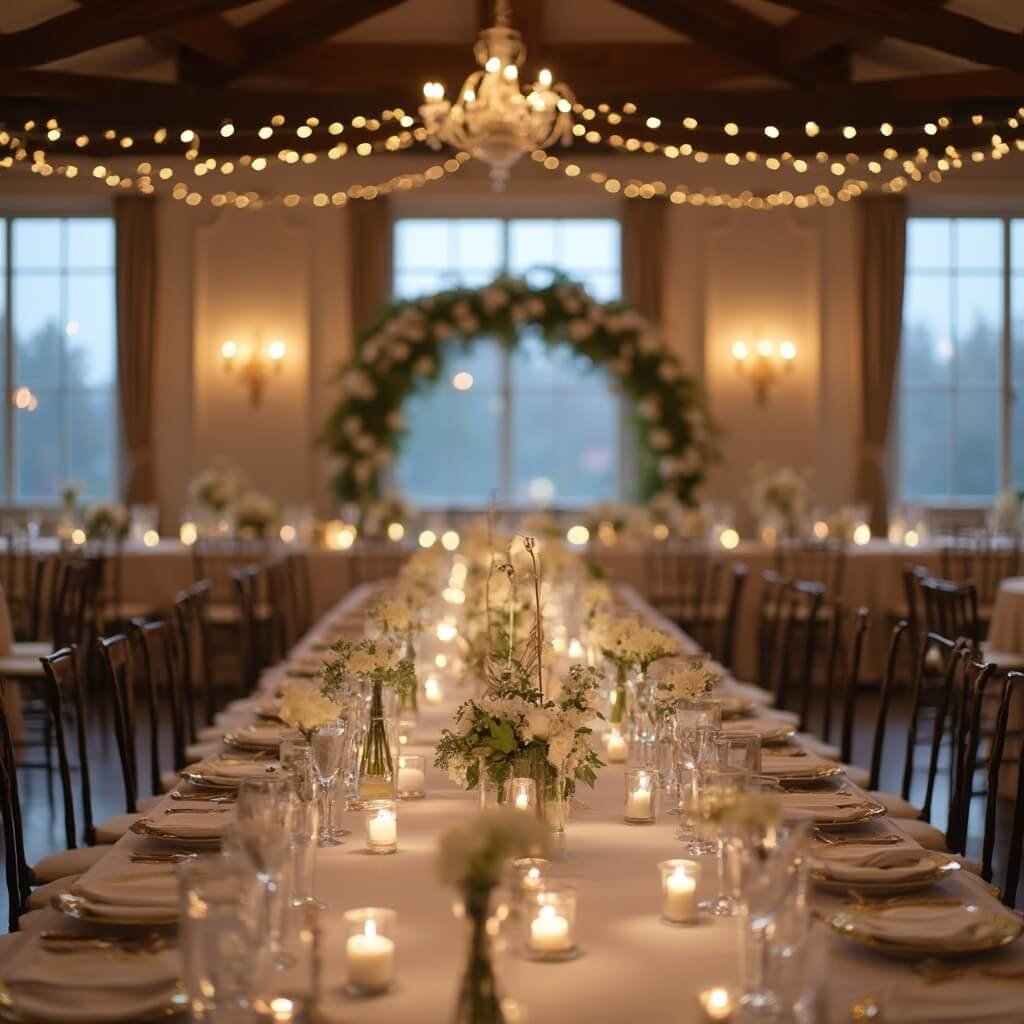
Then there’s the matter of the focal point. Pick one per table. A single centrepiece, a cluster of candles, one sculptural floral moment — not three different things all competing for the same sightline. Many couples also choose one larger “statement” element for the room as a whole, a floral arch behind the top table or a particularly striking runner, and let everything else stay quiet in comparison. One loud note, everything else whispering.
Where Minimalism Helps — And Where It Can Go Wrong
There’s a lot going for this approach, practically as well as aesthetically. It tends to be more cost-effective, since you’re relying on fewer florals and decor pieces and putting your budget into materials and texture instead. It also tends to improve the actual guest experience — I’ve sat at enough wedding tables with a centrepiece so enormous I couldn’t see the person opposite me to appreciate how nice it is when a table is designed with sightlines in mind. And because the elements are simple and repeatable, it’s genuinely easier to style twenty tables consistently than it is with a more maximalist brief, where every table somehow ends up slightly different no matter how detailed your instructions were.
The drawback, and I’ll say this clearly because florists and stylists don’t always volunteer it: minimalism can tip into looking plain if you’re not careful with texture, accent colour and lighting. A table that’s all white with nothing to catch the light or the eye can feel cold rather than calm. Minimalism also takes a certain discipline — it’s very easy for a couple to add “just one more thing” at each planning meeting until the restraint that made the look work in the first place has quietly disappeared.
I married a couple on a blustery April afternoon in a barn in the Cotswolds who wanted exactly this — white, calm, nothing fussy. Their stylist talked them out of adding coloured napkins at the final meeting, which I remember because the bride was nervous the tables would look unfinished. They didn’t. The low autumn light coming through the barn doors did more work than any extra decor would have. Explore more about simple wedding table decor for additional inspiration.
Choosing a Colour Palette That Stays Calm, Not Flat
Core Neutrals
Most minimalist palettes start from the same handful of tones: white, ivory, cream, soft beige, stone, warm grey, occasionally a soft black for contrast. These pair naturally with sleek dinnerware and simple menu design, and they don’t date the way a trend colour might.
Monochrome or tone-on-tone combinations are a particular staple — ivory linen with slightly darker stone napkins, or soft grey plates against warm white tablecloths. The variation is subtle, almost textural rather than colour-based, and that’s exactly the point. You want depth without introducing visual noise.
Adding an Accent Without Losing the Calm
A fully neutral table can feel flat if you don’t add something. The fix is one accent colour, chosen deliberately and then repeated consistently — blush, sage, dusty blue, warm gold — rather than scattering several pastel shades around and hoping they coordinate. Keep that single accent in the florals, the napkins, maybe the candle holders, and nowhere else.
Greenery deserves a mention here too. Olive branches, eucalyptus, simple garden foliage — these add colour and texture without breaking the minimalist rule of restraint, and they tend to look right in almost any season, which is more than I can say for most trend-driven floral choices.
Metallics and Darker Accents
A neutral palette lifted with gold — cutlery, candle holders, the edges of a place card — reads as luxe without crowding the table. Some stylists call this the “Midas touch,” using gold consistently rather than as an occasional flourish. On the other end, soft black or slate details — cutlery, menu typography, a dark candlestick — can sharpen an otherwise very light table, giving it something to anchor against.
For more creative ideas, explore our wedding decor ideas.
👇Shop the Look Here👇
Getting the Materials Right
The palette gets most of the attention in these conversations, but materials are doing at least as much work. Linen, cotton, wood, stone, rattan — these are the backbone of a minimalist table because they bring texture without bringing pattern. A bare wooden table with a linen runner down the center is about as minimalist as it gets, and it works because the wood grain itself becomes the decoration. You don’t need to dress what’s already interesting.
Save this article
Enter your email and we'll send it straight to your inbox.
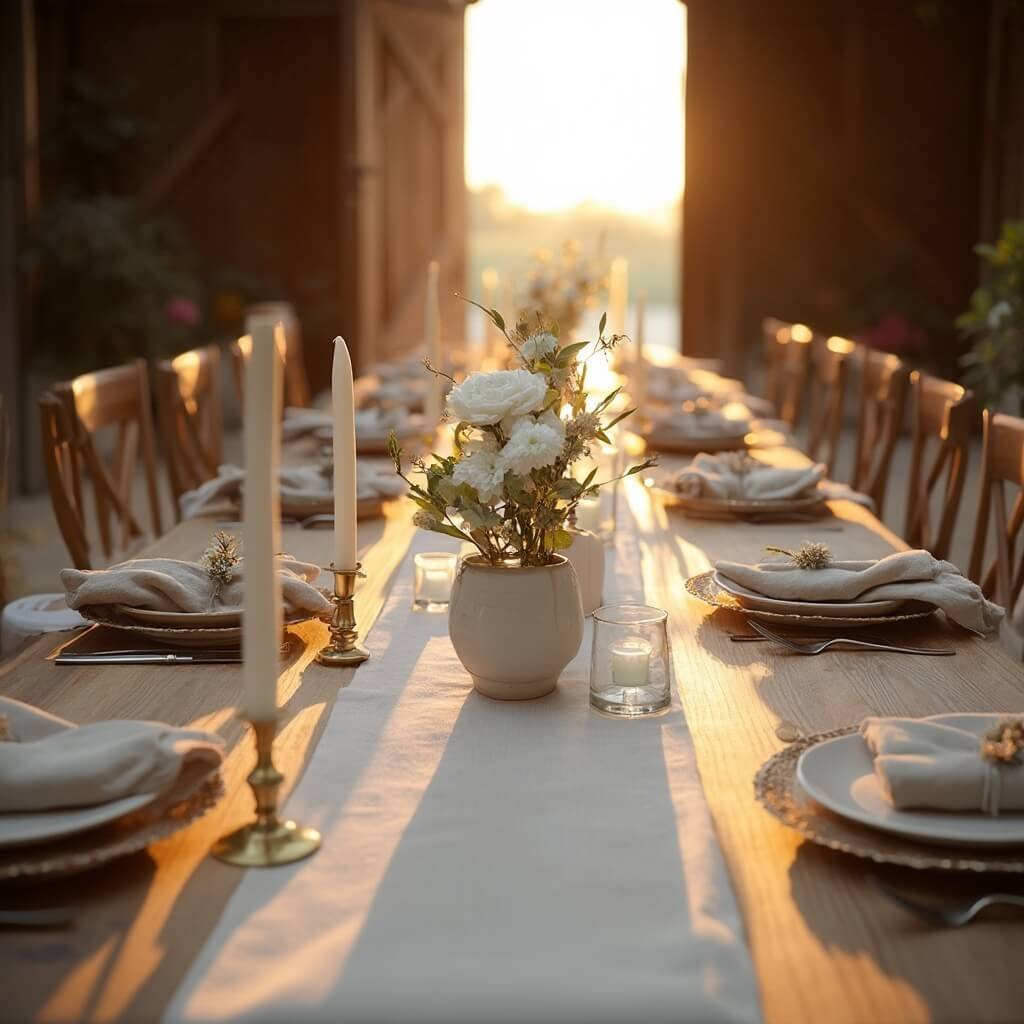
On the more polished end, matte ceramics, clear glass and brushed metal give you a cleaner, more contemporary feel than the rustic-wood route. Brushed gold or matte black cutlery, for instance, looks far more deliberate than standard polished silver — it reads as a choice rather than a default, which is really what you’re going for throughout.
For tablecloths and runners, stick to one linen tone across the board — ivory, warm white, pale stone — rather than mixing two whites that don’t quite match. A linen runner over a bare wood table, or a full cream tablecloth on its own, are both widely used and both correct; the choice comes down to the venue more than anything else. Napkins follow the same logic. White or cream, folded simply, either flat on the plate or tucked beside it. If you want a small flourish, a linen napkin secured with a slim gold pin and a single olive leaf does more for the table than an elaborate fold ever will, and it costs next to nothing.
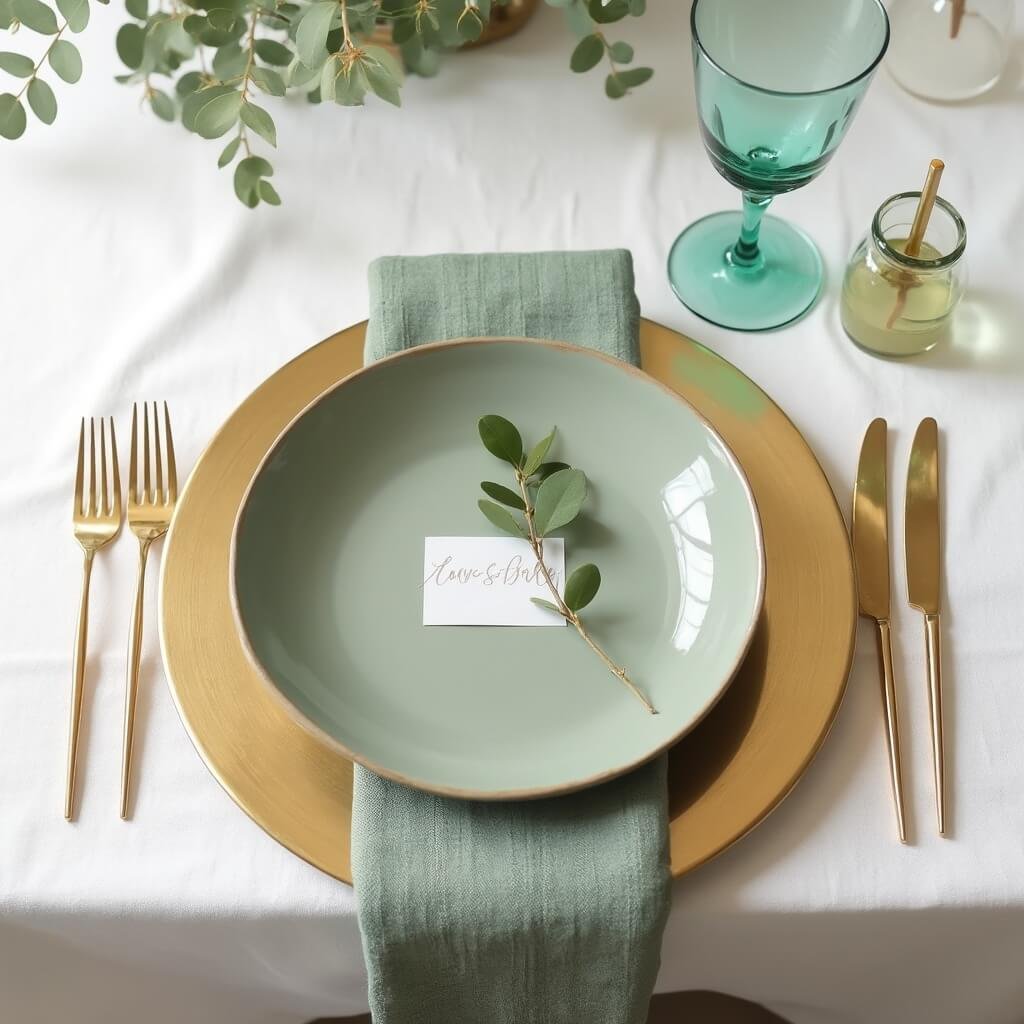
The thing to remember through all of this is that texture is your color palette’s replacement. Stoneware plates, woven linen, a brushed metal candle holder — these give the eye somewhere to land without needing another hue in the mix. A textured, slightly slubbed linen in an all-white scheme will look richer in photographs than a flat, perfectly smooth white ever would, which seems counterintuitive until you see it in person.
Tableware That Doesn’t Compete With Itself
Keep the plates simple. Clean silhouettes, no heavy motifs or ornate rims — a matte ceramic plate in a neutral tone will sit much better in a minimalist setting than a patterned bone china one, however pretty that china is on its own. If you’re using chargers, keep them plain too, a single metallic or stone tone rather than anything embellished. Chargers are easy to overdo because they feel like “extra,” and extra is exactly what you’re avoiding.
Glassware should stay clear and simple. Coloured glass or elaborately stemmed glasses pull focus away from the table’s overall geometry, and matching glassware consistently across every table is one of the quietest ways to make a room feel coordinated — guests rarely notice it consciously, but they notice when it’s wrong.
Cutlery is where a lot of couples get to have a bit of personality without breaking any rules. Brushed gold, matte black or simple stainless all work, provided you commit to one and use it everywhere. Gold cutlery against a ceramic plate and a linen napkin is a combination I see constantly for good reason — it’s warm without being loud. Small metallic details like napkin rings or menu holders can repeat that same metal as a quiet motif across every place setting, which is a nice way of tying a long table together without adding anything that reads as “decoration” in the traditional sense.
Centrepieces: Say One Thing, Say It Well
Minimalist florals are usually smaller, simpler, and built around one flower variety rather than a mixed bouquet. Think asymmetric, slightly sculptural arrangements with more greenery than bloom — a few stems doing a lot of visual work rather than a dense, rounded centrepiece that dominates the table. Greenery-forward designs, a runner of foliage down the table’s length, or small clusters of eucalyptus, do double duty as texture and as the main event, and they’re genuinely one of the most cost-effective choices going, which is worth knowing if your florist’s quote has made your eyes water.
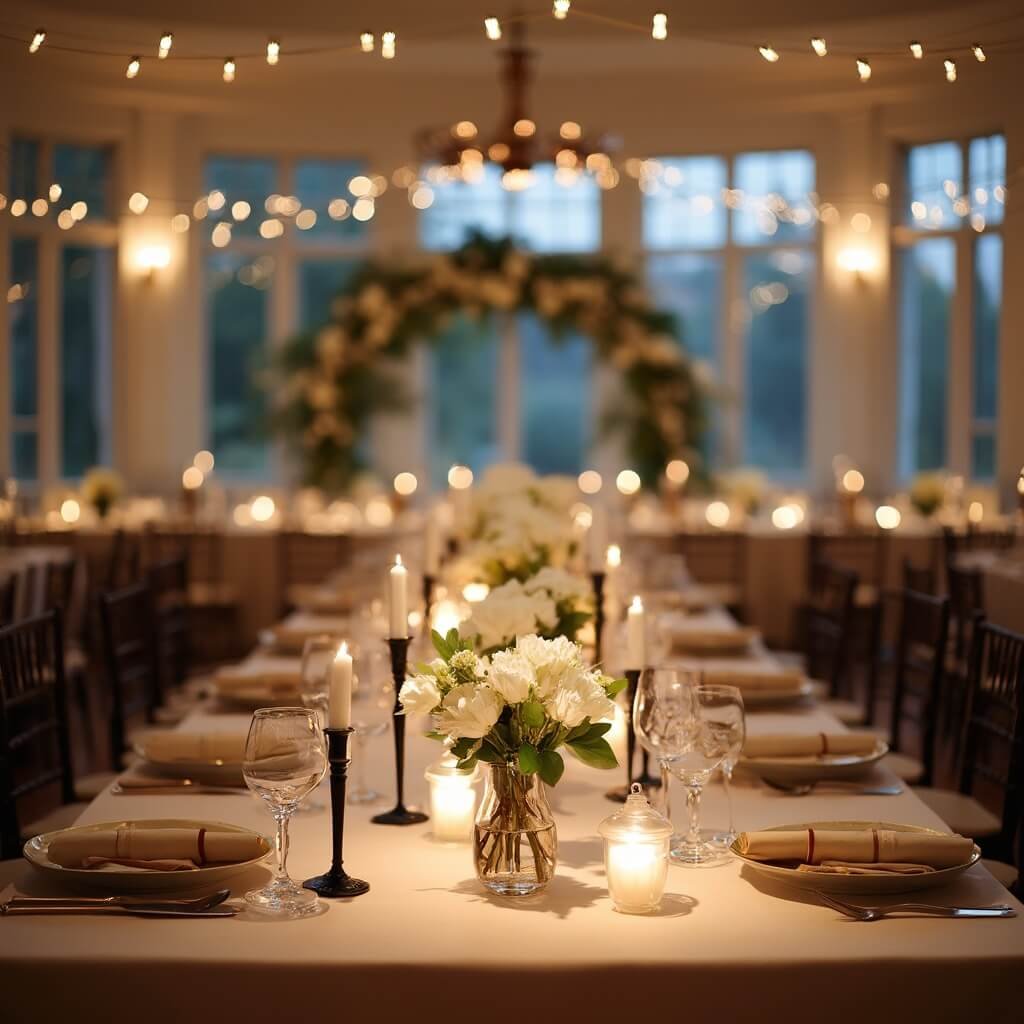
The general rule is one centrepiece per table, properly considered — a tall vessel with three or four stems, or a low, wide bowl holding a single variety of flower. What you want to avoid is several small arrangements scattered down the table that end up competing with each other and reading as clutter by the time the candles are lit.
Bud vases are the exception, and a popular one. Group five or six along a long table, each holding a single stem, and you get a relaxed, slightly scattered look that’s still entirely restrained because every vase is doing the same simple thing. Clear glass, one bloom or even just a single leaf — it’s a format that scales brilliantly for big guest lists without multiplying the florist’s bill. Come autumn, dried florals and seasonal grasses can do a similar job, bringing warmth and texture into the arrangement without needing fresh blooms that will wilt by the speeches.
Not every centrepiece needs to be floral at all. Pillar candles in glass holders, a cluster of tapers, or a run of tealights can be the entire centrepiece, and often look more considered than flowers because the warmth of candlelight does something florals can’t. A few sprigs of greenery around the base of a candle cluster keeps it from feeling austere. I’ve also seen couples use a simple bowl of fresh fruit — lemons, figs, whatever’s in season — or small potted plants along the table instead, which looks unexpected in the nicest way and gives guests something slightly playful to look at between courses.
Candlelight Is Doing More Than You Think
Taper candles in sleek holders — brass, glass, ceramic, doesn’t much matter which as long as it’s consistent — are the classic minimalist choice, and arranging them in trios spaced evenly down the table creates a rhythm that your eye reads as calm even if you couldn’t say why. Pillar candles in tall glass holders with a touch of greenery at the base give a cleaner, more architectural look if tapers feel too fussy for your particular venue. Tealights scattered sparingly, or floating candles in shallow glass bowls of water, both add ambient light without adding clutter, and they’re useful for filling gaps on the table that would otherwise feel unfinished without tipping into “we added more stuff.”
Candlelight generally does more heavy lifting in minimalist schemes than in busier ones, simply because there’s less competing for the eye’s attention. Fairy lights tucked under a tablecloth or wound round a pedestal can reinforce an all-white or neutral scheme after dark, when the palette you worked so hard on during the day starts to disappear into shadow anyway.
Long Tables, Round Tables, and the Honest Difference Between Them
Long communal “feasting” tables are the natural home of minimalist styling — the clean lines of the table itself echo the restraint of the decor, and repeated bud vases or candle clusters down the length create a visual flow that a round table simply can’t replicate. If you’ve got the venue for it, a long table does a lot of the work for you.
Round tables can absolutely still be minimalist, but they need more deliberate thought, because a single centrepiece in the middle of a circle reads very differently to the same piece halfway down a twenty-foot run of linen. I’d always recommend keeping the centrepiece low enough that guests can see across the table — a mistake I see constantly is a beautiful minimalist arrangement that’s nonetheless too tall, blocking half the guest list from each other for the entire meal.
My honest advice, after years of watching these tables come together and fall apart: pick your one statement element before you pick anything else, get the linen and the cutlery right, and resist every urge to add “just one small thing” in the final fortnight. That’s where minimalist wedding table decor either holds its nerve or quietly stops being minimalist at all.
For more elegant wedding reception decor ideas and wedding planning and decor inspiration, visit our website. Discover minimalist napkin table setting ideas and minimalist bud vase centerpieces for more inspiration.
Explore Minimalist Wedding Decor Ideas for a Chic, Understated Celebration and Minimalist Wedding Table Decor: A Practical Styling Guide for further reading.
👇Shop the Look here 👇
Want to keep this one?
We'll email you the link so you can find it again later.