Simple Wedding Table Decor That Doesn’t Look Underdone
Simple wedding table decor is the thing every third couple asks me about after they’ve spent an evening on Pinterest feeling overwhelmed. They tell me the same thing, more or less: “We don’t want it to look bare, but we also don’t want forty candles and a florist’s entire stock on every table.” Fair enough. That balance is achievable, and it’s actually easier to get right than the maximalist version most wedding blogs push at you.
Let me be honest about something first. A lot of “simple” wedding decor guides are written by people trying to sell you a curated box of things you don’t need. Real simplicity isn’t a product category. It’s a decision to use fewer elements and choose them well.
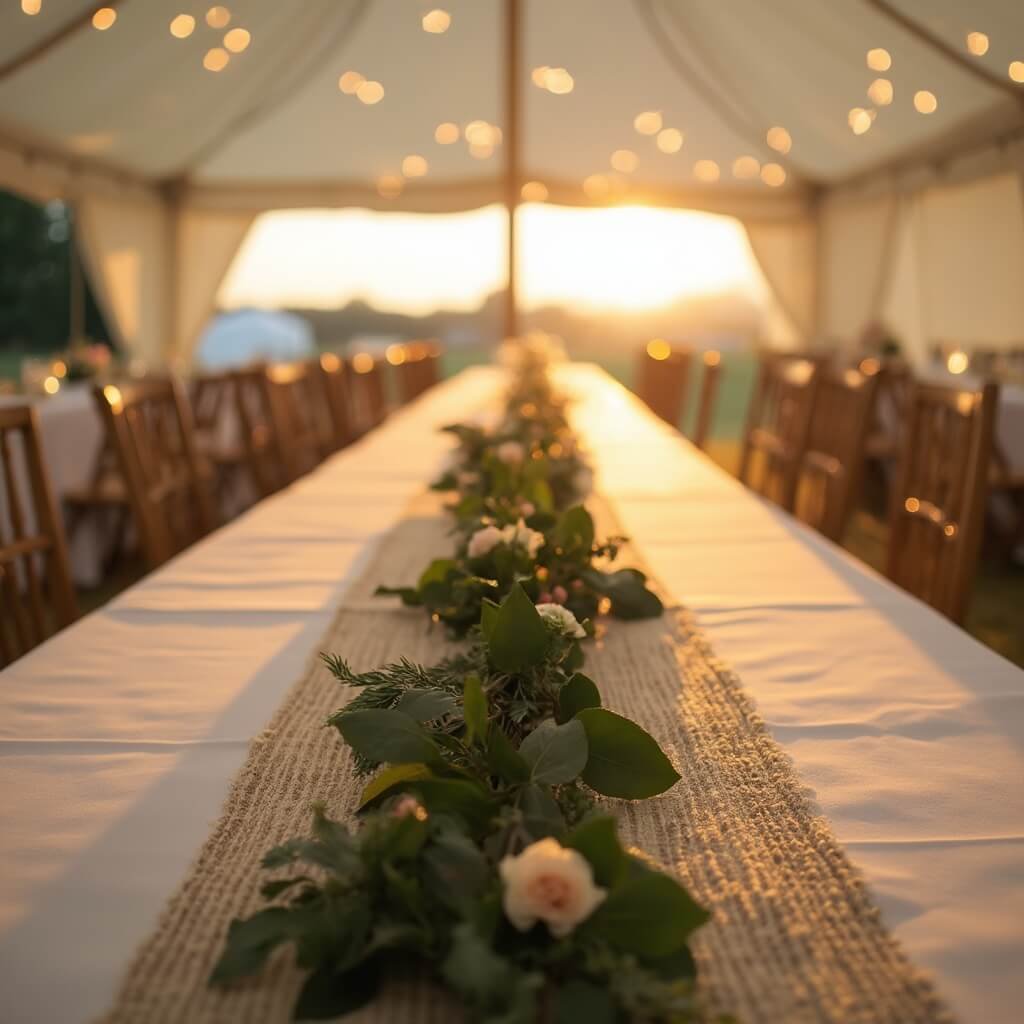
What “Simple” Actually Means on a Table
Simple doesn’t mean empty. It means intentional. Think clean lines, a tight colour palette, and maybe three or four decorative elements repeated with confidence rather than a dozen competing for attention. A candle, a single stem, a decent linen — that’s often plenty.
The materials tend to be ordinary too, which I mean as a compliment. Supermarket flower bundles, basic glassware, foliage cut from someone’s garden. You’re not chasing rare blooms or bespoke everything. You’re choosing a handful of good, unfussy things and trusting them to do the work.
Why Simple Decor Works Better Than People Expect
Cost is the obvious one. Fewer items, simpler materials, lower bill — greenery instead of a full floral spread will save you a genuinely significant amount, and nobody at the table will be doing the maths on your behalf to notice.
But there’s a practical side too, one that gets mentioned less. Low centerpieces mean guests can actually see each other across the table. I’ve sat through receptions where the centerpiece was so tall and wide that the couple opposite me had to lean sideways to make eye contact during the speeches. Nobody enjoyed that. Simple decor tends to be kinder to conversation.
It also photographs well, oddly enough. Neutral linens and a few well-placed candles create a calm, timeless look that doesn’t date the way a heavily themed table might. And setup is faster — which matters more than couples realise until they’re the ones up a ladder at 7am on the wedding morning.
The One Rule Worth Following
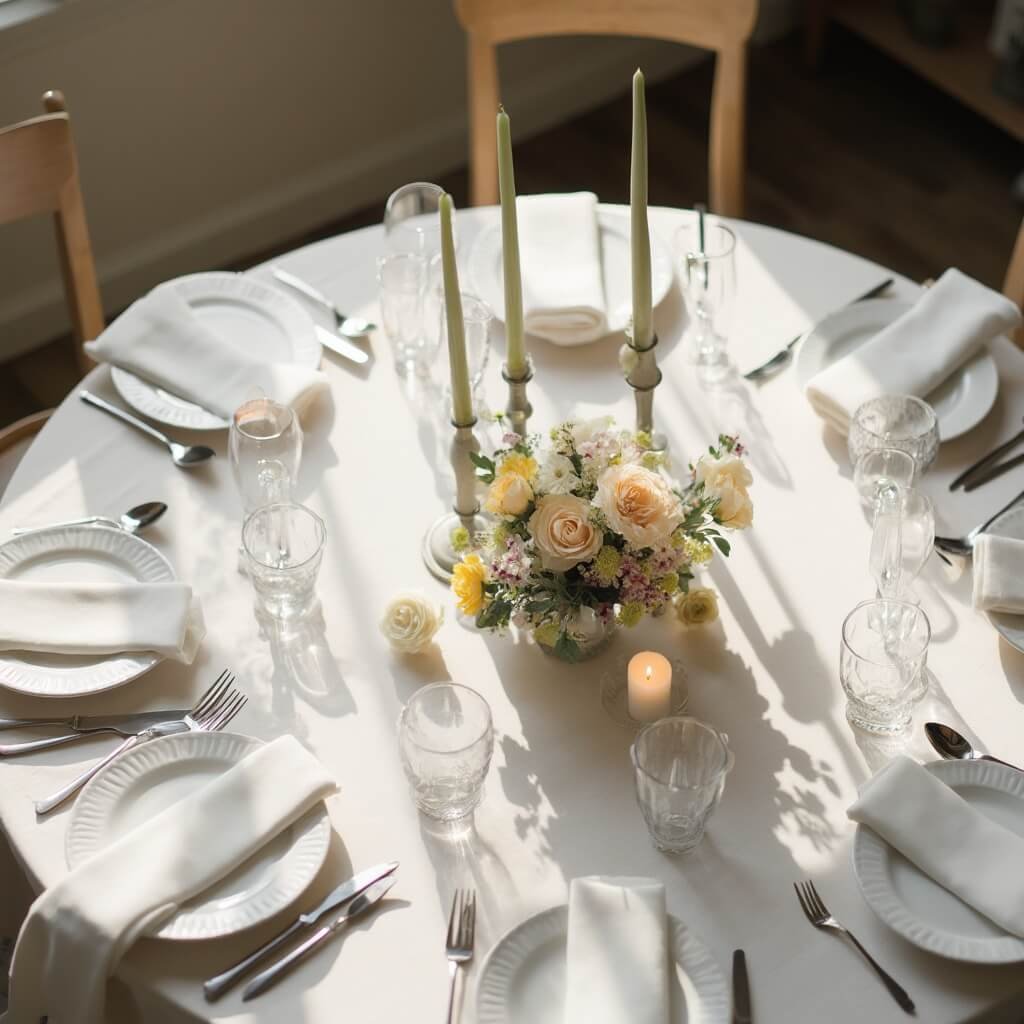
If you take one piece of advice from this whole article, let it be this: pick a single statement feature and let everything else stay quiet. Maybe it’s the centerpiece. Maybe it’s a beautiful textured runner. Maybe it’s candlelight, full stop. Whatever you choose, don’t let two or three “statement” elements compete on the same table — that’s when simple starts looking like clutter with good intentions.
Consistency across tables matters more than people think, too. I once did a wedding — a marquee do in Herefordshire, early September, slightly too warm for the linen the venue had chosen — where the couple had six tables, each styled slightly differently by well-meaning family members who’d all volunteered to “do a table.” It looked chaotic, not eclectic. The fix, had there been time, would have been simple: agree on two or three repeatable elements and let every table use the same ones. Cohesion is what makes a room read as styled rather than assembled.
Linens and the Table Base
Start here, because everything else sits on top of it. Venue-provided tablecloths are usually fine as a base — you don’t need to source your own unless the venue’s colour is genuinely wrong for your palette. White or a neutral tone gives you the most flexibility and tends to look the most timeless in photos years later.
Where you can add interest without adding clutter is texture. A gauze or chiffon runner down the centre, or something in a heavier weave like macramé, brings depth to a table that would otherwise look flat under photography lights. This is a much better use of budget than buying five small decorative objects — one textured runner does more visual work than a scatter of trinkets.
Choosing Centerpieces That Earn Their Place
This is where most couples spend the bulk of their decor budget, so it’s worth getting specific.
- Single-stem florals in bud vases, spaced evenly along the table, give you colour without bulk — and they’re genuinely inexpensive if you buy in season.
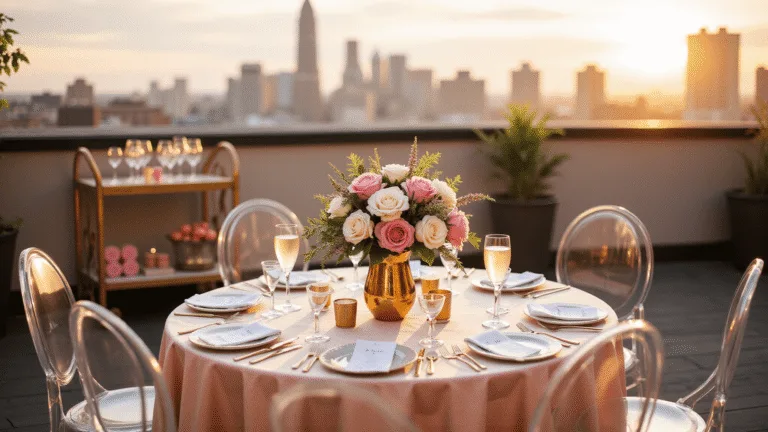
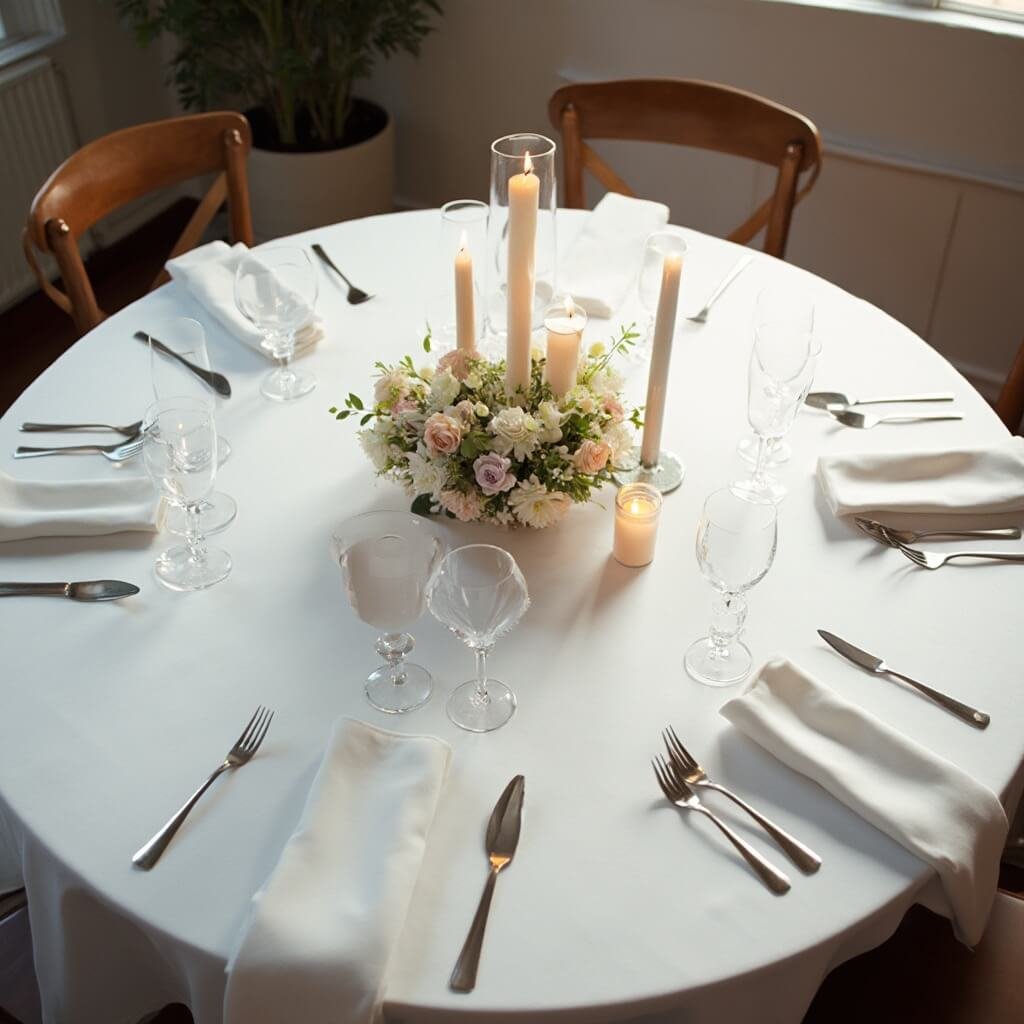
- Low, loose arrangements in a garden style keep sightlines open and suit round tables particularly well.
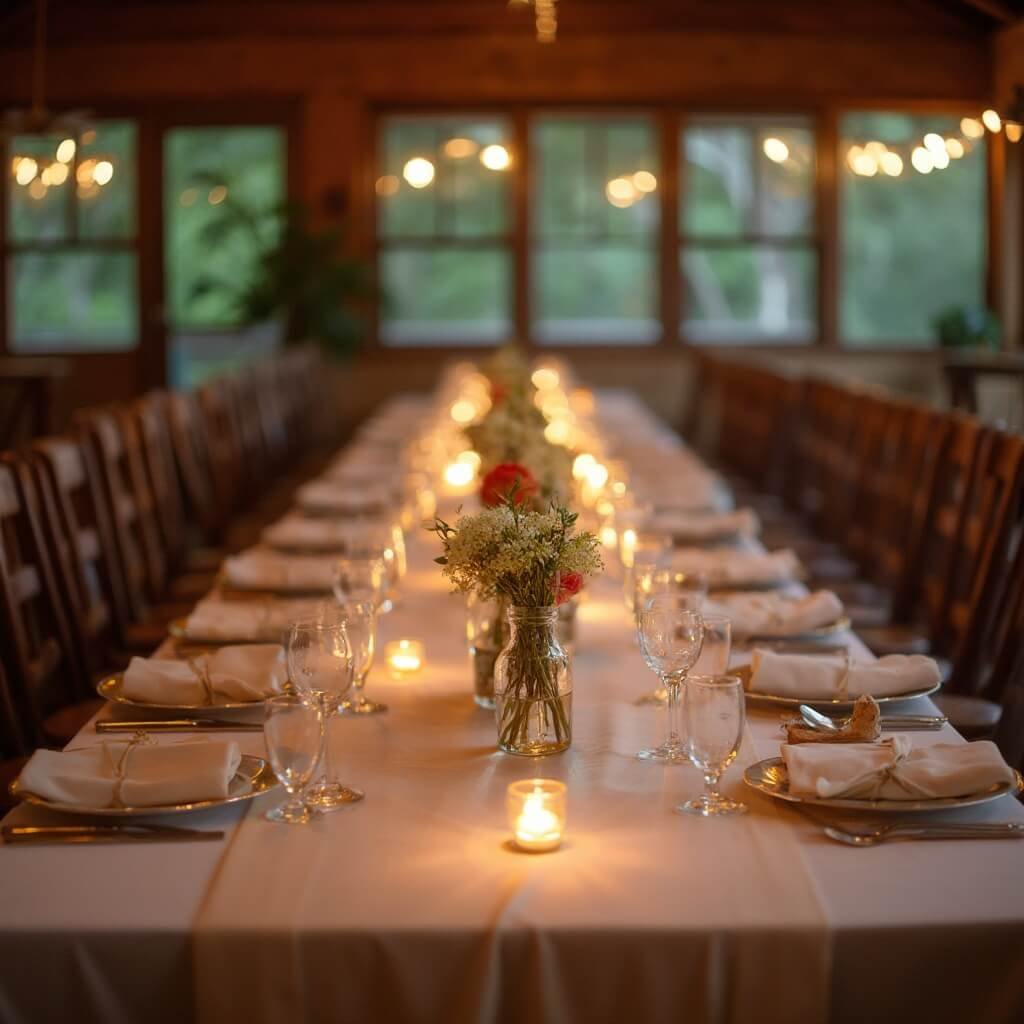
- Greenery runners or garlands, sometimes with just a few flowers tucked in, work brilliantly on long trestle tables and cost far less than full floral coverage.
- Grouped candles at varying heights — pillars, tapers, tealights — make a strong focal point with no flowers at all, which is where a lot of couples land once they see a candlelit table in person.
- Potted herbs or succulents double as favours guests can take home, so you’re not paying for decor that gets binned the next morning.
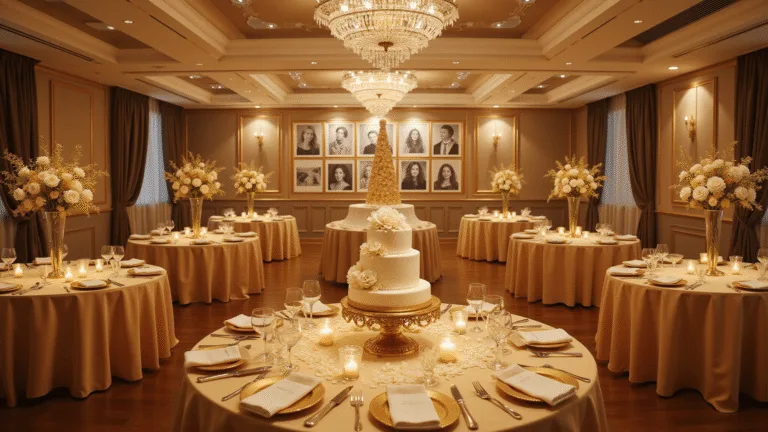
Whatever you choose, size it to the table. A tall, wide arrangement in the middle of a round table for eight is a mistake I still see venues allow far too often — it blocks conversation and looks disproportionate in photos taken from the top table looking down the room. For long tables, aim for a centerpiece roughly every metre to a metre and a half, or commit to one continuous runner-style arrangement instead of separate clusters.
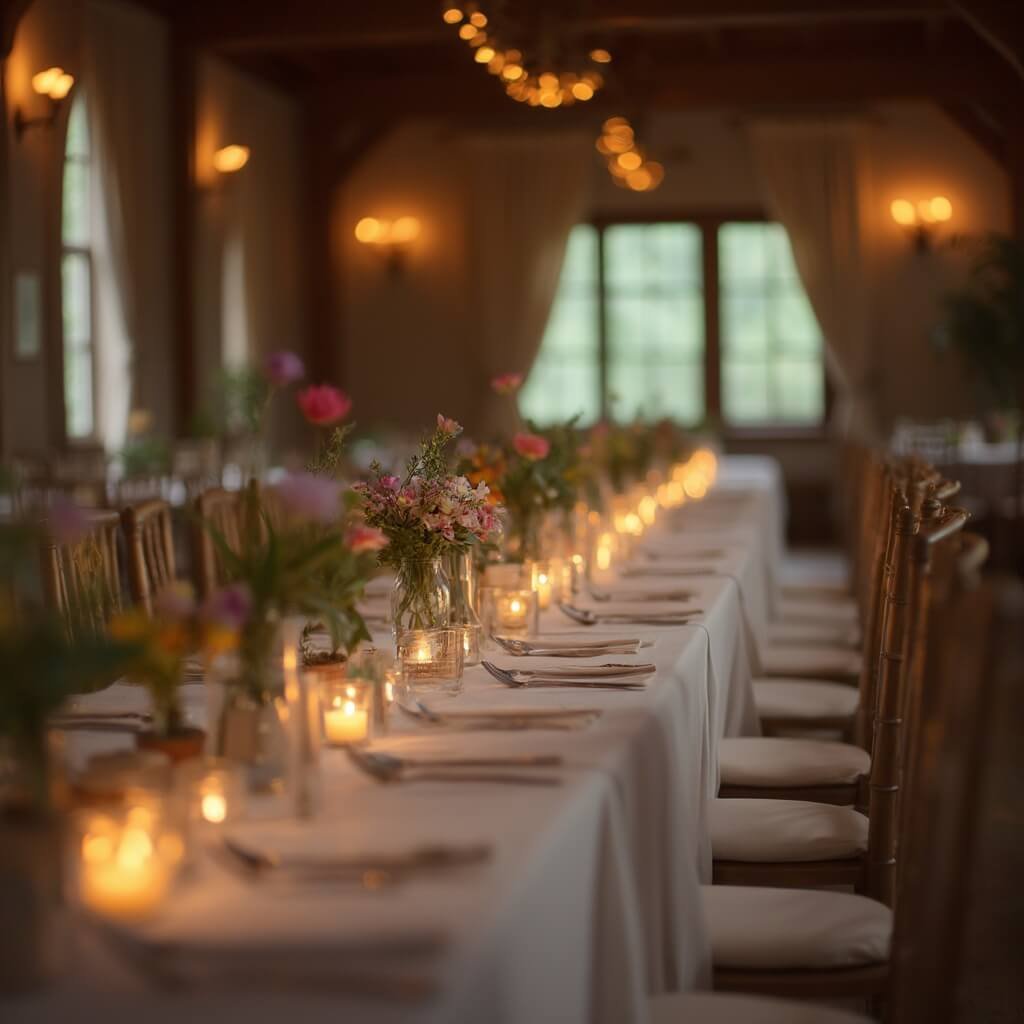
For more simple table setting inspiration or to explore minimalist bud vase centerpieces, visit our site.
👇Shop the Look Here👇
Candles Do More Work Than People Give Them Credit For
If I had to pick one element that consistently outperforms its cost, it’s candlelight. Taper candles in simple brass or glass holders, spaced along the table at intervals, give height and warmth without a single flower involved. Tealights scattered loosely around a centerpiece fill in the gaps and catch the light beautifully once the sun’s gone down. Floating candles in shallow bowls, maybe with a few petals or a sprig of greenery, are an easy way to add a focal point to a table that otherwise has very little on it.
The mistake I see couples make is treating candles as an afterthought rather than the main event. If you’re going the candle-heavy route, buy in bulk — you need more than you think, and running out halfway through setup at 4pm with the venue coordinator hovering is not a situation you want. Second-hand or basic glass holders from a homeware shop do the job just as well as anything bespoke.
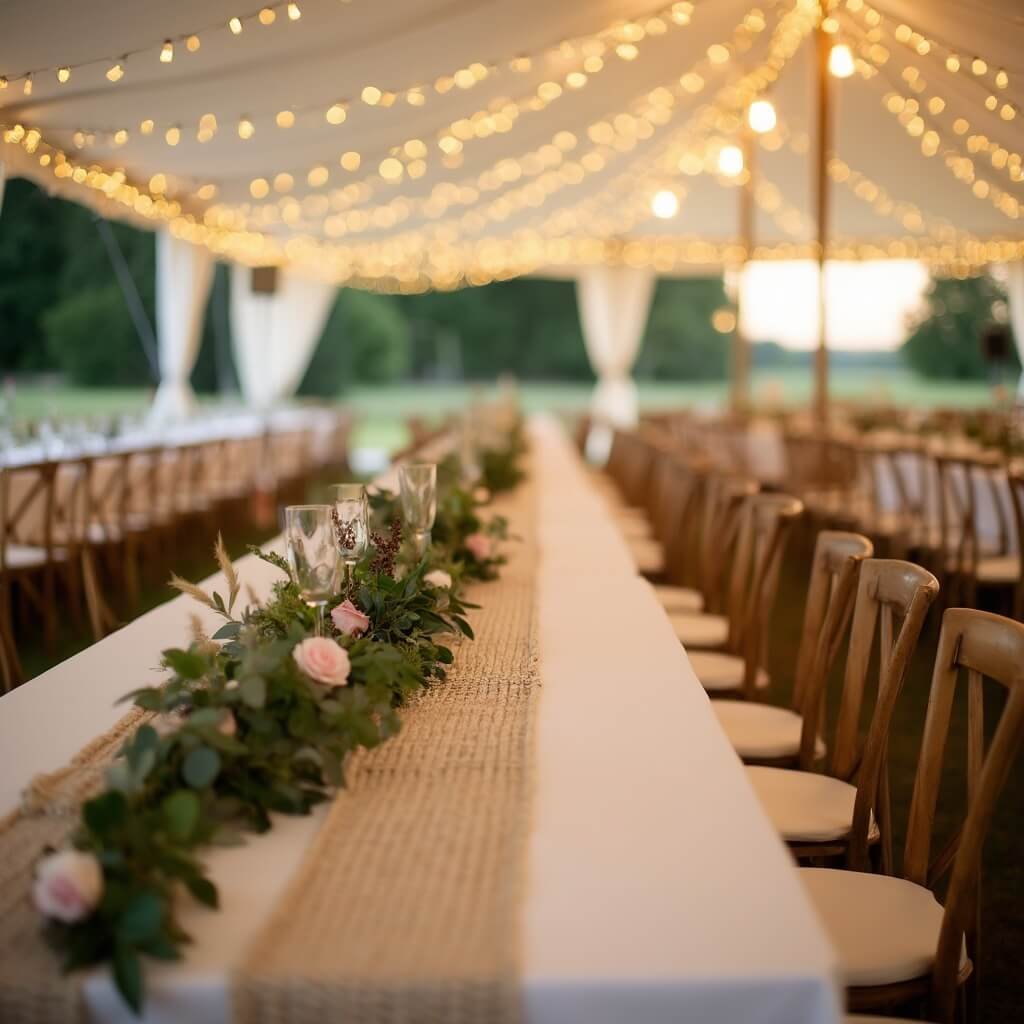
String lights are worth a mention too, though I’d use them sparingly on the table itself — they tend to work better draped along chair backs or overhead, where they add sparkle without competing with whatever’s happening at eye level. Keeping the tabletop clear and letting the lighting do its work from above is a good instinct if you’re nervous about the table looking too bare.
Save this article
Enter your email and we'll send it straight to your inbox.
Place Settings: Where Simple Can Still Feel Considered
This is the bit people forget about when they’re deep in centerpiece research, and it’s a shame, because place settings are where guests actually spend their evening.
The basics are non-negotiable: plates, glassware, cutlery, a napkin, and something telling people where to sit. Beyond that, small additions go a long way. A charger plate underneath the dinner plate adds a sense of occasion without adding another decorative object to think about. A linen napkin folded properly, with a printed menu tucked under it or a single sprig of rosemary laid across, looks considered rather than sparse.
Handwritten place cards are one of the cheapest upgrades available to you, and I mean that literally — a decent pen and someone with reasonably neat handwriting will outperform printed cards nine times out of ten, because guests notice the effort. I did my own sister’s place cards for her wedding two years ago, sitting at her kitchen table with a box of blank cards and a calligraphy pen I’d never used before. They weren’t perfect. The B’s were inconsistent and I ran out of patience by card forty. But guests still comment on them, because handwriting reads as personal in a way that a laser printer never quite manages.
If you want a little extra sparkle without adding clutter, a light scatter of small gems or table confetti in your accent colour does the trick. Just don’t let it multiply — a few pinches per table setting is plenty, and I’ve cleaned up after weddings where confetti ended up in the food, which nobody thanks you for.
Matching Your Style Without Overcomplicating It
Simple decor still needs a direction, otherwise you end up with a table that’s minimal but also a bit characterless. A few approaches tend to work reliably.
For a modern, minimalist look, stick to a neutral palette — white, beige, soft grey — with one accent colour running through the florals or the stationery. Clean glassware, a single candlestick style, and one variety of flower repeated across all the arrangements keep the whole thing feeling deliberate rather than sparse.
If rustic and natural is more your speed, wood does most of the heavy lifting. A slice of untreated timber under a candle or a small jar arrangement gives you texture for almost no cost, especially if you know someone with a garden and a saw. Foraged pine cones, autumn leaves, or a simple greenery garland down the table cost nothing but time, and they photograph with a warmth that bought decor often lacks.
For something softer and more romantic, chiffon runners with clustered bud vases and candles are hard to beat. I’ve also seen couples strip things back even further — candles and fabric only, no flowers whatsoever — and the effect is genuinely lovely, particularly in a room with decent evening light or a marquee with fairy lighting overhead.
And if you’re drawn to something with a bit more personality, mismatched vintage crockery or old glass bottles picked up from charity shops give you texture and story without raising the item count. Family photographs used as table numbers, or tables named after places that matter to you rather than numbered, add a personal layer that costs almost nothing but means a great deal to anyone who notices.
Getting the Budget Version Right
The cost-saving strategies here aren’t complicated, but they do need deciding early, before you’ve fallen in love with something expensive.
Buy candles and vases in bulk or second-hand — charity shops and family cupboards are an underused resource here. Use greenery instead of dense floral arrangements wherever you can, since foliage is cheaper by a wide margin and often looks more current anyway. Ask your florist, if you have one, whether ceremony flowers can be moved to the reception tables afterwards; it’s a straightforward way to avoid paying for two separate sets of florals.
DIY decor works well within this budget approach, provided you’re realistic about time. Painted jam jars with fairy lights inside, mason jars used as vases, pressed leaves or collected pine cones as table scatter — none of it is difficult, but all of it takes longer than you expect when you’re doing forty of something the week before the wedding. Label everything by table, pack it in clear boxes, and work out in advance who’s actually setting it up and who’s taking it down afterwards. That last part gets forgotten more often than you’d think, and someone ends up doing it at midnight in their wedding outfit.
When Simple Risks Looking Sparse — and How to Fix It
The honest caveat here is that simple decor can tip into looking under-decorated if you’re not careful, particularly on a large table or in a big room with high ceilings. The fix isn’t more stuff — it’s better layering of what you’ve already got. A textured runner instead of a flat linen. Candles at two different heights rather than one uniform row. A menu card and a place name rather than just a place name. These are small additions, not new categories of decor, and they close the gap between “simple” and “sparse” without blowing the budget you’ve worked hard to stick to.
Some guests will still expect a more elaborate table, and there’s not much you can do about that beyond accepting it isn’t your job to meet everyone’s expectations. Focus the money you do spend on quality — a genuinely nice linen, well-arranged rather than crammed-in flowers — rather than on quantity, and the table will read as intentional even to someone who prefers a busier look.
If you’re planning your own wedding right now and feeling the pull toward doing more, my actual advice is to pick your one statement feature, source your candles and vases second-hand where you can, and trust that a well-set table with three good elements will always look better than a table with eight mediocre ones. That’s really the whole idea behind simple wedding table decor — not less effort, just better-placed effort.
For more Simple Wedding Table Decoration Ideas or Elegant Simple Wedding Centerpieces, visit our recommended resources.
👇Shop the Look here 👇
Want to keep this one?
We'll email you the link so you can find it again later.