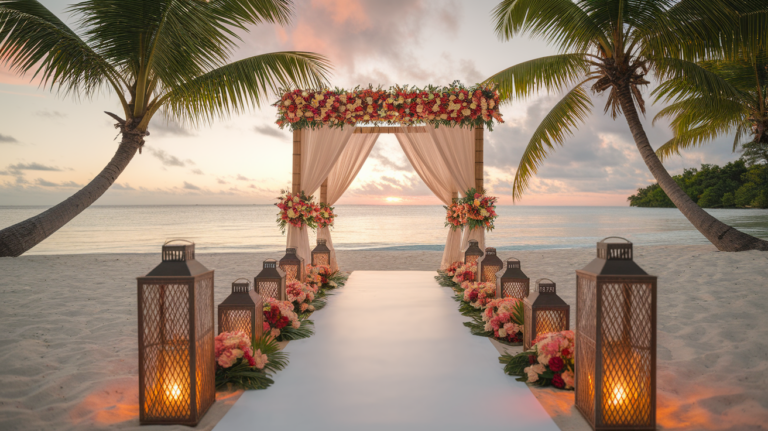
Thrifted Wedding Decor: How to Do It Well (And Where to Start)
Thrifted wedding decor means using secondhand, vintage, or upcycled pieces as the backbone of your styling, rather than buying everything new or hiring it in from a rental company. Vases from a charity shop. A stack of mismatched china found over three separate Saturdays. Your auntie’s old lace tablecloth, finally given a purpose again. It’s less a single trend than a whole different way of sourcing — and it’s one I’ve watched more couples lean into every year I’ve been marrying people.
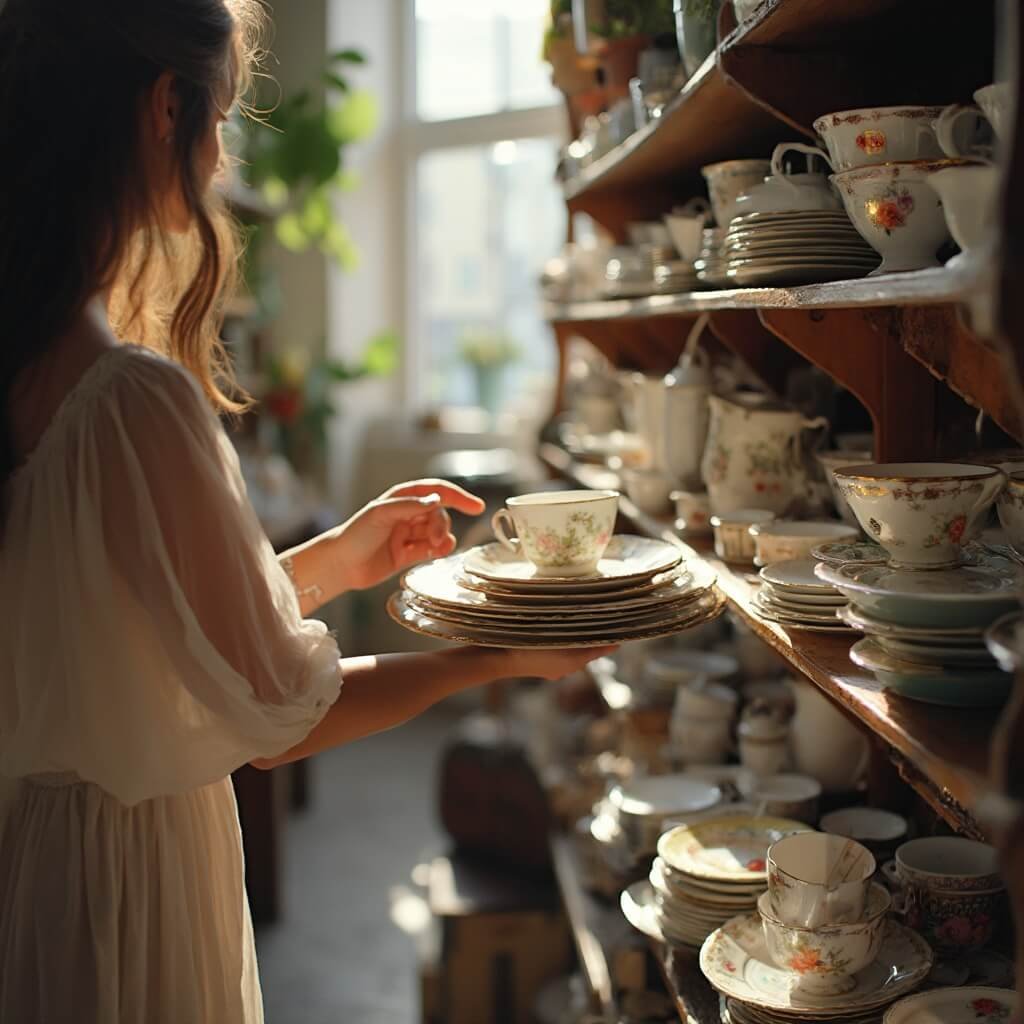
The appeal isn’t complicated, but it’s worth spelling out, because I think a lot of couples underestimate just how much thrifted decor can do for a wedding beyond the obvious saving.
Why couples go down this route
The budget argument is the one everyone leads with, and fairly enough — secondhand glassware, frames, and linens often cost a fraction of what you’d pay to rent them, and nothing like what you’d pay to buy new in bulk. But I’d actually put the look above the money as the real reason people stick with it once they start. Mismatched items, collected slowly, produce a table that looks gathered rather than ordered off a catalogue page. No two thrifted weddings end up looking the same, which is more than you can say for a lot of venue-supplied packages.
There’s a sustainability angle too — reusing what already exists instead of manufacturing more disposable decor — and I don’t want to undersell that, but I notice couples mention it second, after the aesthetic. And then there’s sentiment. A pair of brass candlesticks that belonged to someone’s grandmother carries a different weight on the day than something ordered new, even if a guest can’t tell the difference just by looking at it.
Thrifted decor suits a particular kind of couple, though, and it’s worth being honest about that. If your taste runs eclectic, vintage, or “collected” rather than crisp and matched, you’ll enjoy this process. If you’ve got months to spare and don’t mind a Saturday morning charity shop crawl becoming a semi-regular date, even better. If you want everything finalised in six weeks flat, this probably isn’t your route — thrifting rewards patience, not urgency.
Building your vision before you buy anything
Don’t start shopping before you’ve decided what you’re shopping for. I know that sounds obvious, but I’ve seen couples arrive at a thrift haul with a car boot full of gorgeous individual items that have absolutely nothing to do with one another once they’re on a table together.
Put together a simple mood board first — colours, textures, a handful of reference photos of table settings or ceremony backdrops that feel like you. Pick a colour palette, even a loose one — pastels, jewel tones, warm neutrals — because that’s what will let a dozen mismatched plates read as “curated” rather than “leftover.” And settle on a general style early: vintage romantic, rustic, boho, minimalist. You don’t need to be rigid about it, but you do need a filter, because charity shops are full of tempting things that don’t belong anywhere near your wedding.
From there, build an actual decor checklist — every category, ceremony through to reception: tables, signage, lounge areas, lighting, the lot. Against each item, note whether you plan to thrift it, rent it, borrow it, or just buy new. Centrepieces and tableware are worth spending your thrifting energy on; they’re seen up close and repeated across every table. Small details — a single sign, a card box — matter less and can wait.
Setting a budget that actually holds
Thrifting can save you a genuine amount of money, but it can also quietly bleed you dry in £3 increments if you’re not careful. Set yourself a per-item price limit before you go — a max spend per vase, per plate, per frame — and hold to it. It’s worth comparing that limit to what the equivalent would cost to rent, just so you know you’re actually saving rather than just accumulating.
Track what you’re spending across trips, because it adds up faster than people expect. And don’t forget to budget for the DIY side of things too — spray paint, glue, craft paper, whatever tools your projects need. That’s real money, and it’s easy to forget it exists until you’re standing in the paint aisle wondering why this “free” decor is costing you £40.
Giving yourself enough time
This is the bit couples get wrong most often. Thrifting works on months, not weeks. You need time to find enough matching or coordinating pieces — six mismatched-but-cohesive dinner plates don’t turn up on the same day, in the same shop.
Go early, and go often. Charity shops tend to put new stock out in the morning, and most don’t restock again until the next day — so a Tuesday lunchtime visit will show you the same shelf as Monday’s. Build quick stops into your normal week rather than treating it as a single big shopping trip. I had a couple a few years back who turned their weekly food shop into a decor scouting mission — same supermarket car park, but a five-minute detour into the charity shop next door every single week for four months. By the wedding they had forty-two mismatched teacups, colour-sorted into three boxes in their spare room. It looked completely intentional on the day. It was, in the loosest sense, an accident of routine.
Where to actually find the stuff
- Local charity and thrift shops — reliable for vases, frames, glassware, linens, string lights, small furniture. Cheap, plentiful, inconsistent — you have to be willing to come back empty-handed sometimes.
- Vintage and consignment shops — pricier, but more curated. Good for statement pieces rather than volume.
- Wedding-specific resale — Facebook groups and Marketplace searches for “wedding,” bridal resale events where past brides offload entire decor sets, and dedicated resale platforms built specifically for buying and selling used wedding decor.
- Etsy and online resellers — some sellers specialise in curated vintage or thrifted wedding bundles, which saves you the legwork if your budget stretches slightly further.
- Borrowed items — frames, linens, vases, string lights from friends and family who’ve already got married. Free, sentimental, and usually the first place people forget to ask.
Past brides are, in my experience, one of the most underused resources going. Someone who got married eighteen months ago usually still has a garage full of decor they’d love to never look at again, and they’ll often give it away for next to nothing just to have it gone.
The categories worth your thrifting energy
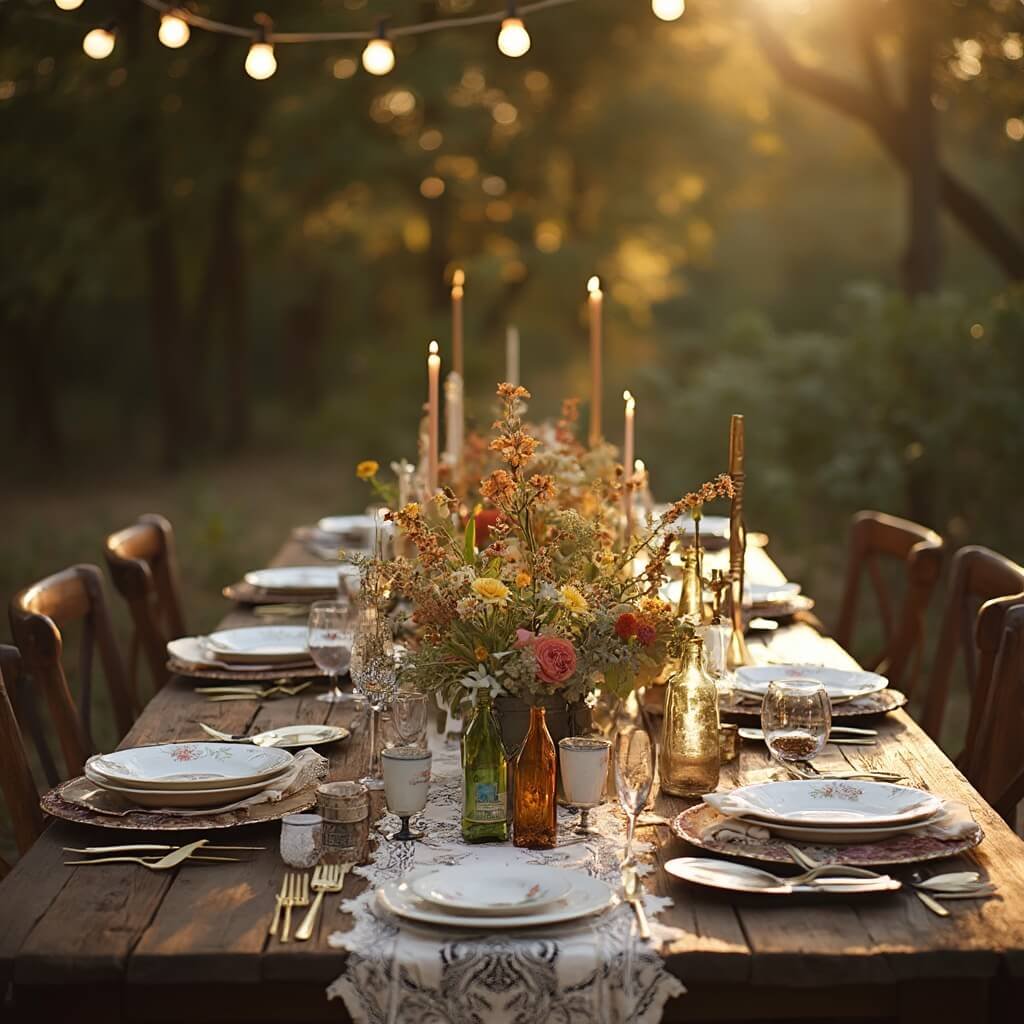
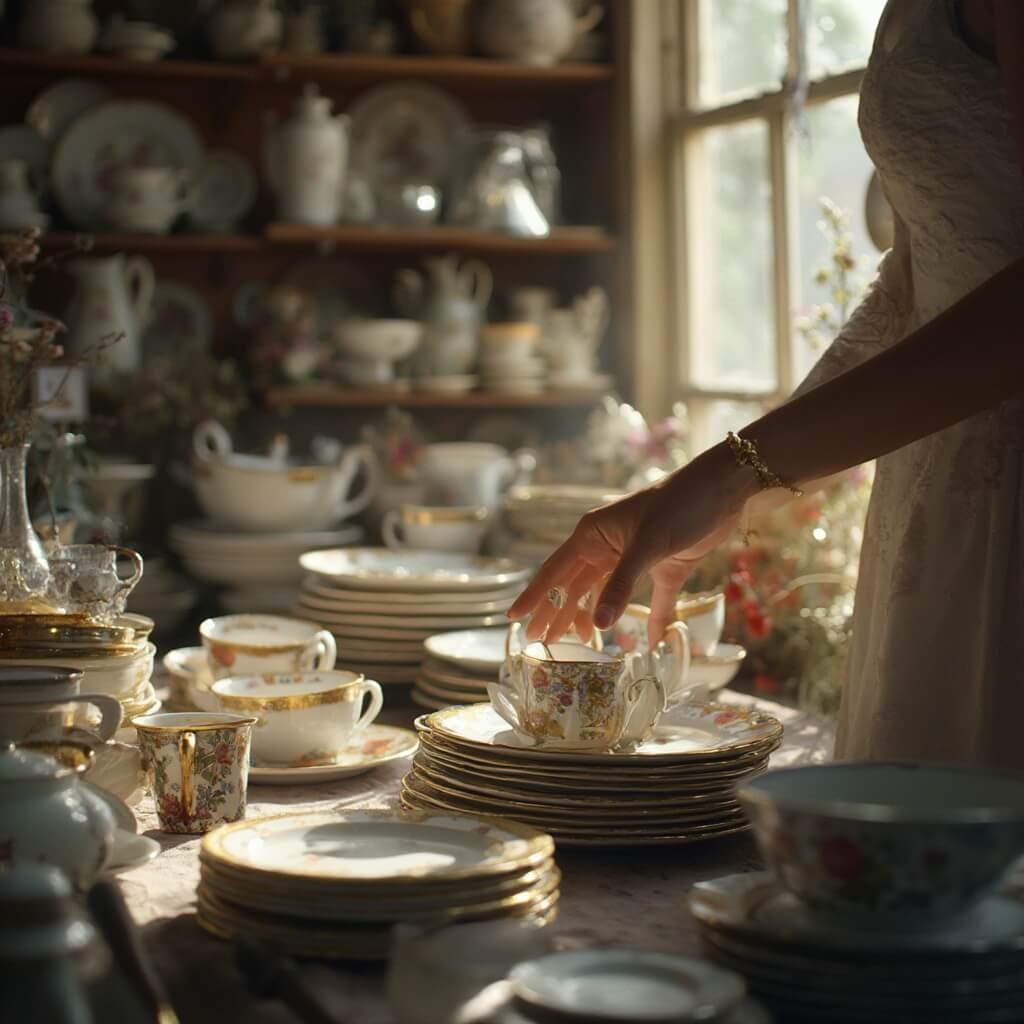
Tableware is where thrifted decor earns its reputation. Mismatched vintage plates — gold rims, faded florals, whatever suits your palette — read as romantic and eclectic rather than chaotic, provided you keep them loosely within one era or motif. Glassware works the same way: goblets, candle holders, water glasses in varying shapes layered across a table look considered rather than random. Coloured goblets are having a moment, but they’re genuinely hard to find in matching sets — mismatched clear glass is a much easier win and looks just as good layered.
Don’t overlook cutlery. Vintage silverware and serving spoons turn up in charity shops more often than you’d think, sometimes in full sets for a few pounds. And old linens — tablecloths, lace, doilies — can be repurposed as runners, altar backdrops, or even cut down into napkins, which is a good use for anything too fragile or stained for its original job.
Centrepieces are where thrifting really shines, largely because bud vases, mason jars, and old bottles are everywhere and cost almost nothing.
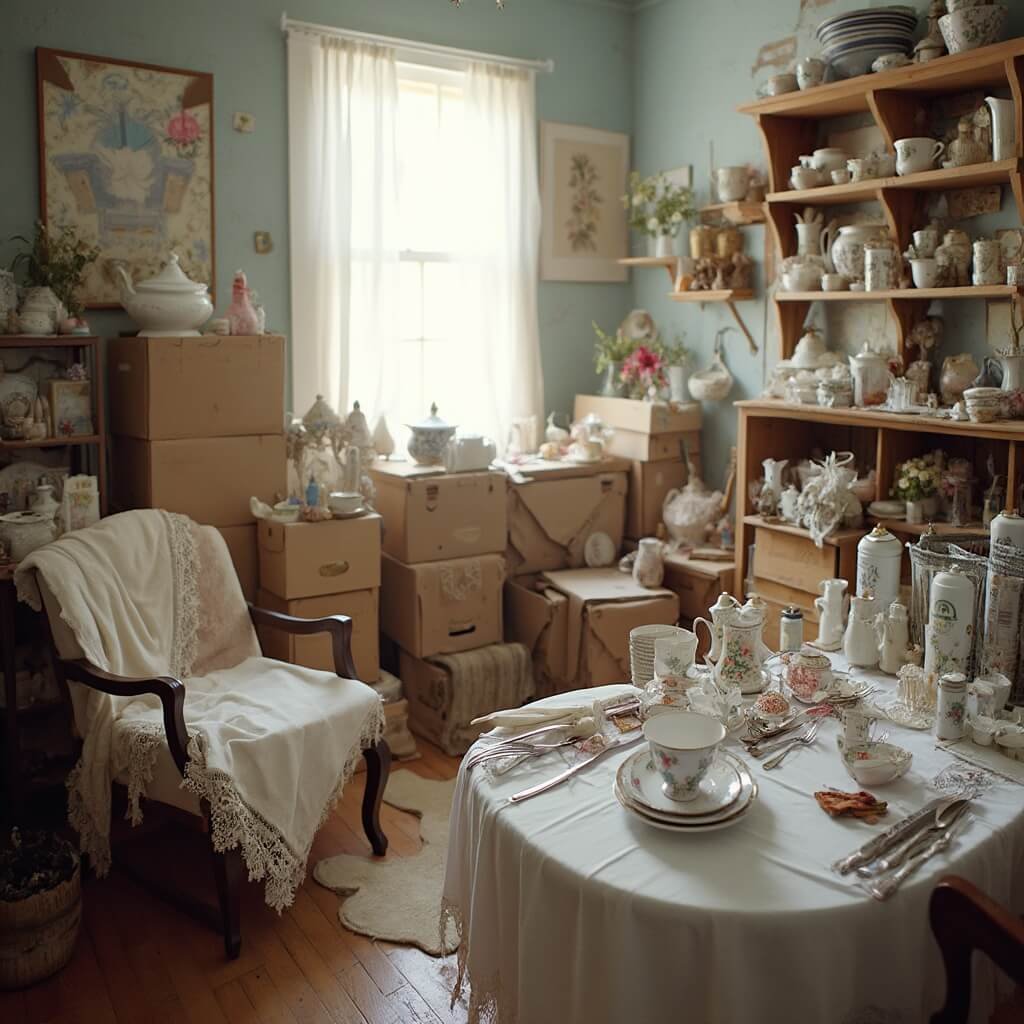
For more inspiration on creating beautiful and unique wedding settings, explore our wedding decor ideas and discover other budget-friendly wedding ideas.
👇Shop the Look Here👇
### Grouping Decor Elements
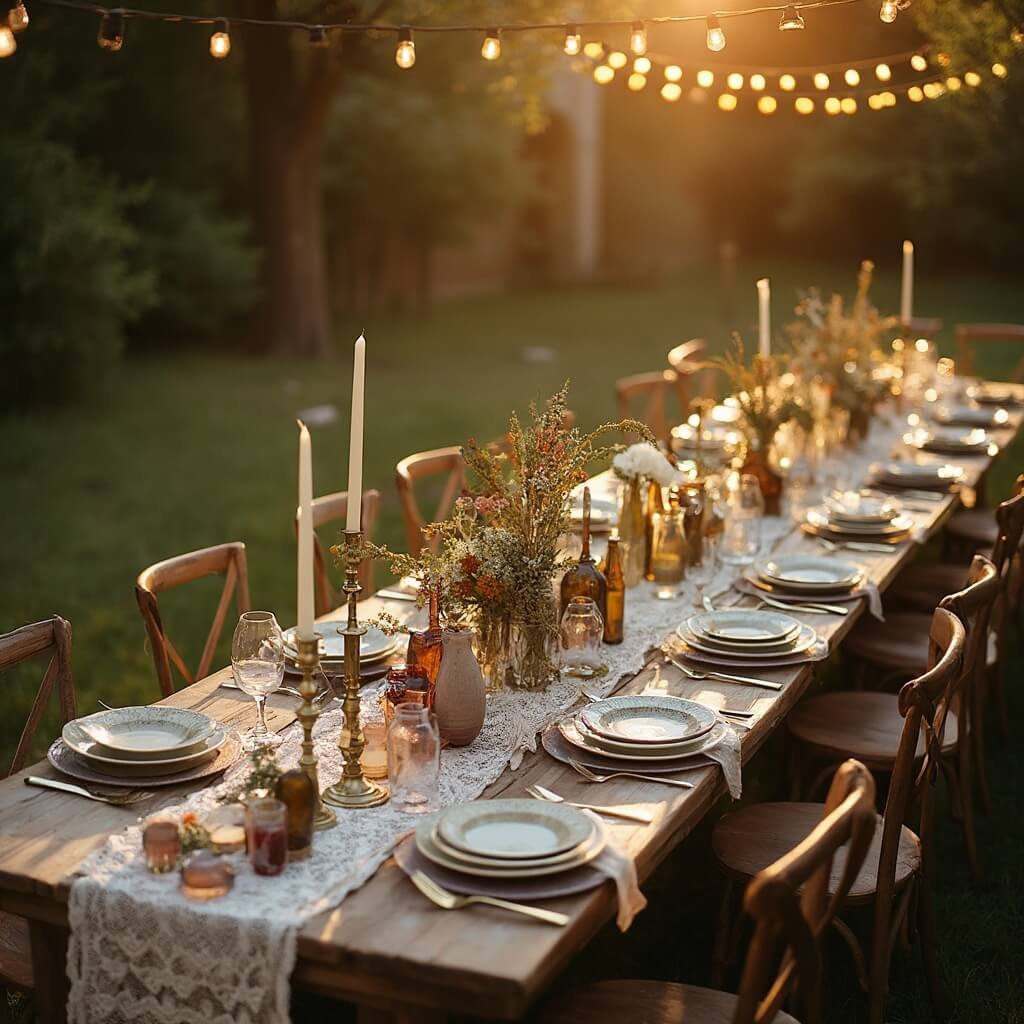
**Group them by height and glass tone** rather than trying to match them exactly, and a table full of different vessels starts to look like a florist did it on purpose. Old wine bottles are **particularly good value** — spray-painted or left bare with just the label soaked off, they make convincing rustic centerpieces for the cost of whatever you were already drinking. **Candleholders** work on the same logic: mismatched candlesticks and **glass votives**, grouped with candles of varying heights but similar wax tone, read as layered rather than jumbled.
### Versatile Thrift Finds
**Teacups deserve** a mention on their own because they’re one of the cheapest, most abundant things in any charity shop and one of the most versatile. Pour wax into a thrifted teacup and you’ve got a candle centerpiece or a **wedding favour** that costs you almost nothing beyond the wax itself. I’ve seen couples do an entire top table lined with **teacup candles** in different patterns, which is a detail guests actually comment on.
Save this article
Enter your email and we'll send it straight to your inbox.
**Frames are the other great workhorse** of thrifted decor. They come in every size, every finish, always sitting in a box near the till for a pound or two. Use them for **welcome signs**, bar menus, table numbers, seating charts — anything that needs to look presentable and framed rather than propped against a vase. Paint a mismatched pile of frames one unifying colour and they stop looking like a job lot from a house clearance and start looking chosen. **Mirrors and old window panes** do a similar job for signage, especially if you’re comfortable with a paint pen or some vinyl lettering — a window pane leaning against an easel with your seating plan written across it in white paint looks far more expensive than it was.
### Lighting, Furniture, and Bigger Pieces
**String lights** are worth collecting even if they seem like an odd thing to thrift. A single strand from a charity shop won’t do much, but four or five collected over a few months create the kind of soft, abundant glow that a single rented set often doesn’t. Lanterns and old lamps do similar work — swap the electrics for an LED candle and you’ve got safe, atmospheric lighting without worrying about anything near fabric or hay bales getting too close to a flame.
**Furniture is where thrifting** stops being about small tabletop details and starts changing the actual feel of a space. A couple of vintage armchairs and a low table turn an empty corner into a lounge area guests will actually use, rather than walk past. An old bookcase or dresser makes a far more interesting spot for a guestbook or dessert table than a hired trestle table with a cloth over it. And if you can get your hands on an old suitcase or two, they make brilliant card boxes — line the inside with fabric, cut a slot if you’re feeling ambitious, and you’ve got something with actual character sitting by the entrance instead of a generic post box.
### Getting the Ceremony Space Right
The **ceremony backdrop** is where I think thrifted decor can look genuinely spectacular because it’s the one spot where you’re not constrained by table size or place settings — you’re building something from scratch. A wall of mismatched mirrors, shelves, and framed art behind where you’ll actually say your vows photographs beautifully and costs a fraction of a floral wall. Fabric panels, old wallpaper remnants, and thrifted frames arranged loosely around an arch achieve a similar effect for less outlay than most florists would charge for greenery alone.
**Down the aisle**, mason jars, shepherd’s hooks, and vintage lanterns do a job that fresh flowers alone would cost considerably more to do, and they hold up better if your ceremony’s outdoors and the wind picks up.
### Styles This Approach Can Pull Off
There’s a common misconception that thrifted decor only really works for a **rustic, barn-wedding look**, and it doesn’t — it just changes character depending on what you collect. **Vintage romantic** leans on floral china, cut glass, lace, and gold or brass frames. Rustic and farmhouse styles want **mason jars**, wooden crates, and linen runners.
**Boho and eclectic** thrives on colour and pattern clashing on purpose — mismatched cushions, patterned glassware, layered rugs in a lounge corner. Even a clean, modern minimalist look is achievable thrifted, though it takes more restraint: clear glass, plain white plates, black or metal frames, one **statement piece per table rather than a cluster**. It’s the hardest of the styles to thrift for, oddly, because minimalism doesn’t forgive mismatched anything — you need more patience to find enough matching pieces rather than fewer.
**Themed decor** is where thrifted shopping gets genuinely fun. I married a couple who’d met while backpacking, and their reception used an old globe as a guestbook, a stack of battered suitcases as card boxes, and vintage maps under glass as table numbers. Every piece came from charity shops and boot sales over about eight months. It cost them barely anything and looked more like them than any rented decor package ever could have.
### A Few DIY Projects Worth the Effort
Some thrifted pieces need a bit of work before they’re wedding-ready, and it’s worth budgeting an afternoon or two for the ones that matter most. **A large thrifted frame**, painted to match your palette, with craft paper and hand-lettering inside, makes a genuinely good-looking seating chart for the cost of a tin of spray paint. A tired metal or glass box can become a card box with a cut slot and a coat of paint — replace the glass if it’s cracked, and finish with dried flowers or twine so it doesn’t look like what it used to be, which was probably a biscuit tin. **Old bottles and jars** take spray paint well, and a coordinated set of them looks far more expensive grouped together than they cost individually.
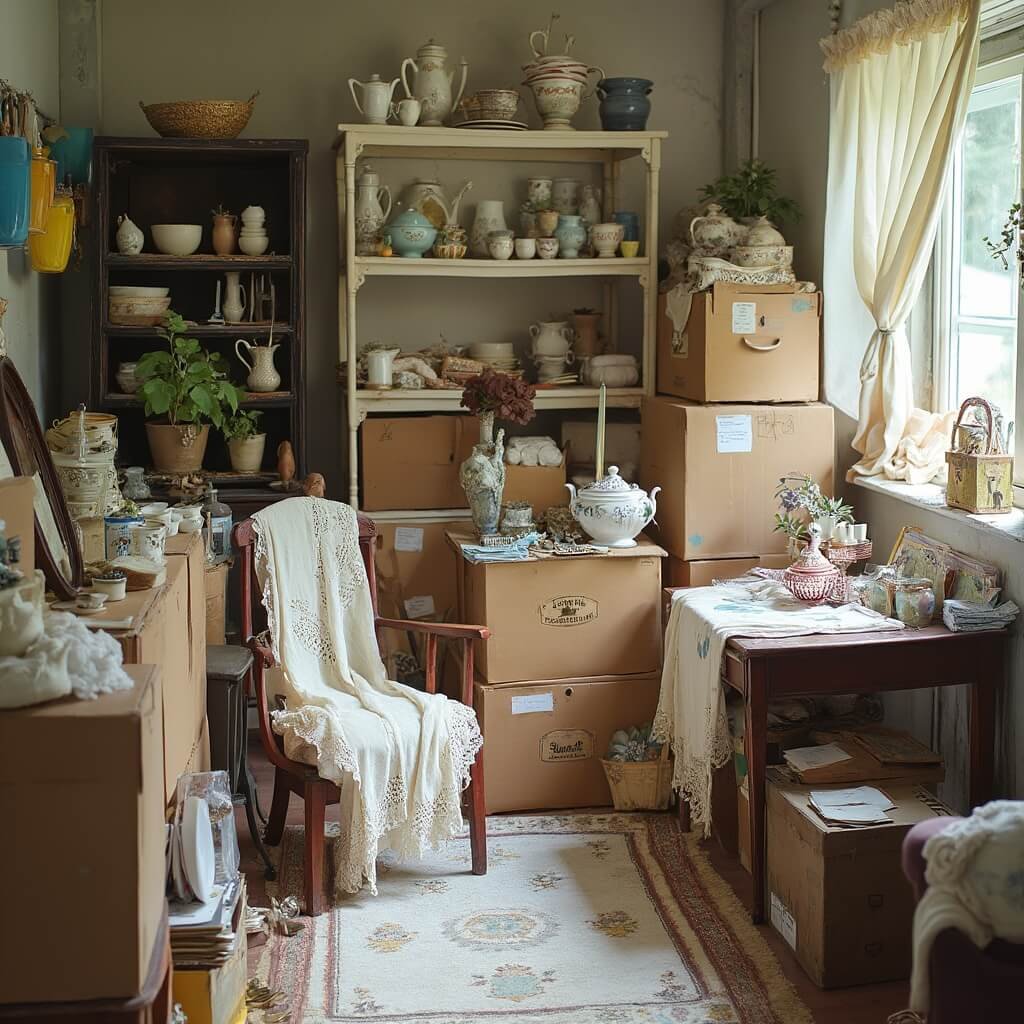
If you’re picking up **secondhand books for a pound each**, don’t feel obliged to keep them as books. Bunting made from torn pages, table confetti, or paper wrapped round bottles as labels are cheap ways to use pages you’d otherwise have to store.
### Making Mismatched Look Intentional
This is the actual skill in thrifted decor, and it’s the difference between a table that looks curated and one that looks like a house clearance. Stick to your **colour palette religiously** — it’s the single biggest unifying factor when nothing else matches. Repeat certain materials across the room, even if the individual pieces vary wildly: if brass shows up in your candlesticks, let it show up in a few frames too. Vary heights and shapes within a centerpiece cluster for visual interest, but keep each table roughly consistent with its neighbors, or the room stops reading as one wedding and starts reading as several small ones happening at the same tables.
Layering helps enormously and costs nothing extra. **A salad plate over a dinner plate** in a complementary tone looks deliberate even if both came from different charity shops in different months. Cluster vases or candles in odd numbers rather than even — it’s a small trick, but it consistently looks better. And put something underneath your centerpiece clusters, even if it’s just a scrap of thrifted lace or an old doily, because it anchors what would otherwise look like items placed rather than arranged.
Do check **glassware and ceramics** properly before the big day — a hairline crack that looked fine in a dim shop can be a genuine hazard once it’s holding wine at a table full of people. Anything touching food should ideally be food-safe or covered with a liner, and any candleholder should be checked for stability; LED candles are worth using anywhere children or trailing sleeves are likely to be nearby.
Wash everything before the day, properly, not just a rinse — price sticker residue comes off far more easily with a baking soda paste than you’d think, and it’s worth doing this weeks in advance rather than the night before, when you’ll have forty other things demanding attention. Store finished pieces by category in labelled boxes, and work out in advance who’s actually setting the tables up on the day, because “we’ll sort it out then” is how good thrifted decor ends up shoved onto tables looking nothing like the **mood board** you spent months building.
If I were advising a couple starting from nothing, I’d say this: give yourself four to six months, pick your palette before you set foot in a single shop, and treat every trip as a small errand rather than an event — that’s how the good pieces turn up without you burning out on it. Thrifted wedding decor rewards the patient and punishes the rushed, but done properly, it’s one of the few ways to make a wedding look completely, unmistakably yours rather than hired for the day.
For more tips on creating a personalized wedding atmosphere, check out these [thrifted wedding decor ideas](https://ideastoknow.com/thrifted-wedding-decor-ideas/) and [10 thrift store wedding decor finds](https://artsyfartsylife.com/10-thrift-store-wedding-decor-finds-that-are-cheap-chic-and-charming/).
👇Shop the Look here 👇
Want to keep this one?
We'll email you the link so you can find it again later.