Reception Decor: Where to Spend, Where to Save, and What Actually Matters
Reception decor is the thing couples either obsess over for a year or panic about six weeks out. Both approaches, in my experience, lead to roughly the same place — a room that looks lovely for four hours and a bank balance that takes a bit longer to recover. So let’s start with what reception decor actually is, because the word gets used so loosely it’s almost meaningless.
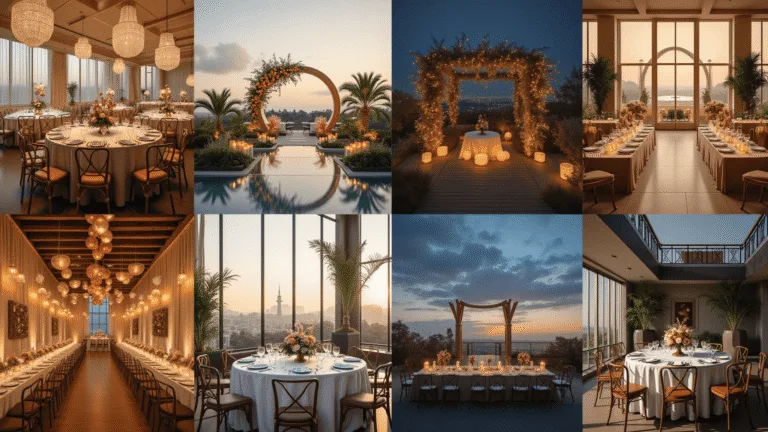
Reception decor is everything that transforms a hired space — a marquee, a barn, a hotel ballroom, a golf club function room — into somewhere that feels like it belongs to you. It’s the entrance, the tables, the lighting, the bar, the cake table, the dance floor, any lounge or photo area, signage, and the small personal touches scattered through all of it. It is not, despite what some venues will have you believe, just “flowers on tables.” That’s one piece of a much bigger picture.
What Reception Decor Is Actually For
Good decor does four jobs at once, and most couples only think about one of them.
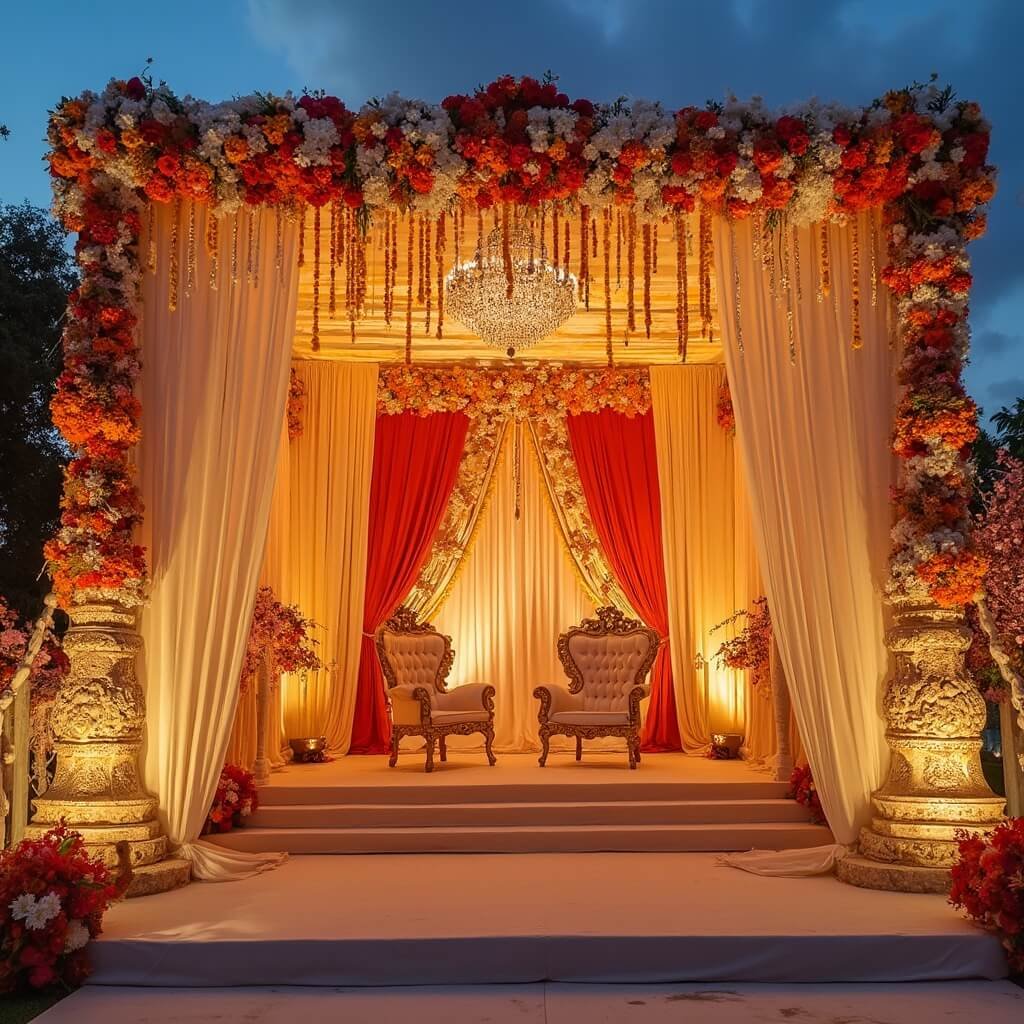
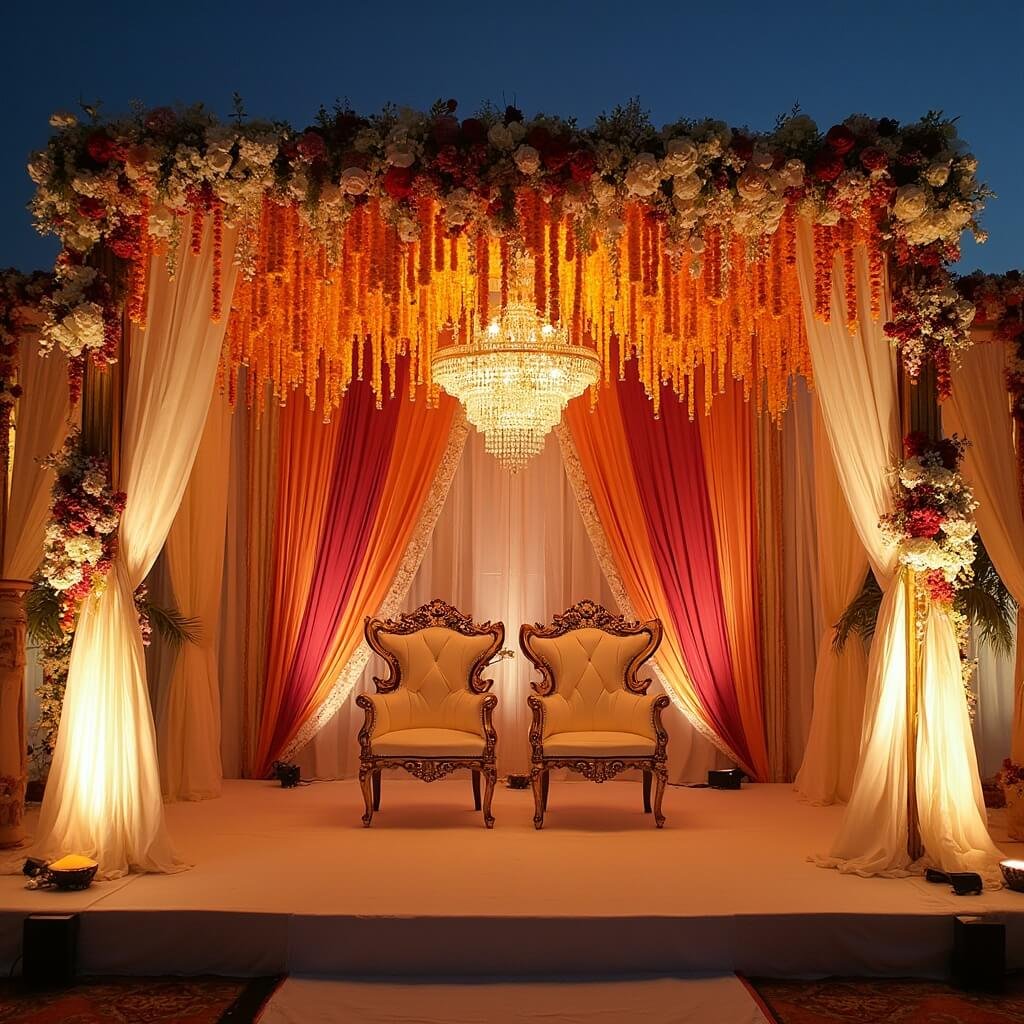
First, it creates a visual identity — a consistent thread running through the room so it doesn’t feel like several different events bolted together. Second, it makes guests comfortable and helps them find their way around: where’s the bar, where do I sit, where are the loos. That second one gets ignored constantly, and it shouldn’t, because a beautiful room where nobody can find their table number is not a successful room. Third, it gives you and your photographer something to work with — decent light, a backdrop that isn’t a fire exit sign. Fourth, it supports whatever the day is actually for, whether that’s a wedding celebration, a corporate brand event, or a cultural ceremony with its own visual grammar, like the stage-focused design of many Indian wedding receptions.
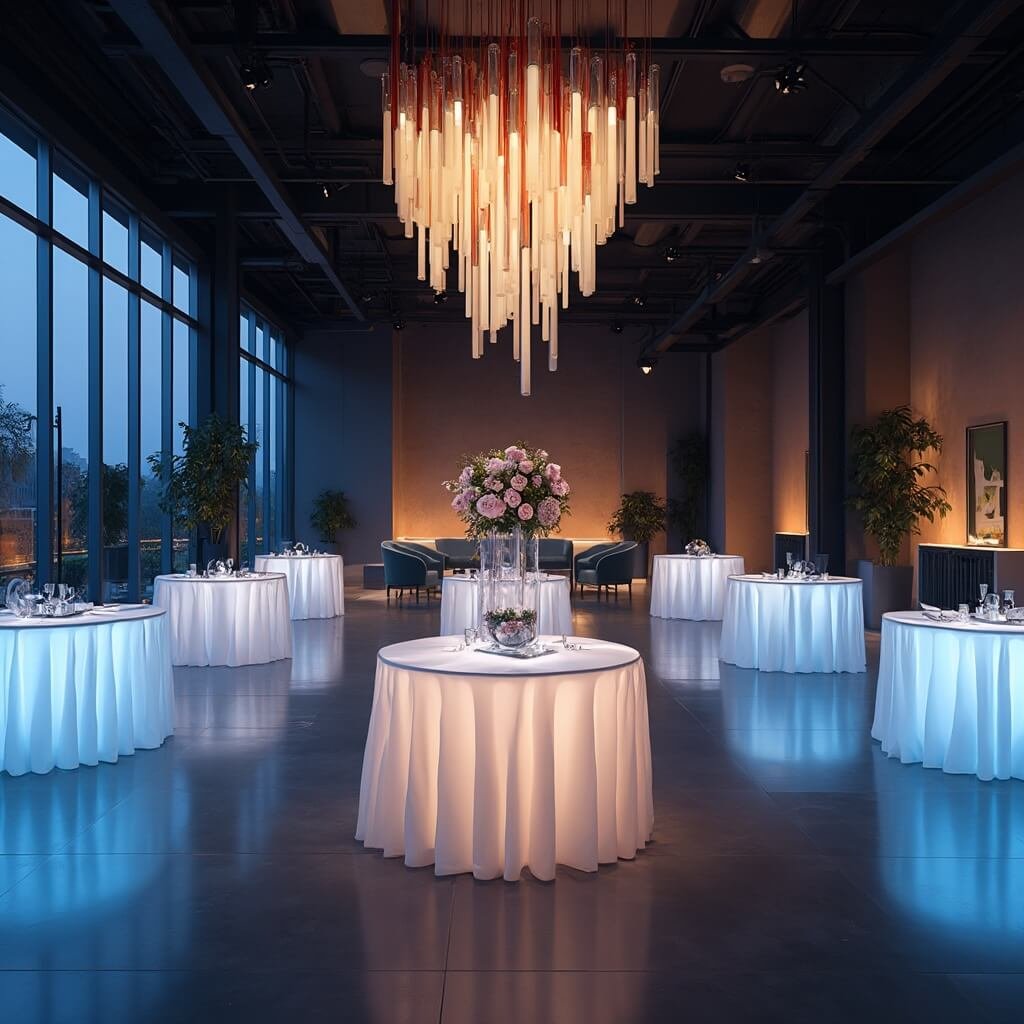
Not every zone deserves equal attention, and this is where I see budgets wasted. For a typical Western wedding reception, your highest-impact areas are the entrance, the dining tables, the dance floor, the lighting rig, and one strong photo backdrop. For an Indian wedding reception, the stage backdrop and entrance arch usually eclipse everything else in both cost and visual weight. For a corporate reception, you genuinely don’t need much — a well-planned seating layout, decent lighting, and one impactful feature (a striking floral piece, a good rug, an art wall) will outperform a room stuffed with generic branding.
Start With the Venue, Not the Pinterest Board
Before you choose a single colour swatch, walk the venue properly. I mean actually walk it — the entry corridor, the cocktail area, the main room, the outdoor space if there is one, even the route to the toilets. Note the ceiling height. Note what the light does at 4pm versus 8pm versus 10pm, because a room that looks golden and forgiving at sunset can look flat and grey under fluorescent strip lighting an hour later. Ask about rules on candles, confetti, and hanging things from the ceiling — venues vary wildly here, and I’ve seen couples order a beautiful suspended installation only to find out three weeks before the day that nothing can be fixed to the beams.
Take photos. Take measurements. It sounds unglamorous, but it’s the single most useful hour you’ll spend on decor planning, because every subsequent decision — table shape, centerpiece height, where the welcome sign goes — depends on knowing the actual room, not the room in your head.
Choosing a Theme, Style, and Palette Before You Buy Anything
Pick your theme before you buy a single item. Classic, rustic, modern, garden, cultural — whatever it is, decide early, because decor bought piecemeal without a theme tends to look exactly like that: piecemeal.
Stick to two or three main colours, then vary the shades within them. A wedding in “blush and sage” doesn’t mean one pink and one green — it means three or four tones of each, which is what stops a palette looking flat or, worse, like a school project. Your decor should feel connected to your invitations and to your ceremony design, but — and I’ll push back on the conventional advice here — it doesn’t need to match exactly. A relaxed, wildflower-strewn ceremony can absolutely lead into a slightly more polished, candlelit reception. Guests won’t clock the shift as a mismatch; they’ll experience it as the day building in atmosphere, which is usually what you want anyway.
Materials matter more than people think. Wood, acrylic, mirror, linen — each carries its own mood, and mixing too many can make a room feel indecisive.
What Reception Decor Actually Costs
This is the section couples skip to, so let’s not pretend otherwise.
For a US wedding with 80–120 guests, decor typically runs $3,500–$8,000. DIY-heavy weddings can bring that down to $1,500–$2,500, while luxury setups — 150+ guests, full floral installations, rented lighting rigs, specialty furniture — climb to $12,000–$15,000 or more. Within that budget, florals tend to eat the largest share, roughly 35–45%, followed by lighting at 20–25%, and rentals — furniture, linens, specialty tableware — at 15–20%.
Indian wedding reception decor operates on a different scale and structure. An elegant banquet hall setup might run ₹2–5 lakh, a fully designed reception with a custom stage and lighting rig ₹5–12 lakh, and luxury setups with architectural structures and imported flowers ₹15–50 lakh or more. The stage alone can absorb 30–40% of the entire decor budget, which tells you where the visual priority sits in that tradition.
Corporate receptions need far less. Spend on lighting, get the seating layout right, add one genuinely impactful piece — that’s usually the entire brief, and it’s the one I find most refreshing to work on precisely because nobody’s asking for seventeen types of candle holder.
A Rough Timeline That Actually Works
I once had a couple ring me eight weeks before their wedding asking where to “start” on decor, having already booked a marquee, a band, and a florist independently of each other with no shared brief. It took a fair bit of untangling. So here’s the order I’d actually suggest:
- Identify which zones of the venue need decorating and settle on an overall style
- Set your decor budget and start a mood board — even a rough one, photos saved on your phone count
- Book major rentals and statement pieces early: furniture, linens, lighting rigs, these get booked up
- Order personalised items — welcome sign, seating chart, table numbers — with enough lead time for reprints if you spot a typo
- Finalise centerpieces, linens, and any large decorative elements
- In the final week, confirm all personalised items have arrived, label boxes by zone, and write an actual setup plan with someone assigned to run it
That last point matters more than it sounds. On the morning of a wedding, nobody wants to be the person deciding where the seating chart goes while also trying to get dressed.
DIY or Professional — Being Honest About the Trade-Off
DIY decor saves money, and it lets you put your own hands on something, which some couples genuinely want. It works best for smaller weddings or simpler designs — a few dozen jam-jar centerpieces, hand-lettered signs, that sort of thing. But it’s time-intensive, it adds setup-day stress that you don’t need on top of everything else happening that morning, and the quality can vary table to table in ways a guest will notice even if they can’t say why.
Professionals bring expertise with florals, lighting, and anything structural — a suspended installation, a flower wall, rigging that needs to hold weight safely. You pay more, and you have less control over the tiny details. Neither approach is “correct.” I’d just say: be honest with yourselves about how much spare time and patience you’ll actually have three weeks out, because that’s usually the deciding factor, not the budget.
Save this article
Enter your email and we'll send it straight to your inbox.
For more insights on creating the perfect atmosphere for your celebration, check out our wedding decor ideas and fun wedding reception ideas.
👇Shop the Look Here👇
Building the Room, Zone by Zone
Once you’ve got a theme and a budget, the actual work starts, and it helps to think in zones rather than trying to design the whole room at once.
The entrance sets expectations before a guest has even sat down. A welcome sign — wood, acrylic, mirror, whatever suits your palette — does more work than people give it credit for, partly because it’s the first thing guests photograph and partly because it tells them, instantly, whether this is a formal room or a relaxed one.
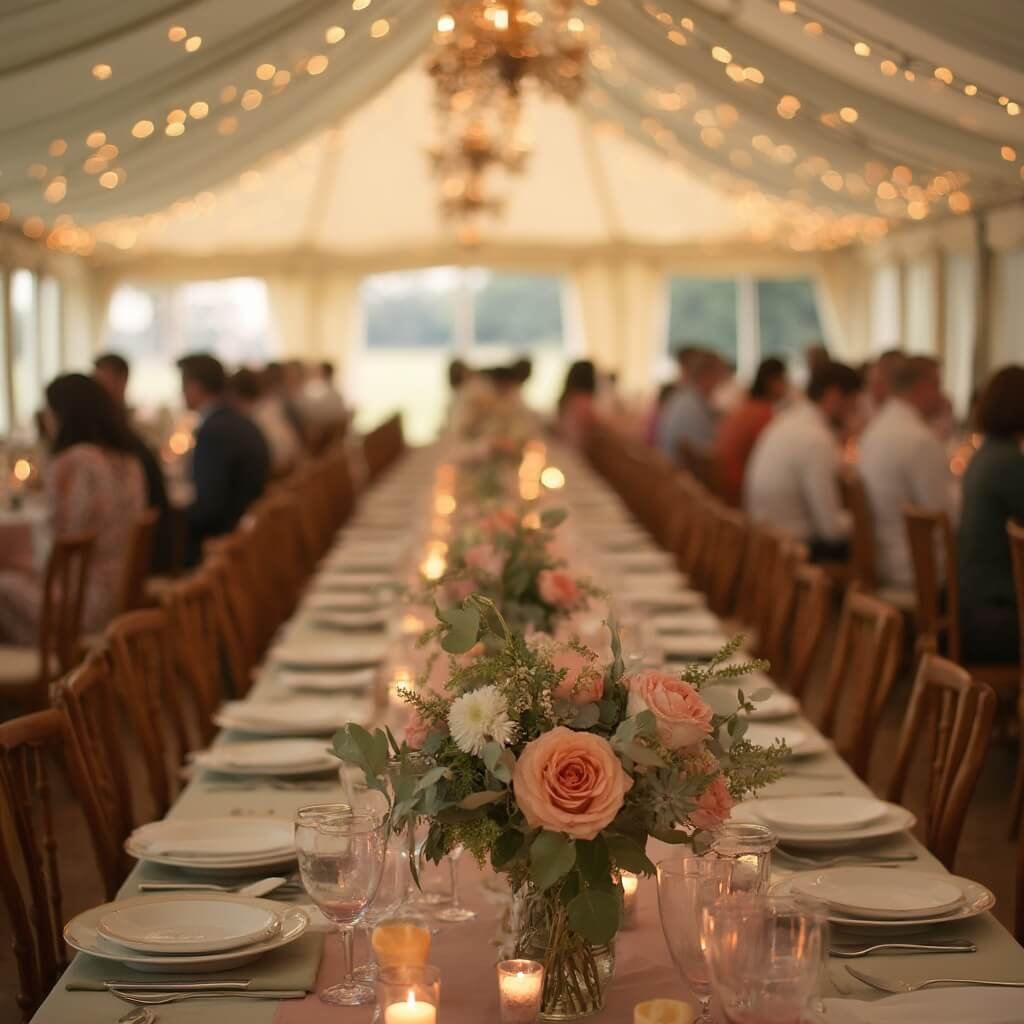
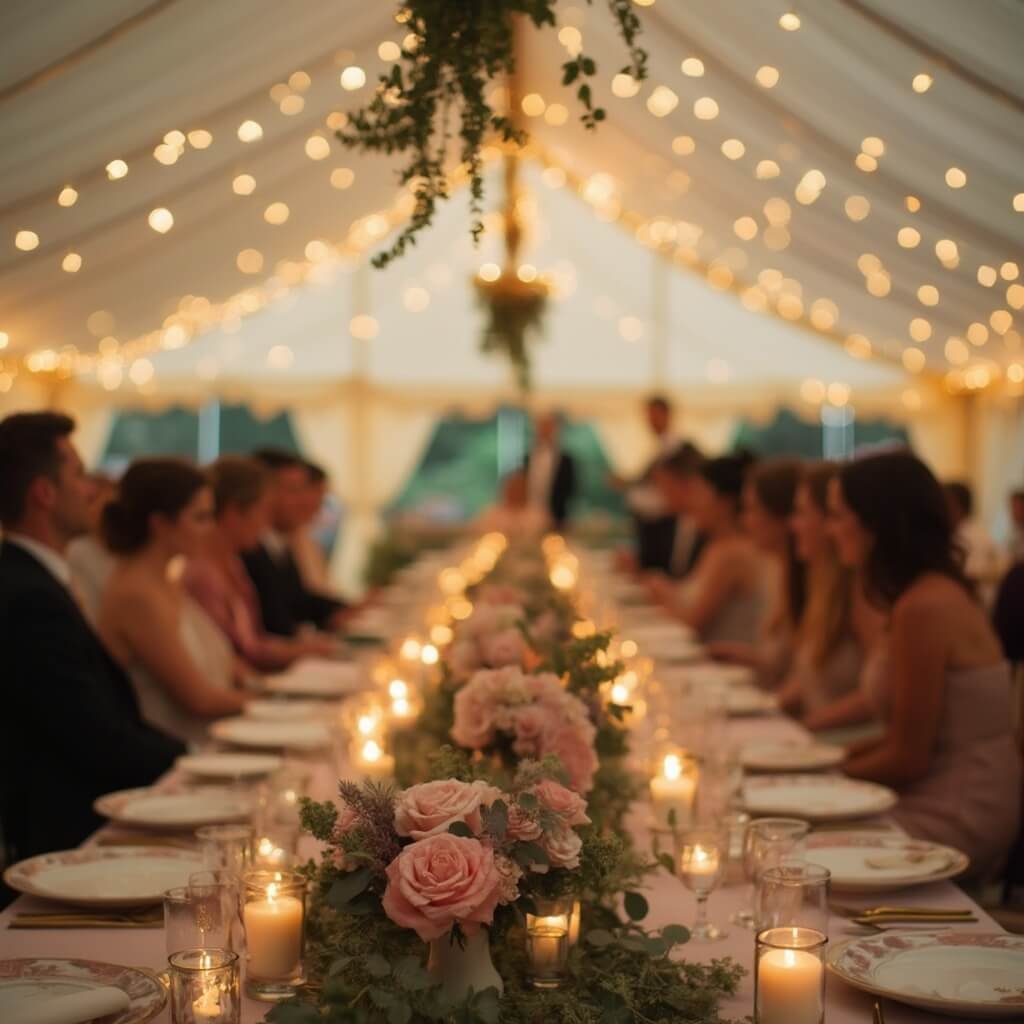
Tables are where most of the budget visibly lands, and rightly so, since guests spend more time looking at their own table than anywhere else in the room. Centerpieces do the heavy lifting here — tall arrangements with branches or trailing florals if you want drama and can afford the flowers, low arrangements with candles and bud vases if you’d rather people could actually see each other across the table and have a conversation.
The sweetheart table or top table needs slightly more attention than a standard guest table, mostly because every photograph of the couple that day gets taken in front of it. A backdrop — draped fabric, a floral wall, a lighting feature, even just well-placed greenery — gives those photos somewhere to breathe.
The dance floor deserves more thought than “clear some space and add a DJ.” A custom monogram projected onto the floor, a ring of florals around the edge, a canopy of fairy lights overhead — these are the details that make dancing photos look intentional.
Lounge areas and photo corners are the parts couples forget until a planner mentions them, and then can’t imagine the reception without. A couple of sofas, some cushions, a rug, a low table with candles — suddenly you’ve got somewhere for guests who don’t want to dance to sit and actually talk, which older relatives in particular will thank you for.
None of this works, though, without the unglamorous layer underneath it: signage. Seating charts, bar menus, dessert labels, directional signs — get these wrong or leave them out and the loveliest florals in the world won’t stop guests feeling lost.
Matching Decor to Style, Properly
Once the zones are sorted, style is really about restraint and consistency rather than piling on more.
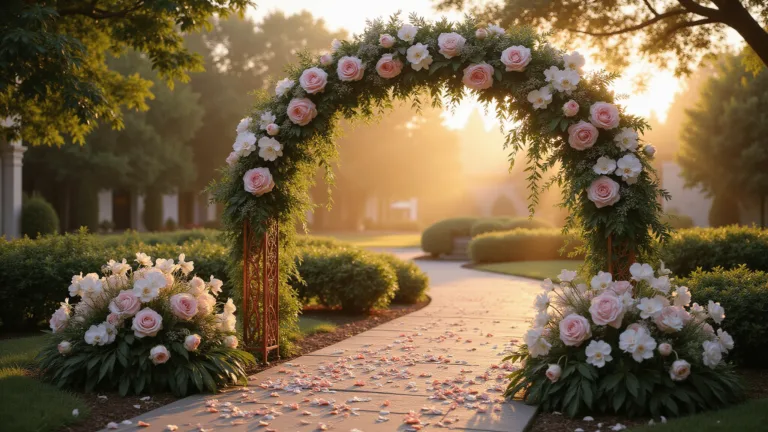
Classic and romantic decor leans on soft palettes — ivory, blush, dusty pastels — paired with lush florals and candlelight; it’s forgiving and rarely dates badly. Rustic decor, especially in barns, works best when it embraces the building rather than fighting it.
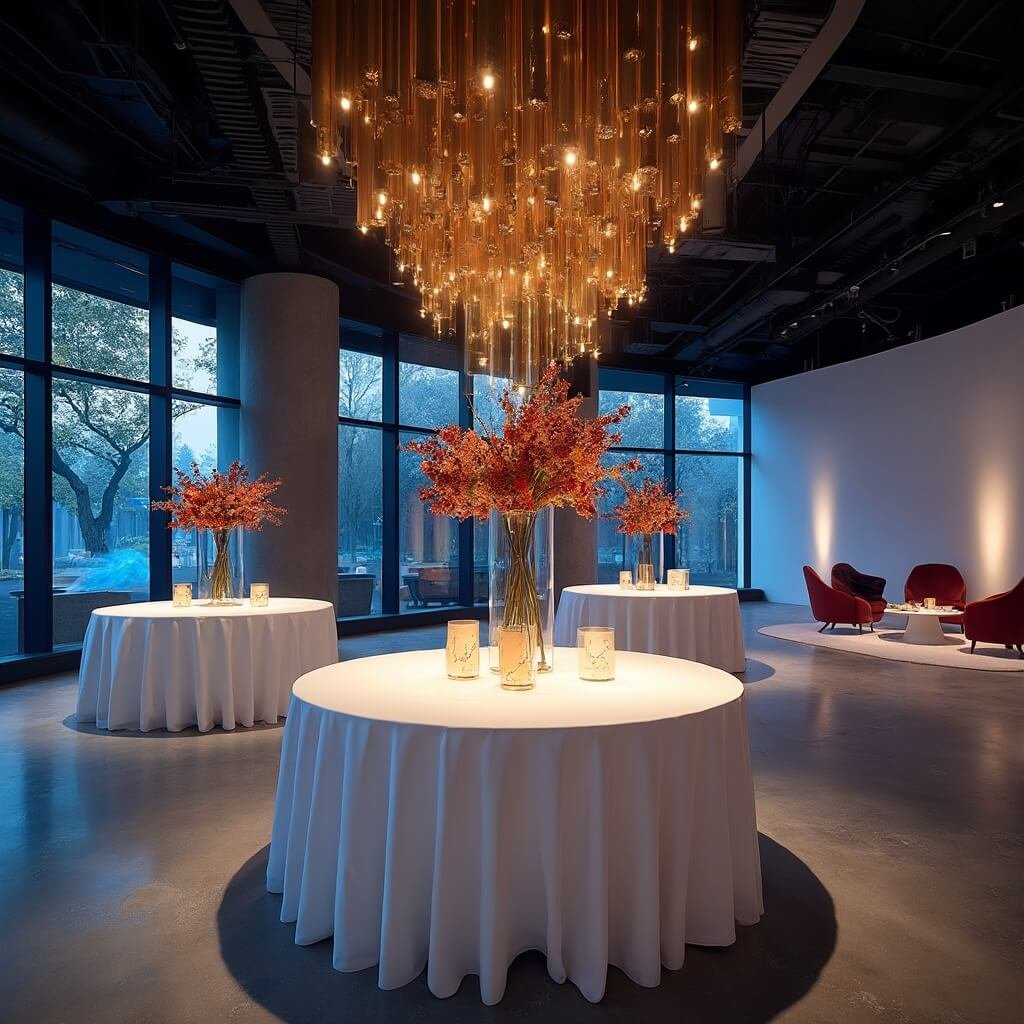
Garden and destination weddings mostly need you to trust the setting. Natural florals, soft lighting, a relaxed table layout — over-decorating a beautiful outdoor space is one of the more common mistakes I see.
Lighting Is Doing More Than You Think
If I had to tell a couple to reallocate money from one category to another, it would almost always be florals to lighting. Lighting affects every photograph taken after 6pm, it changes how a room feels within minutes, and it’s often underspent relative to its impact.
String lights and fairy light canopies remain popular for good reason — they’re inexpensive relative to the atmosphere they create. Candles and lanterns add warmth that no LED quite replicates, though venues increasingly restrict open flame.
Where I’d Actually Spend the Money
If you take one thing from all this: reception decor works best as a small number of well-executed decisions rather than a long list of adequate ones. Pick your two or three highest-impact zones — for most weddings, that’s the entrance, the tables, and the lighting — and put your real budget there.
Good reception decor should feel inevitable in hindsight, like the room could never have looked any other way, and that only comes from decisions made early and kept simple. For more ideas on how to nail every detail, visit Wedding Decor Checklist: Nail Every Detail and get inspired by Easy Ways to Decorate Your Wedding Reception.
👇Shop the Look here 👇
Want to keep this one?
We'll email you the link so you can find it again later.