What Is a Drop Waist Wedding Dress, and Is It Right for You?
A drop waist wedding dress is one of those styles brides either spot instantly across a shop floor or walk straight past without quite knowing why it caught their eye. If you’re asking what one actually is, here’s the straightforward answer: it’s a gown where the bodice extends below your natural waist, usually stopping somewhere near the high hip, before the skirt begins. That seam placement is the whole story. Everything else — the drama, the vintage nod, the elongated look brides keep describing to me in fittings — follows from that one structural decision.
I should say upfront: I’m not a dressmaker. I’m a celebrant who’s stood at the front of enough ceremonies to have opinions about what works when a bride is walking, standing still for twenty minutes, then sitting down for a meal. So this is less about construction technique and more about what actually happens to a dress — and a person — on the day.
Definition and Key Characteristics
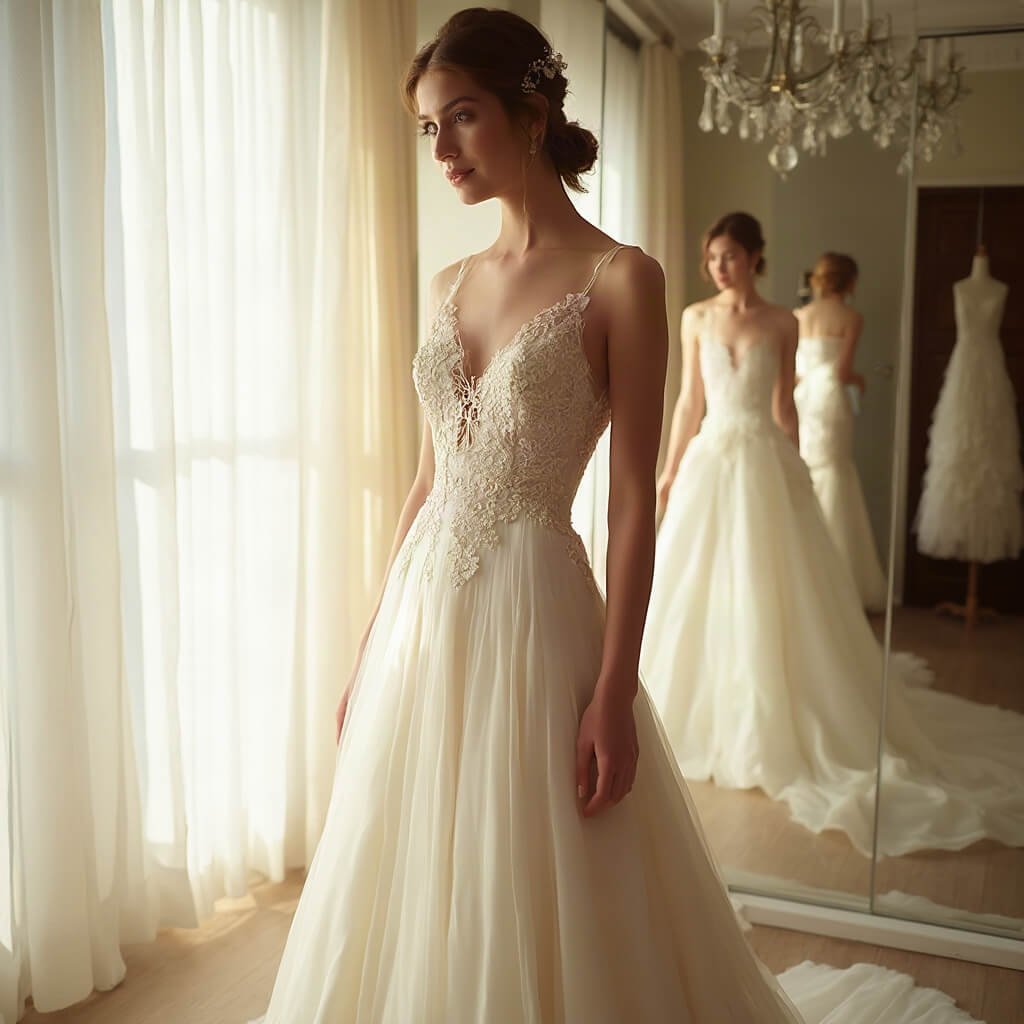
The defining feature is simple: the waist seam sits several inches below where your body naturally narrows, often resting near the high hip rather than the ribcage or true waistline. That’s different from an empire waist, which sits just under the bust, and different again from a natural-waist gown, which follows your actual shape. A drop waist does neither. It creates its own line, independent of where your body actually bends.
What that lowered seam does visually is worth understanding before you try one on, because the effect can be surprising. It tends to lengthen the torso — sometimes dramatically — and makes a full skirt look more sculptural, almost architectural, because the eye reads the seam as a deliberate construction choice rather than a natural waistline. It draws attention to proportion in a way a lot of timeless wedding dress silhouettes don’t.
The shape of that seam itself varies. Some drop waists are straight across, giving a clean, almost geometric effect. Others dip into a V at the front — more romantic, closer to a basque waist in feeling even if the seam sits lower. A few designers get more adventurous with asymmetrical draping or pointed seaming that breaks the line up entirely. None of these is more “correct” than another; it depends entirely on what kind of bride you are.
How It Differs From Other Waistlines
It helps to see these side by side, because bridal consultants throw the terms around as if everyone already knows them, and honestly, most people don’t.
- Natural waist — skirt begins at your narrowest point; traditional and familiar.
- Empire waist — seam sits directly under the bust; relaxed, flowing, often forgiving.
- Basque waist — dips into a V at the front, usually paired with corseted or princess-style bodices.
- Dropped waist — extends below the natural waist toward the high hip; elongates the torso.
- Mermaid or fit-and-flare — these describe the skirt, not the waist, and can be combined with any of the above.
That last point trips people up constantly. A drop waist isn’t a skirt shape. It’s a waist placement that can sit above an A-line, a ballgown, a trumpet, almost anything. I’ve had brides come in asking for “a drop waist mermaid” as though it’s one fixed design, when really it’s two separate decisions stacked together.
Where the Style Comes From
The silhouette has an obvious ancestor: the 1920s, when low waistlines and long, straight torsos were the look of the decade. If you’ve seen photographs of flapper dresses, you already understand the visual logic — the waist drops, the body elongates, movement becomes looser below the hip.
But what’s on bridal racks now isn’t a costume recreation. Designers are pairing that vintage shape with modern corsetry, structured fabrics, dimensional lace, and skirts with real architectural weight to them. It’s an odd but effective combination — a 1920s silhouette built with 2020s engineering. The nostalgia comes from the proportions; the modernity comes from how precisely the thing is constructed underneath.
Why This Style Is Having a Moment
Bridal fashion coverage heading into 2026 keeps circling back to waist-focused design — corseted bodices, basque and drop waist seaming, sculpted tailoring paired with genuinely dramatic skirts. It’s a shift away from the softer, unstructured gowns that dominated for a few years, and towards something with more visible engineering. Matte satin, dimensional lace, sculptural pleating — these keep appearing together, and the drop waist is often the seam that holds all of it in place.
Part of the appeal, I think, is that it offers something other than the two silhouettes everyone already has in their head: the high-waisted A-line and the traditional mermaid. Brides who’ve tried on fifteen dresses that all start to blur together often perk up the moment something structurally different goes on. It doesn’t need excessive embellishment to look distinctive — the seam itself is doing a lot of the work.
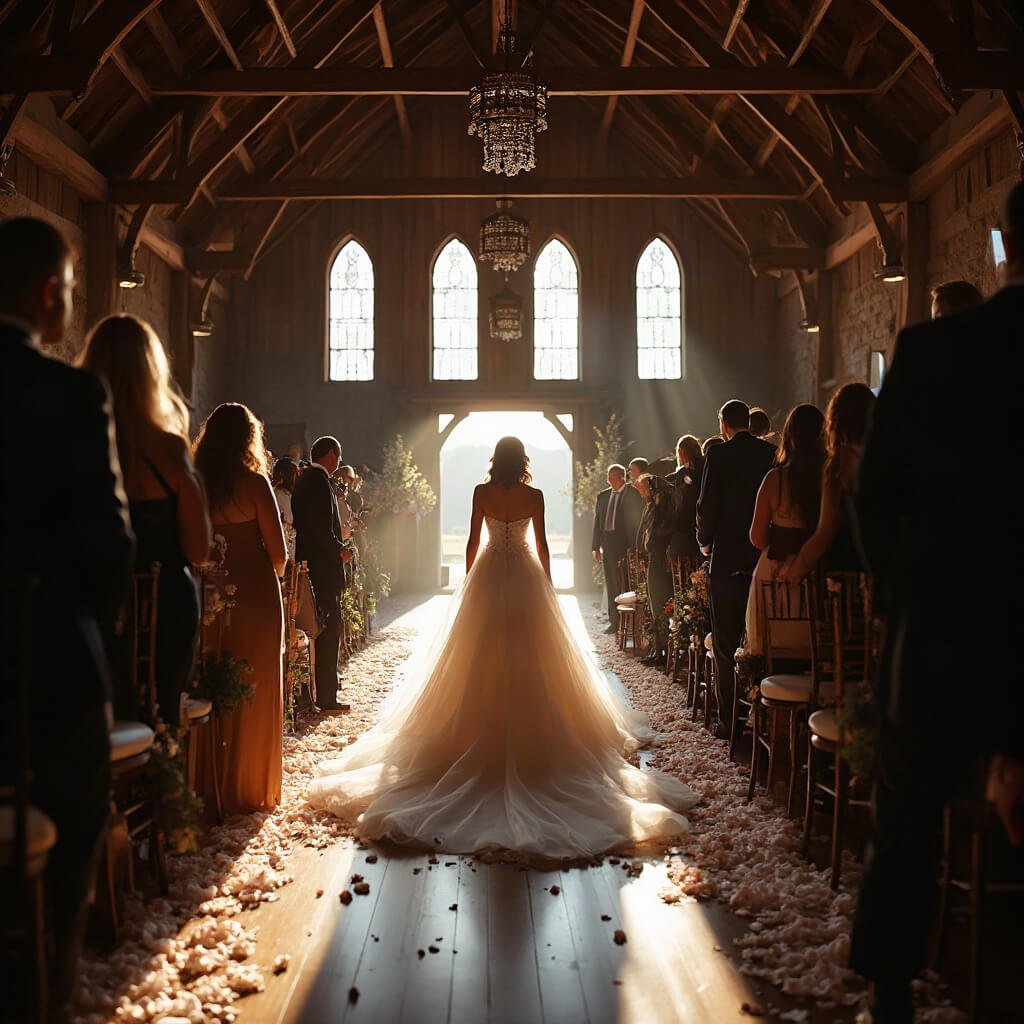
There’s also a vintage-modern tension that photographs well, which matters more than people admit when they’re choosing a dress. A long bodice creates a strong vertical line in pictures. Combine that with a full skirt and you get real proportion and drama, the kind that reads clearly whether you’re being shot front-on, in three-quarter profile, or mid-walk down an aisle. I’ve watched photographers visibly brighten when a bride with a structured drop waist gown walks past a window — the seams catch the light in a way a soft, unstructured dress simply doesn’t.
The Different Silhouettes Within the Trend
This is where it gets genuinely varied, and where I’d encourage you to try more than one version before deciding the style “isn’t you.”
Drop waist A-line.
The skirt widens gradually from the low seam. It’s the easiest to move in, the most forgiving for a long day of standing and walking, and probably the best starting point if you’re unsure whether you even like the silhouette.
Drop waist ballgown.
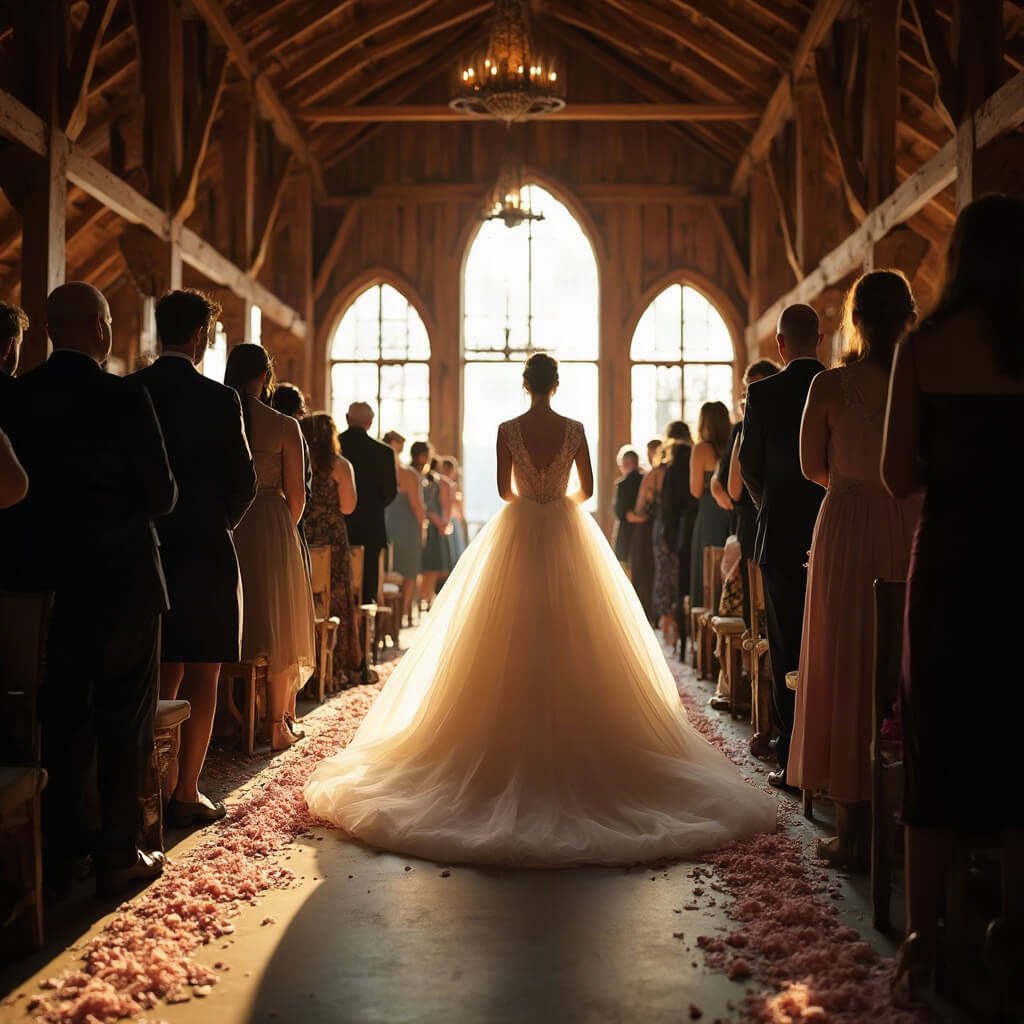
The bodice runs to the high hip before opening into real volume — silk Mikado, layered tulle, organza, sculptural pleats. This is the version for a ballroom, a cathedral, anywhere with the scale to match the drama. I married a couple in a converted barn with twelve-foot ceilings a few years back, and the bride’s ballgown drop waist genuinely needed that height — in a lower-ceilinged room, it would have overwhelmed the space rather than complemented it.
Drop waist fit-and-flare or trumpet.
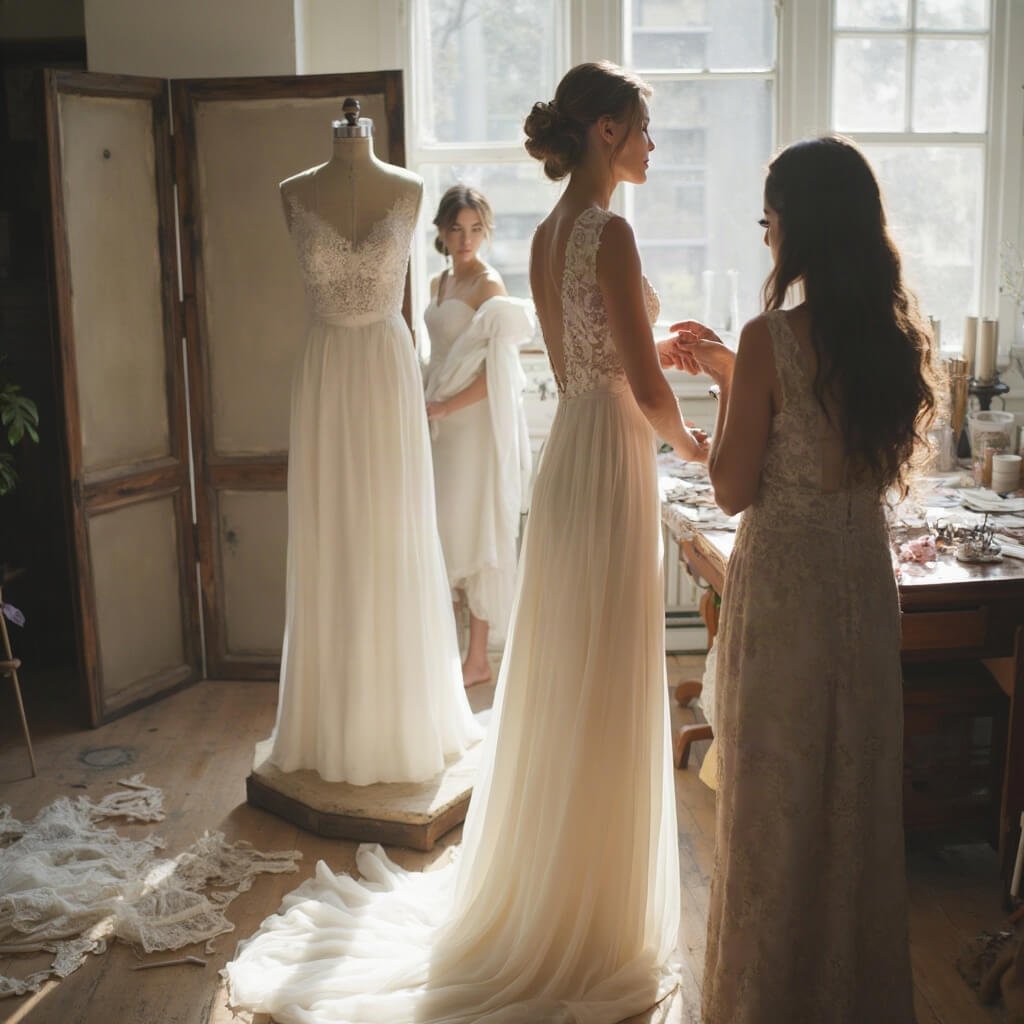
This follows the body closely through the hip before flaring, combining the elongating effect with something more figure-defining. It asks a lot of the fitting process, particularly around the upper thigh, so budget extra time for alterations here.
Drop waist mermaid.
Similar logic, more dramatic flare, usually near the knee. Gorgeous, body-conscious, and genuinely worth testing for sitting and dancing before you commit — more on that later.
Drop waist sheath or column.
A straight, minimal fall from the low seam. This is the quiet option, the one that suits a registry office or a smaller city wedding where you don’t want twelve yards of tulle negotiating a narrow staircase.
Drop waist mini or two-event dress.
A shorter reinterpretation, sometimes with a detachable overskirt, built for a rehearsal dinner, a civil ceremony, or a second look at the reception.
Save this article
Enter your email and we'll send it straight to your inbox.
👇Shop the Look Here👇
Necklines, Sleeves, and What’s Happening Underneath
Necklines and Sleeves
The neckline matters more on a drop waist gown than people expect, mainly because the bodice is doing so much visual work already. A strapless neckline tends to suit the style best when the skirt is sculptural and the fabric is something with real body to it — satin, Mikado — because it keeps the eye travelling down that long seam without interruption. A square neckline does something similar but with more structure, which I’ve noticed appeals to brides who find strapless gowns slightly too soft or too bridal in the conventional sense.
Sweetheart necklines soften a heavily corseted bodice nicely, and off-the-shoulder necklines lean into the vintage reference properly, especially when paired with a fuller skirt and some lace detail. If you want something sleeker, a halter or high neck will balance out a dramatic skirt without fighting it for attention. A deep V works well structurally too, reinforcing that vertical line the drop waist is already creating, though I’d genuinely test one before the day itself — some gape or shift more than brides expect once they’re moving rather than standing still in a fitting room.
Sleeves are more about mood than function, though a long fitted sleeve does add a formality that a sleeveless gown simply won’t. Bishop or balloon sleeves bring in that vintage contrast nicely if the rest of the dress is quite clean. Detachable sleeves are a sensible compromise if you want coverage for the ceremony and something lighter once the dancing starts.
For more ideas, explore satin wedding dresses with sleeves, boho wedding dress styles, and open back wedding dress ideas.
What’s Happening Underneath
What matters more than any of this, in my experience, is what’s happening on the inside. Corset panels and boning are what actually hold that dropped seam in place all day, and the quality of that internal structure is the difference between a dress that still looks sharp at 11pm and one that’s slipped and bunched by the time the cake’s been cut. Flexible spiral steel stays tend to be more forgiving than rigid boning if you’re planning on sitting for a meal, which — unless you’re having a standing reception — you almost certainly are. Ask whether the structure is sewn in permanently or can be adjusted during alterations. It’s a question most brides don’t think to ask until it’s too late to change much.
Fabric Choices and What They Do to the Silhouette
Structured and Soft Fabrics
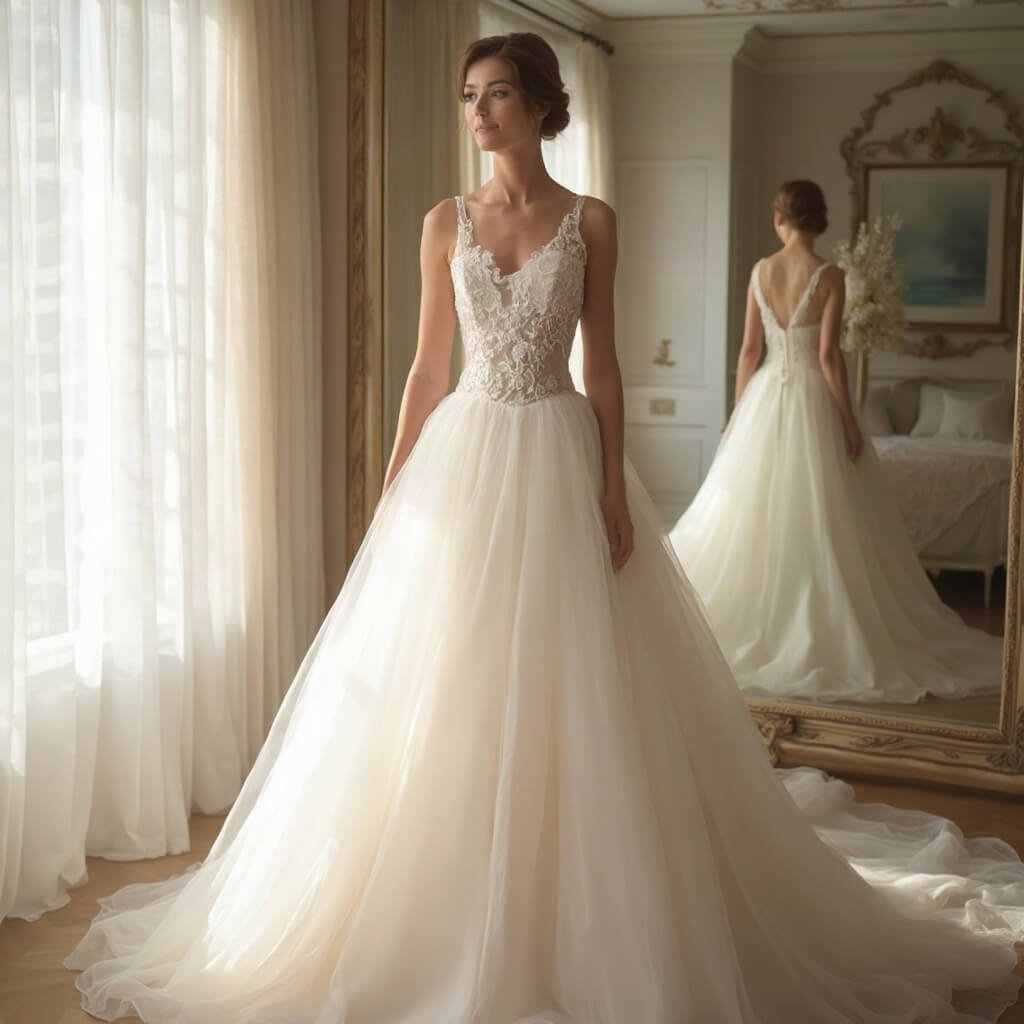
Structured fabrics like silk Mikado, duchess satin, and taffeta hold that architectural look the drop waist is known for. They’re the fabrics that make a straight seam look genuinely sculptural rather than just a line on a dress. Softer fabrics — tulle, organza, chiffon, crepe — do something different; they let the bodice keep its shape while the skirt moves more freely, which some brides find considerably more comfortable over a long day, particularly if the wedding’s outdoors or in warm weather.
Lace and beading can emphasise the seam itself, which is a nice way of drawing attention to the dress’s defining feature without adding a separate belt or sash. Art Deco-style beading leans into the 1920s reference quite directly, while a single unembellished fabric lets the construction speak for itself. I’ve seen both work equally well — it really depends on whether you want people to notice the beadwork or the shape first.
For more inspiration, see these ethereal wedding dress ideas and read The Return of the Drop Waist: A 2026 Bridal Trend Brides Are Loving.
Does This Suit Every Body Shape?
Finding the Right Seam Placement
Short answer: yes, broadly, though the details matter enormously. I’d push back gently on the idea — which does the rounds in bridal shops — that a drop waist “only suits” tall or straight figures. What actually matters is where that seam sits on your particular body, not your body type in the abstract.
For petite brides, a slightly raised drop waist (still lower than natural, just not dramatically so) tends to avoid shortening the legs visually. Tall brides generally have more room to play with — longer bodices, bigger skirts, bolder seaming all tend to sit well. Curvy or hourglass figures often do beautifully in a corseted drop waist, provided the skirt doesn’t pull tightly across the high hip, which is the most common fit complaint I hear secondhand from brides describing their alteration appointments. Straighter or more athletic figures can use the seam to create shape that might otherwise come from a fitted waist, especially with some draping or a fuller skirt added.
If you’d rather not draw attention to your waist at all, for whatever reason, a fluid column in one unbroken fabric with no contrasting seam will do that far better than trying to avoid the style altogether. The drop waist doesn’t have to shout.
For a comparison with another defined shape, explore this mermaid wedding dress silhouette guide. You can also read Drop Waist Wedding Dresses: A Comprehensive Guide.
Worth Weighing Up Before You Commit
Practical Considerations
There’s a lot to like here, but I’d be doing you a disservice if I didn’t mention the practical downsides, because they come up often enough in my own experience watching brides move through a wedding day.
- A low, rigid waist seam can genuinely restrict sitting, particularly in a car or at a long reception table — test this properly, not just perching on the edge of a fitting-room stool.
- Boning that’s comfortable for twenty minutes in a shop can feel very different after eight hours.
- Alterations around the high hip tend to be more involved than a standard hem or bust adjustment, so factor in extra time and, often, extra cost.
- A full skirt attached to a structured bodice can be heavier and warmer than it looks on the hanger — something to consider for a summer wedding.
None of this means skip the style. It means test it properly: sit, walk, climb a few stairs if there are any nearby, and ask the consultant directly about alteration scope before you fall in love with something that might need significant reworking.
A Few Practical Shopping Notes
Before You Decide
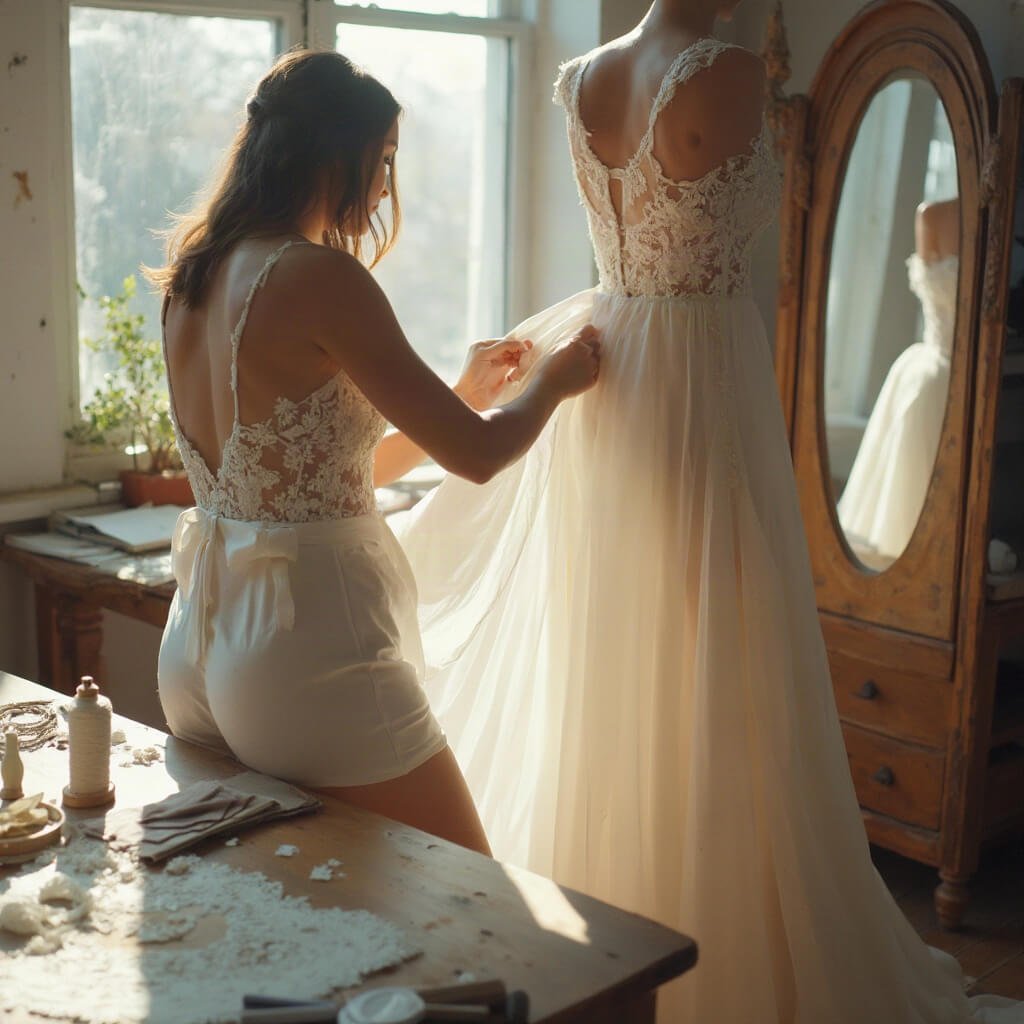
Bring the shoes and undergarments you’ll actually wear on the day — it sounds obvious, written down, but I’d guess half the brides I talk to afterwards admit they tried the dress on in trainers. Ask specifically where the seam sits on your body and whether it can move during alterations, because a centimetre either way changes the whole proportion. And sit down in the dress before you decide. Every consultant will let you do this if you ask, and most won’t suggest it unless you do.
My honest recommendation, after watching a fair number of these dresses in action rather than just on a hanger: if you’re drawn to a drop waist wedding dress, try at least three different skirt silhouettes underneath it before deciding the shape isn’t for you, because the waist seam and the skirt are doing genuinely separate jobs, and it’s easy to write off the whole style because one particular version didn’t suit. The seam might be exactly right even if the first skirt you saw it on wasn’t.
👇Shop the Look here 👇
Want to keep this one?
We'll email you the link so you can find it again later.