What Is a Mermaid Wedding Dress, and Is It Right for You?
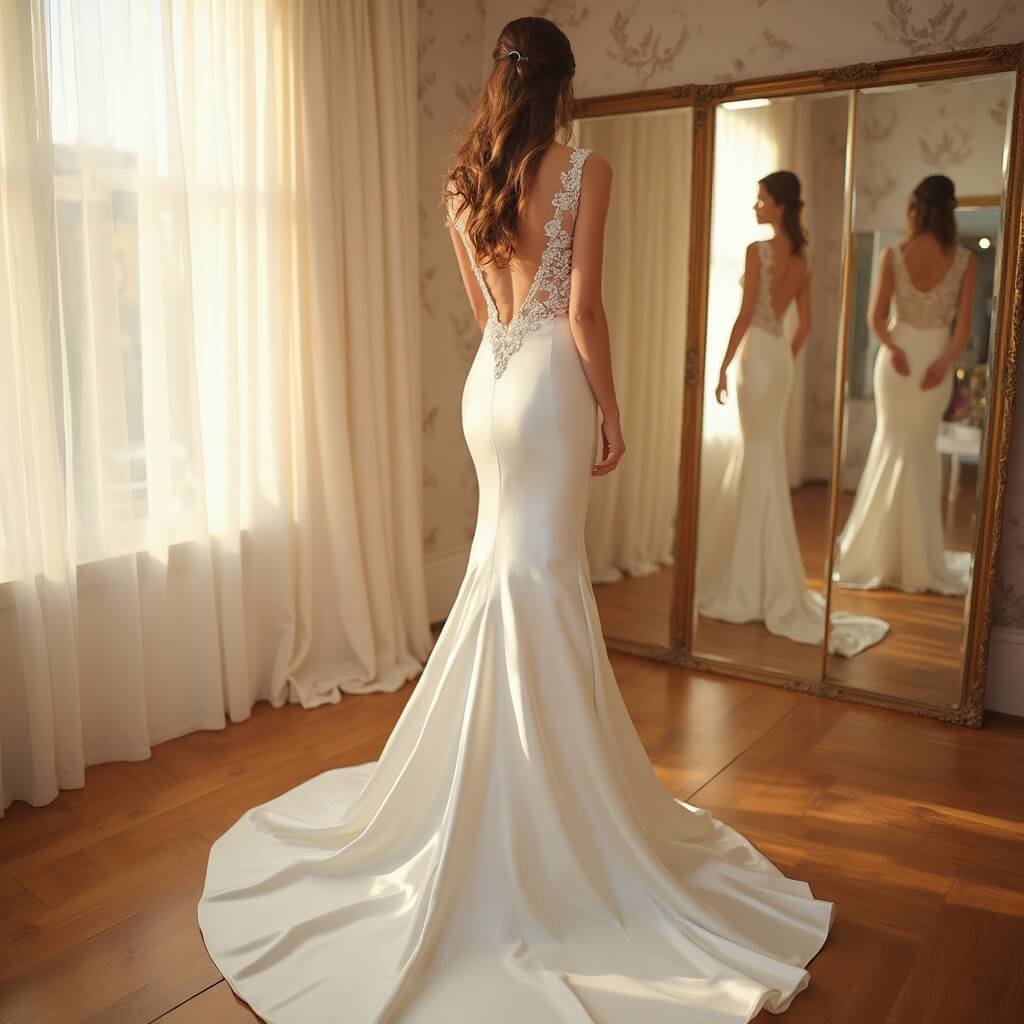
A mermaid wedding dress is a fitted gown that follows the body closely through the bodice, waist, and hips, then flares out dramatically at or just below the knee. Think fin, not funnel. That flare is what gives the silhouette its name, and it’s also what makes it one of the most talked-about — and occasionally misunderstood — dress shapes in bridal fashion.
I’ve stood at the front of a lot of ceremonies watching brides walk towards me in mermaid gowns, and there’s a particular moment it creates that other silhouettes don’t quite manage. The fabric skims the body until the knee, then suddenly there’s movement and volume. It’s theatrical. Guests notice. If you want a dress that makes people quietly gasp rather than politely admire, this is usually the shape that does it.
The Basic Shape, Explained Properly
The defining feature is the hourglass emphasis. The bodice, waist, and hips are all contoured tightly, often with boning or internal structure doing the real work, before the skirt breaks away into a flare. That contrast between snug and sudden is the whole point. Remove the drama of the flare and you’ve basically got a fitted column gown, which is a different thing entirely.
This silhouette has stayed near the top of bridal preference lists for years, and I don’t think that’s mysterious. It flatters curves, photographs beautifully from every angle, and suits the formality most couples still want from a wedding day, even a relatively casual one. Bridal houses keep producing new versions season after season — Justin Alexander, Sophia Tolli, Enzoani, Allure — because demand hasn’t dropped off in the way some other trends have. A boho fit-and-flare might feel very 2019 in a few years. A well-cut mermaid gown tends not to date the same way.
Mermaid, Fit-and-Flare, Trumpet, A-Line — Sorting Out the Confusion
This is where I get the most questions, usually over email a few weeks before a couple has even booked a dress appointment. The terms get used loosely by retailers, and it’s genuinely confusing.
- Mermaid vs fit-and-flare: A fit-and-flare dress widens gradually below the hips — softer, more forgiving, less of a hard break in the line. A mermaid gown snaps out sharply at or below the knee. If you’re not sure which you’re looking at, watch where the fabric changes direction. Gradual widening is fit-and-flare. A sudden flare is mermaid.
- Mermaid vs trumpet: Technically, a trumpet gown flares at mid-thigh, higher up the leg than a mermaid, which holds its fitted line down to the knee before releasing. In practice, plenty of bridal brands use the two words interchangeably, and I’ve seen the same dress labelled “mermaid” on one website and “trumpet” on another. Don’t rely on the label alone — try the dress on and look at where it actually flares.
- Mermaid vs A-line: An A-line is fitted at the bodice and then opens from the waist in a gentle A shape. It’s far more forgiving through the hip and thigh. If a mermaid feels too committal, an A-line is usually the alternative brides ask me about next.
None of this is pedantry for its own sake. Knowing the actual difference saves you turning up to three appointments expecting one shape and being shown another because a website used the wrong word.
The Design Details That Make a Mermaid Gown Work
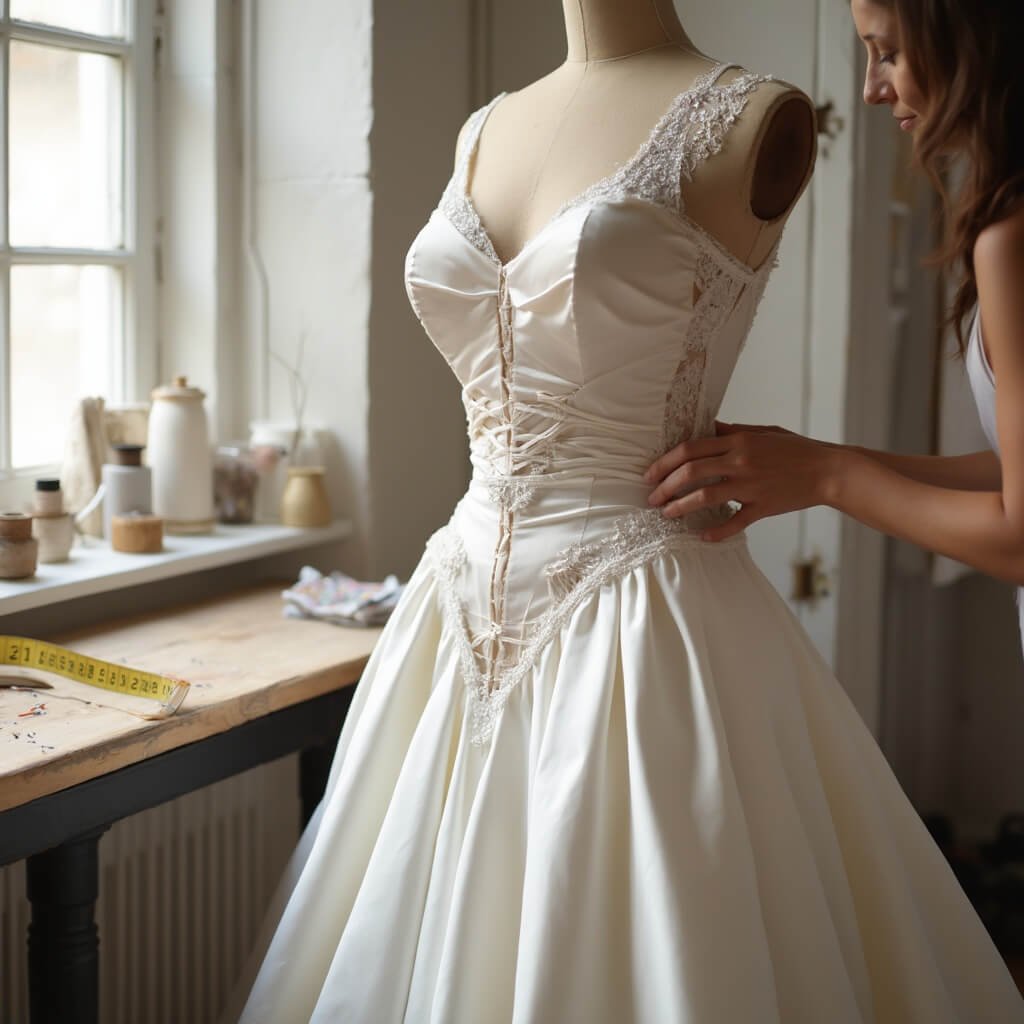
The bodice is doing more structural work than in almost any other silhouette. Boning, internal corsetry, and moulded cups aren’t decorative extras here — they’re what keeps the dress on and the shape correct. A mermaid gown with a weak or unstructured bodice will crease, gape, and generally fight you all day.
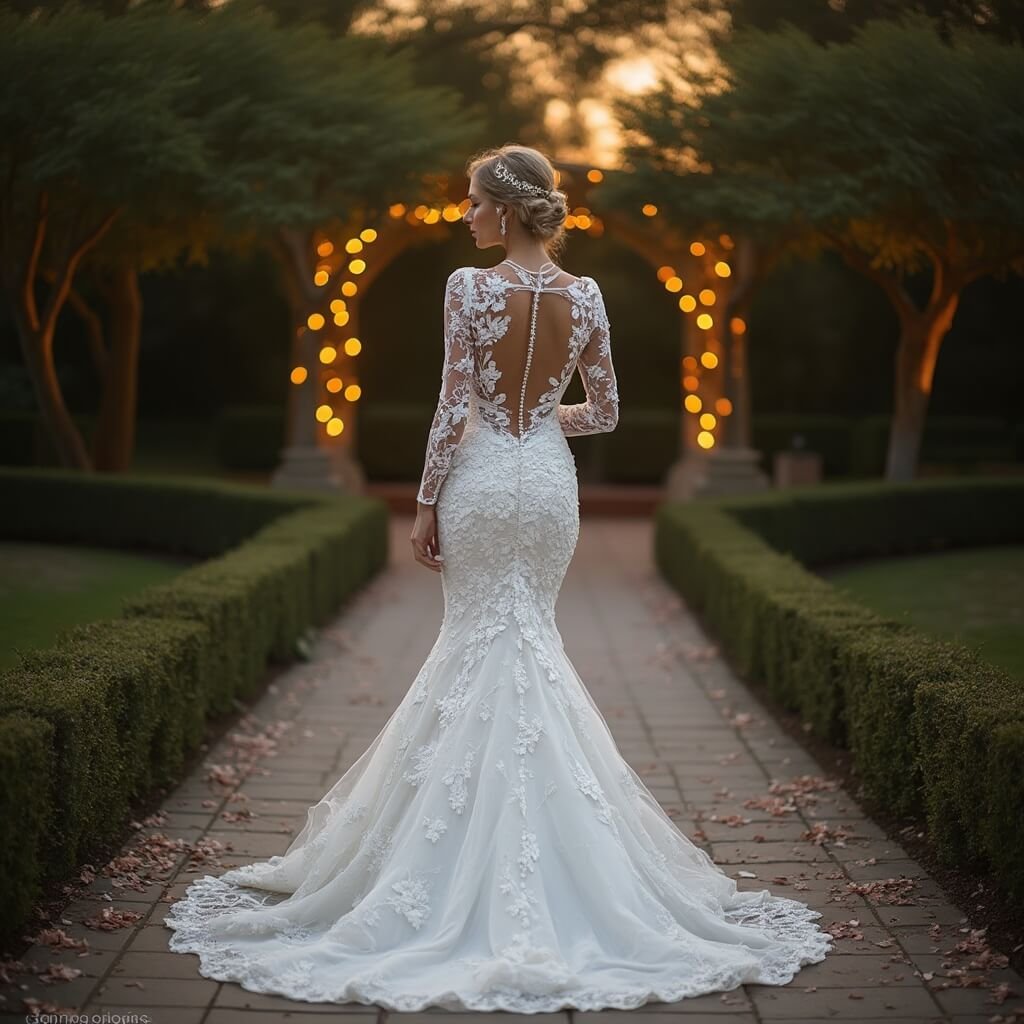
Necklines vary more than people expect. Sweetheart and strapless remain the classic pairing, but plunging V-necks, halters, and illusion necklines all show up regularly on mermaid gowns now. Long sleeves have become genuinely popular too, partly for cooler-season weddings and partly because a sleeve balances out a very fitted skirt rather nicely — it stops the whole look feeling like one long unbroken statement.
Fabric choice changes the entire personality of the dress. A mikado or heavy satin mermaid gown reads architectural, almost sculptural — sharp lines, strong presence. Lace and tulle soften that considerably, giving you the same shape with a much more romantic, undone feel. I once did a rehearsal for a bride in a heavy crepe mermaid gown who genuinely couldn’t sit down in the venue’s antique chairs without help — the fabric simply didn’t bend the way she needed it to. We ended up finding her a wider bench seat for the register signing. Small thing, but it’s exactly why fabric weight deserves more thought than most brides give it during the excitement of a fitting.
Back details matter more on a mermaid gown than almost any other style, mainly because so many mermaid dresses are worn with the back visible for a good portion of the ceremony — walking down the aisle, standing at the front, turning to face guests. Illusion lace backs, corset lacing, covered buttons — all common, all worth trying in person rather than judging from a photo.
Who Actually Suits a Mermaid Silhouette
The honest answer: more people than the bridal magazines suggest. Yes, it’s often described as the go-to for hourglass figures, and there’s truth in that — the shape naturally follows a defined waist and balanced bust-to-hip ratio without much intervention. But I’d push back a little on the idea that it’s only for hourglass bodies.
With the right construction — vertical seams, strategic ruching, a flare placed slightly higher for a petite frame — a mermaid gown can flatter pear shapes, rectangular frames, and shorter brides too. A good bridal consultant should be adjusting the design details to your body, not just handing you the sample closest to your size and hoping. If a boutique tells you a mermaid “won’t work” for your shape without trying any variations first, I’d take that with a pinch of salt and try somewhere else.
Where I’d genuinely flag caution is mobility. This is a snug dress, by design, and that means walking, sitting, and dancing all require a bit more thought than they would in a flowing A-line. It’s not a reason to avoid the silhouette — it’s a reason to actually test those movements in the fitting room rather than just standing in front of the mirror admiring the shape.
For more on this topic, explore our selection of mermaid wedding dresses with sleeves. For those considering various sizes, take a look at our plus size wedding dresses.
👇Shop the Look Here👇
Types and Variations Worth Knowing About
Not all mermaid dresses are the same level of commitment, and I think this gets lost when people picture the silhouette. There’s the classic dramatic version — heavily fitted, bold flare, often with a train, the kind that photographs like something off a red carpet. Then there’s a softer take, sometimes marketed as a “soft mermaid” or blurring into fit-and-flare territory, where the fit through the hip is a touch more relaxed and the flare less severe. If the full drama feels like too much but you still want that shape in principle, ask specifically for the softer version. Boutiques usually have both hanging a few racks apart.
Neckline changes the whole character too. A sweetheart mermaid in lace reads romantic and fairly classic — it’s the version I see most often at country house weddings. A plunging V-neck in the same silhouette feels considerably more modern and, frankly, more daring. Long-sleeve mermaid gowns have become one of my favourite recommendations for autumn and winter weddings specifically, because they solve two problems at once: they add warmth and they balance out the fitted skirt so the eye has somewhere else to go.
Save this article
Enter your email and we'll send it straight to your inbox.
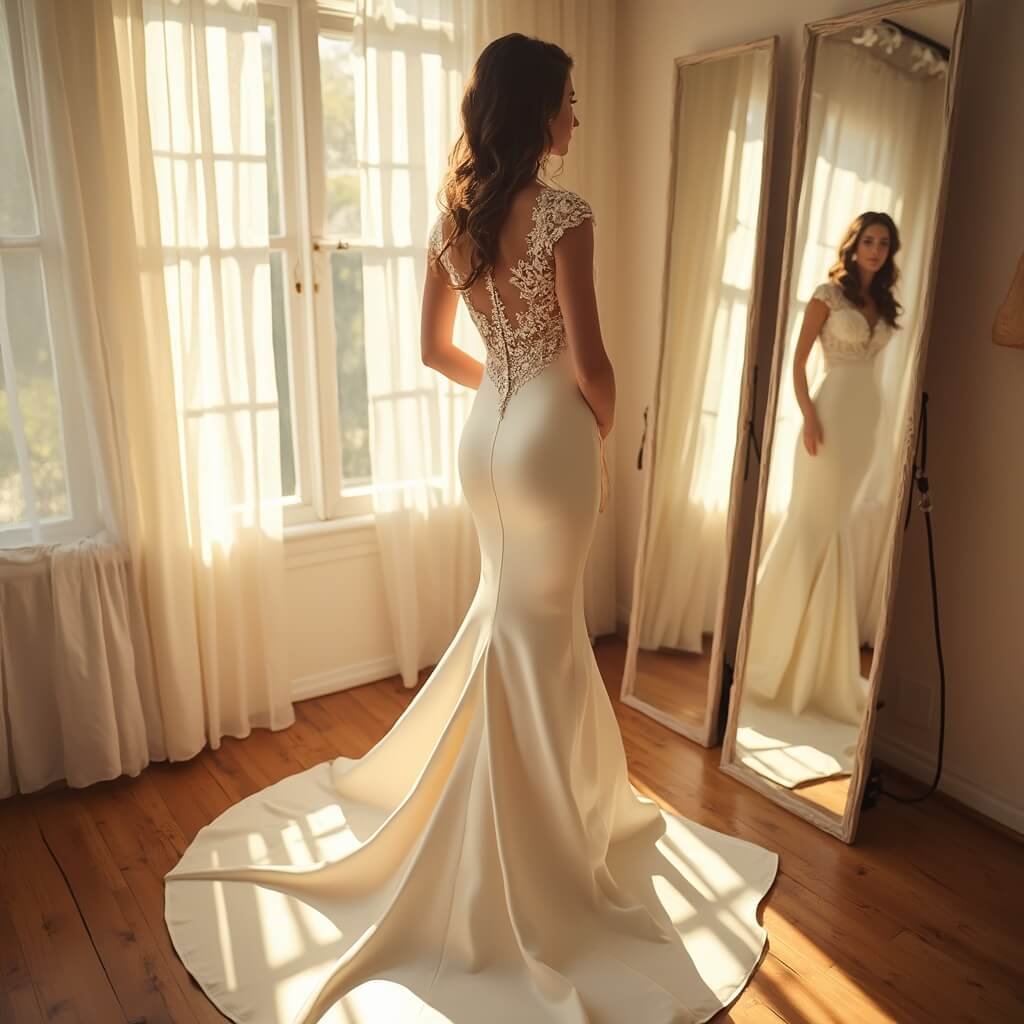
Then there’s the broader style category. A minimalist mermaid in clean crepe or matte satin, almost no embellishment, is having a real moment right now — brides who want the shape without the sparkle. At the other end, couture mermaid gowns loaded with hand-beading and appliqué are still very much alive in designer collections, for the brides who want maximum impact and have the budget for it. Somewhere in the middle sits the boho-leaning mermaid, softened with tulle overlays and looser lace, which tends to suit relaxed countryside or barn venues better than the sharper structured versions.
Actually Shopping for One
Price ranges genuinely span the whole spectrum here, more than people expect. There are accessible mermaid gowns at national chains and online retailers, and there are designer pieces that cost several times that. Fabric and embellishment level usually explain most of the price gap — hand-beading and imported lace cost real money, and it shows in the final price tag more than the silhouette itself does.
Where you buy shapes the experience as much as the dress does. Bridal boutiques and designer salons will usually let you try several mermaid variations side by side, which I think is genuinely the best way to learn what works on your body rather than guessing from photos. National chains like David’s Bridal carry mermaid and trumpet styles across a wide size range, often at a friendlier price point, and they’re worth a visit even if you end up buying elsewhere — trying dresses on teaches you more than browsing ever will. Online retailers have improved a lot too, with decent filtering by silhouette, neckline, and fabric, though I’d still be cautious ordering a fitted gown without trying a similar cut in person first.
When you do try one on, actually move in it. Walk the length of the shop. Sit down if there’s a chair. Do a small twirl if the flare has any give to it. Wear the heel height you’re planning for the day, because two inches changes your centre of balance more than you’d think in a dress this fitted.
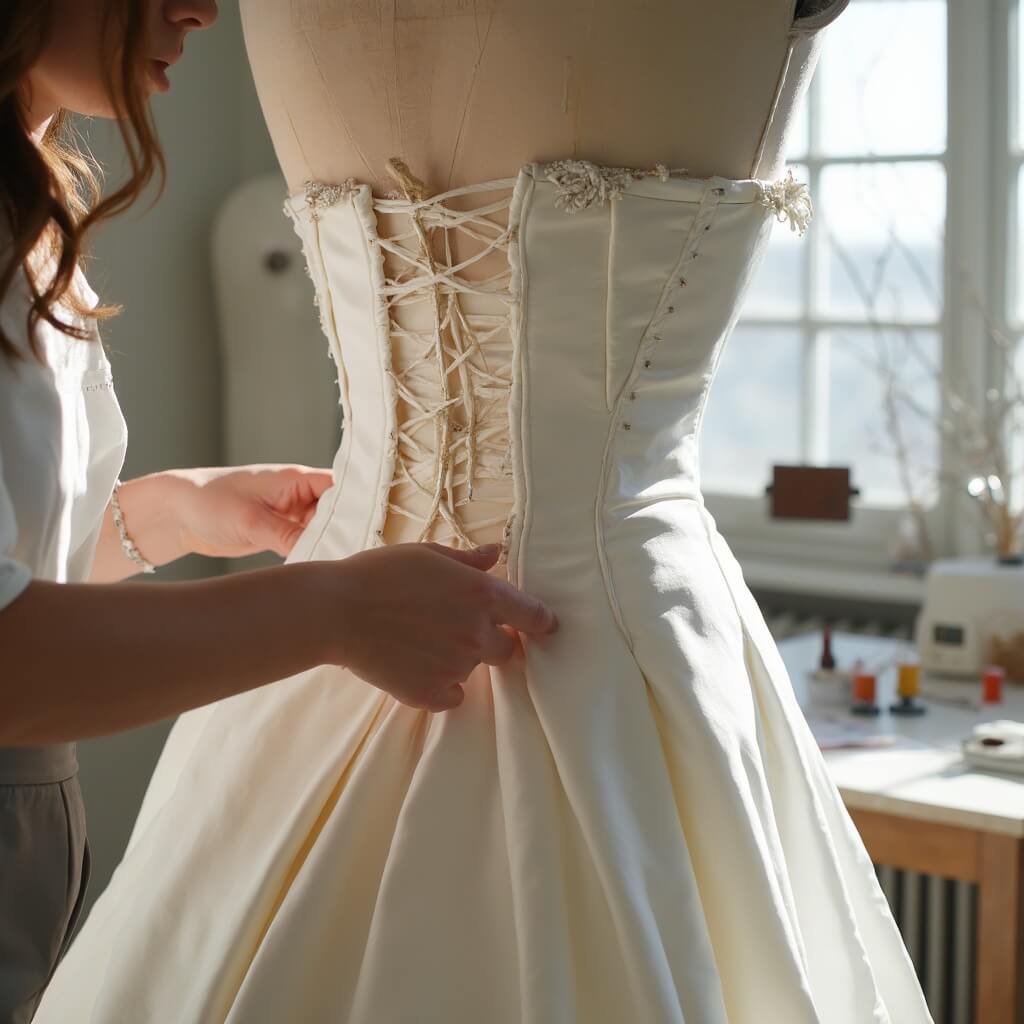
Alterations Aren’t Optional Here
I’ll be blunt about this one: budget for proper alterations from the start, not as an afterthought. A mermaid gown lives or dies on precise fit through the bust, waist, and hip, and very few brides fit a sample size perfectly off the rack. The flare placement itself can sometimes be adjusted too — raised slightly for a shorter bride, or the train shortened for a venue with stairs or gravel paths. A skilled seamstress is doing real structural work here, not just taking in a side seam, so factor both time and cost into your planning. If you’re ordering a made-to-order designer gown, add the production time — often several months — on top of the alteration window. Leaving this until six weeks before the wedding is the single most common mistake I see.
Styling It Properly
Veils genuinely change the character of a mermaid gown more than most brides realise before they try one on with the dress. A cathedral-length veil amplifies the drama and works beautifully with a train. A fingertip or elbow-length veil does the opposite — it takes some of the formality down a notch, which some brides actively want.
Jewellery-wise, the dress is usually already doing a lot of visual work, so I tend to steer brides towards restraint unless the neckline is very simple. Statement earrings suit a strapless or sweetheart bodice nicely; anything on the neck can start to compete if the dress already has beading up top.
Shapewear deserves an honest mention, because nobody brings it up until the final fitting and then panics. Given how closely this silhouette follows the body, a good seamless shaping garment underneath makes a genuine difference to the line, especially around the stomach and lower back. It’s not vanity, it’s just how the fabric behaves — cling fabrics show every seam and edge underneath, so plan your undergarments at the same time as the dress, not the week before.
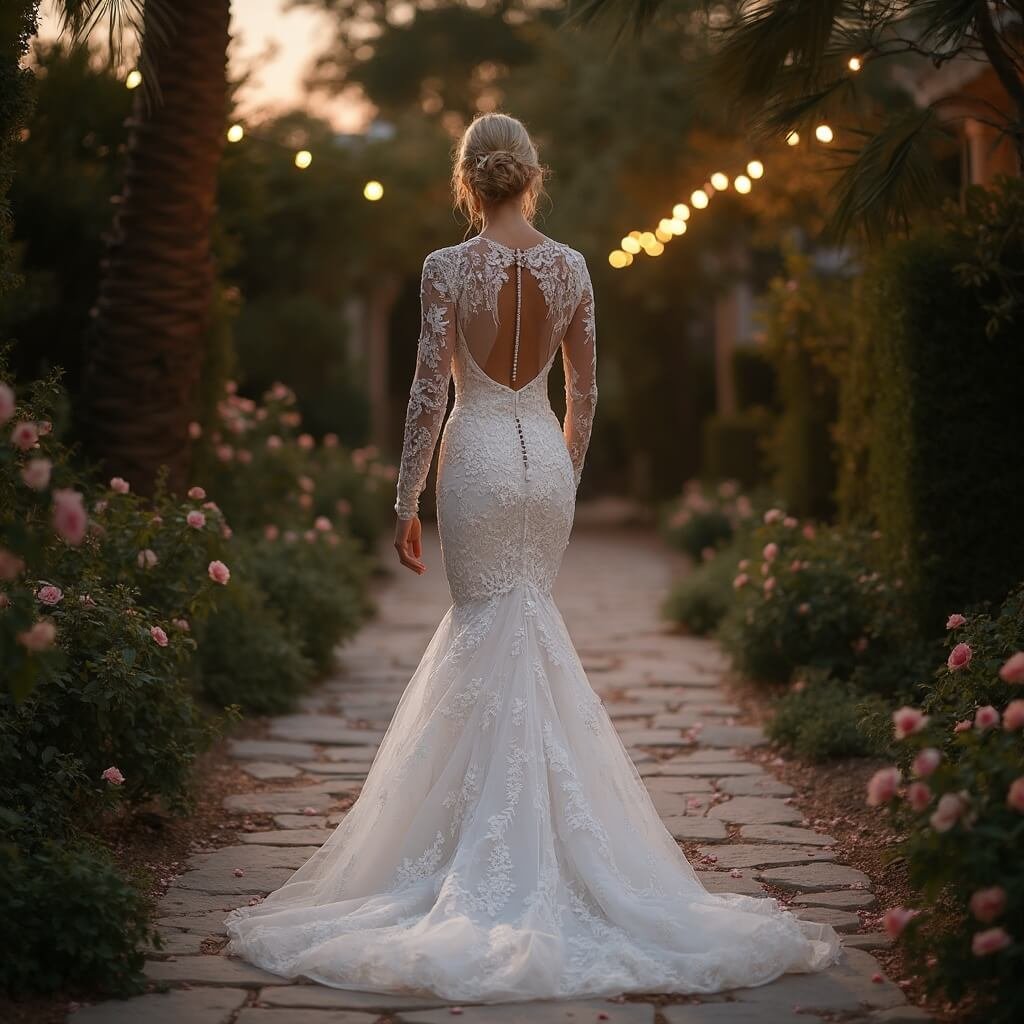
Shoes matter more than people assume too. A slight heel elongates the leg line and helps the flare fall properly rather than pooling awkwardly at the floor. I’ve seen brides in flat shoes under a mermaid gown look slightly swamped by their own train, simply because there wasn’t enough height to let the fabric fall the way it was cut to.
Venue and Occasion — Where This Shape Actually Works Best
Formal and black-tie weddings are the natural home for a mermaid gown, and I’d say most of the ones I’ve seen at country house or ballroom venues have suited the space perfectly. The silhouette wants a bit of grandeur around it. That said, I’ve also seen it done well outdoors, provided the bride chooses a lighter fabric and a shorter or detachable train — dragging heavy mikado through wet grass is a fight nobody wins.
For destination or beach weddings specifically, I’d steer towards crepe or a lighter lace over anything structured. Heat and sand are not kind to boning and heavy underlays.
If modesty is a consideration, whether for cultural or personal reasons, the silhouette itself doesn’t have to change — higher necklines, sleeves, and additional lining all work within the mermaid shape without diluting what makes it distinctive.
Where the Trend Is Heading
Right now, I’m seeing two things happening at once, which sounds contradictory but isn’t. Minimalist mermaid gowns — clean crepe, barely any embellishment, sharp lines — are trending hard for brides who want the shape without the spectacle. At the same time, heavily beaded, lace-rich, vintage-inspired mermaid gowns haven’t gone anywhere; if anything, the detailing has got more intricate. Sleeves and necklines are where most of the innovation is happening lately — bishop sleeves, unusual cutouts, off-the-shoulder straps — because designers are looking for ways to update a shape that’s fundamentally been the same for decades.
If you’re currently trying to decide whether a mermaid wedding dress is the right choice, my honest advice is to try one on before you rule it in or out based on photos alone — the way this silhouette actually feels and moves on your particular body tells you far more than any picture will, and it’s a very different dress in person than it looks on a hanger.
👇Shop the Look here 👇
Want to keep this one?
We'll email you the link so you can find it again later.