Do You Need a Full-Length Gown, or Could a Short Wedding Dress Work?
A short wedding dress is any bridal gown that falls above the ankle — mini, midi, or tea length — and it’s one of the biggest shifts I’ve seen in bridal fashion over the past few years. Couples email me asking whether it’s “allowed.” It is. There was never a rule. Someone just forgot to tell everyone that.
Let me be precise about what we’re talking about because “short” gets used loosely. Tea-length sits just above the ankle, or at the narrowest part of the calf — think 1950s cocktail dress, quietly formal. Midi drops to roughly mid-calf. Mini is knee or above, sometimes well above, and it’s the one that still makes a few traditionalist relatives raise an eyebrow at the ceremony. All three count as short. All three are now genuinely mainstream, not a niche choice for brides who “don’t want the fuss.”
Why This Isn’t Just an Elopement Trend Anymore
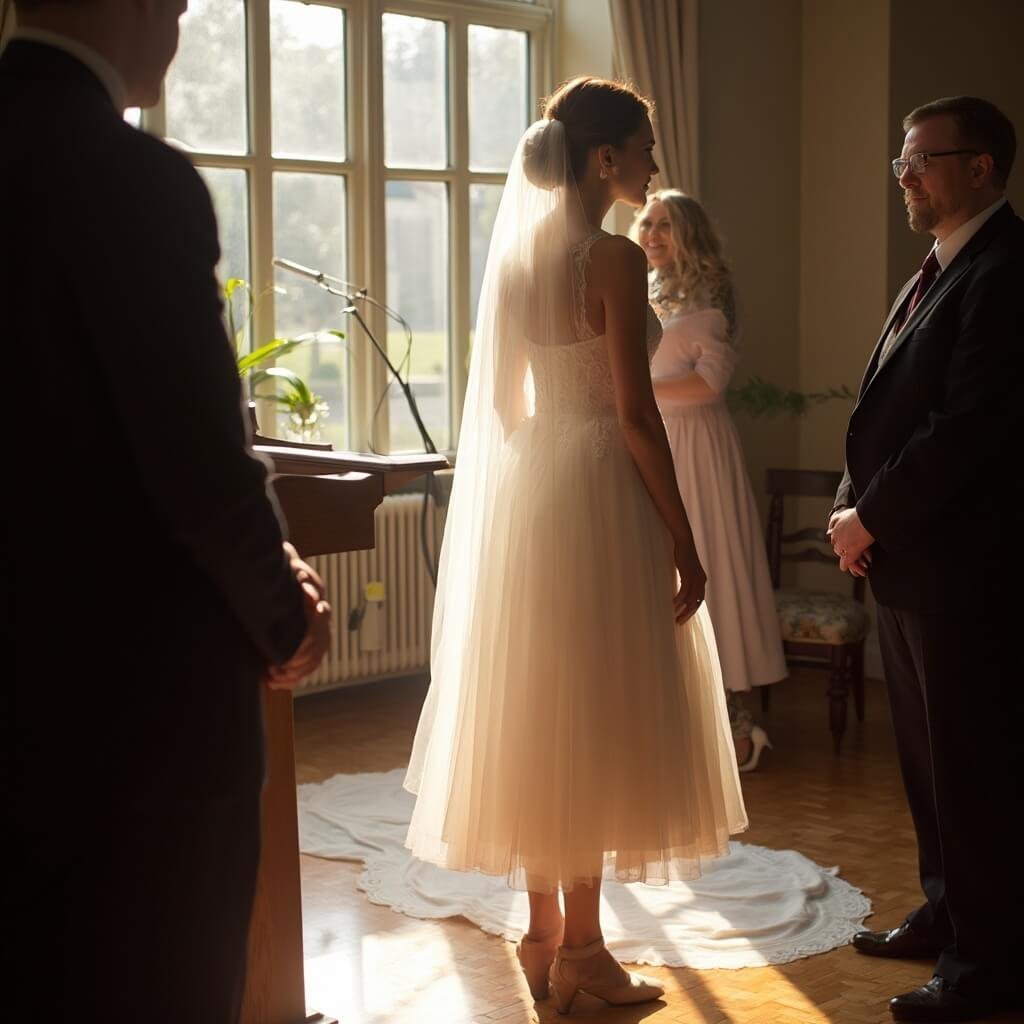
Short bridal dresses used to live in a fairly narrow lane — courthouse weddings, second marriages, brides who wanted something quick and low-key for a registry office appointment. That’s changed. I’m now conducting full ceremonies, aisle walk and all, where the bride is in a knee-length dress with a cathedral-length veil, and it looks entirely intentional rather than like a compromise.
Part of this is simply runway influence trickling down — higher hemlines have been everywhere in eveningwear for a few seasons, and bridal always follows fashion with a lag of a year or two. Part of it is practical: brides who’ve been to enough weddings know exactly how much a heavy train limits your evening. Short dresses are being talked about as one of the standout trends for 2026, and from what I’m seeing booked in for next year, that tracks. It’s not a fad tucked into one corner of the industry; it’s showing up in mainstream bridal collections as a permanent category now, not a seasonal experiment.
What’s shifted most is perception. A short dress used to signal “this is the fun, informal part of the day.” Now it can just as easily be the dress — for the ceremony, the vows, the photos with grandparents. Nobody assumes it’s the second outfit anymore unless you tell them it is.
The Different Lengths, and Why the Difference Matters
This is where I think a lot of couples skip past detail they’ll later wish they’d considered.
- Mini — knee or above. Playful, leg-baring, brilliant for dancing and for city weddings where the whole day has a lighter tone. Less suited, in my experience, to very traditional venues unless styled quite deliberately.
- Midi — mid-calf. This is the length I find myself recommending most for registry office ceremonies or restaurant weddings; it reads as chic without tipping into “going out dress.”
- Tea length — just above the ankle. Genuinely the most quietly formal of the three, and the one most likely to satisfy a nervous mother-of-the-bride who’s worried about “too short.”
Silhouette matters as much as length. An A-line mini, floating gently away from the hips, photographs completely differently from a sheath or column style skimming the body — the A-line reads softer and more traditional, the sheath more minimalist and city-chic. Fit-and-flare splits the difference, giving you a fitted bodice with movement below. And then there’s the question of structure: a stiff, structured satin mini holds a bold, almost architectural shape, while tulle or organza in the same length moves and lifts as you walk, which changes the whole feel of an aisle entrance.
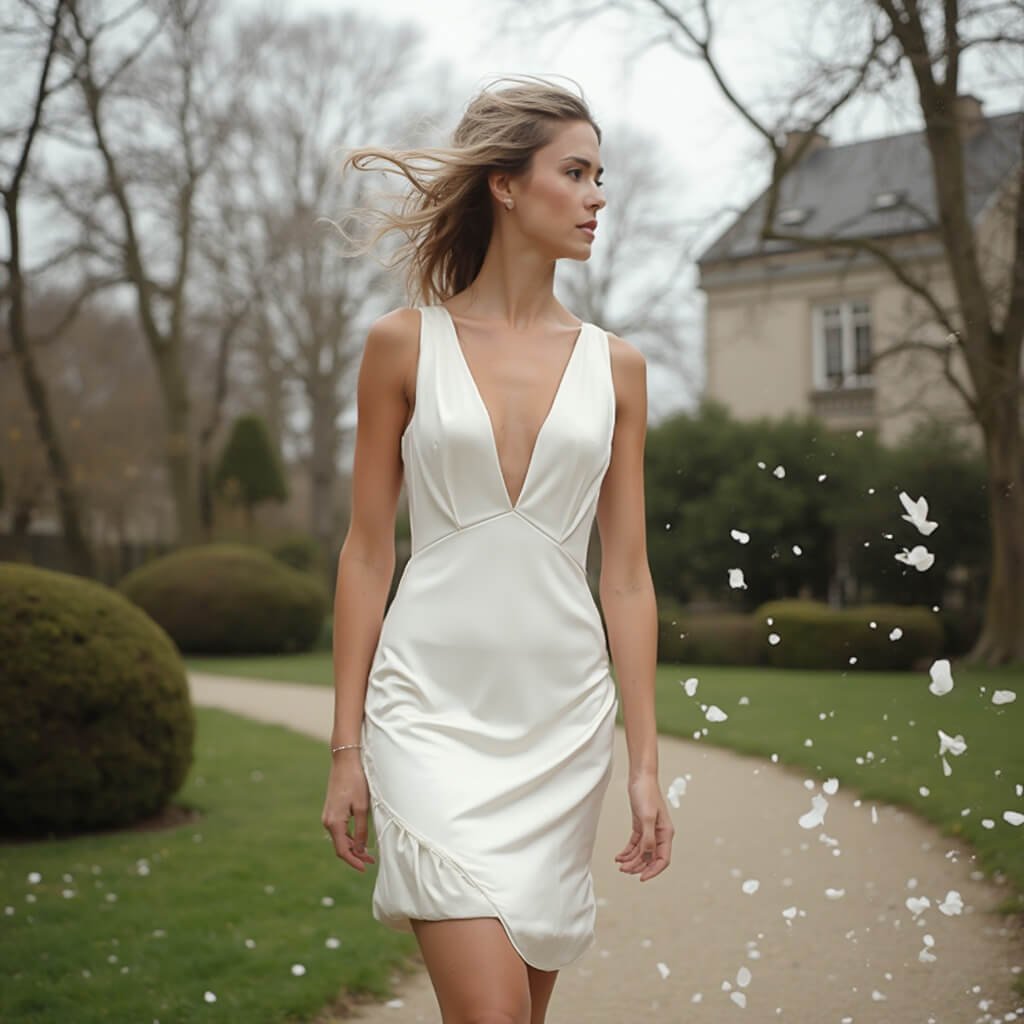
I once conducted a ceremony on a blustery April afternoon — genuinely blustery, the sort of wind that flips notes off the lectern — where the bride wore a structured satin mini specifically because she’d tried a tulle version at her fitting and it had billowed around her knees the second she stepped outside. Small detail, but it mattered enormously to her on the day. Fabric choice isn’t just aesthetic; it’s practical in a way brides don’t always think about until they’re standing in the actual wind.
Where Short Dresses Actually Get Worn
This is worth separating out clearly, because “short wedding dress” now covers several different moments in a wedding weekend, not just one.
For the main ceremony, short dresses suit civil ceremonies, registry offices, small church services, and beach or garden settings particularly well. I’d still say a very grand, formal cathedral wedding is where a tea-length or midi does more work than a micro-mini — length can quietly signal formality without you needing to say a word.
For the reception, short dresses have become the standard “second look” — brides doing a full ceremony gown, then changing into something shorter for the first dance and the dancing that follows. It’s not new exactly, but it’s more common and more photographed than it used to be.
For pre-wedding events — engagement parties, showers, hen weekends — a short white dress has become almost its own category, separate from bridal shops altogether. You’ll find these in high-street fashion collections rather than wedding boutiques, which brings the price down considerably.
And then there’s the whole territory of small and destination weddings, where practicality does a lot of the deciding for you. A floor-length gown on a beach is, frankly, a liability — sand, wind, hemlines dragging through wet sand at the shoreline. A lightweight midi in the right fabric solves problems a bigger dress creates.

For more inspiration, you can explore stunning mini wedding dress styles or discover timeless full-length wedding gown inspiration.
👇Shop the Look Here👇
Save this article
Enter your email and we'll send it straight to your inbox.
Fabric, Necklines, and the Details That Change Everything
Once you’ve settled on a length, the fabric conversation matters more than most brides expect it to. Satin holds structure and gives you that clean, sculptural look — it’s the fabric doing most of the heavy lifting in those bold, architectural minis I mentioned earlier. Lace goes the other way entirely, softening a short hemline into something that reads as properly traditional even at knee-length; an all-over lace mini can look more “wedding” than a plain satin floor-length gown, oddly enough. Chiffon and tulle bring movement and airiness, which I’d always point brides toward for summer or destination weddings where you want the dress to breathe. Mesh and sheer panelling are the fashion-forward end of things — more common in editorial shoots than in what I actually see walking down the aisle, but they’re growing in popularity among brides who want their dress to feel like fashion first, bridal second.
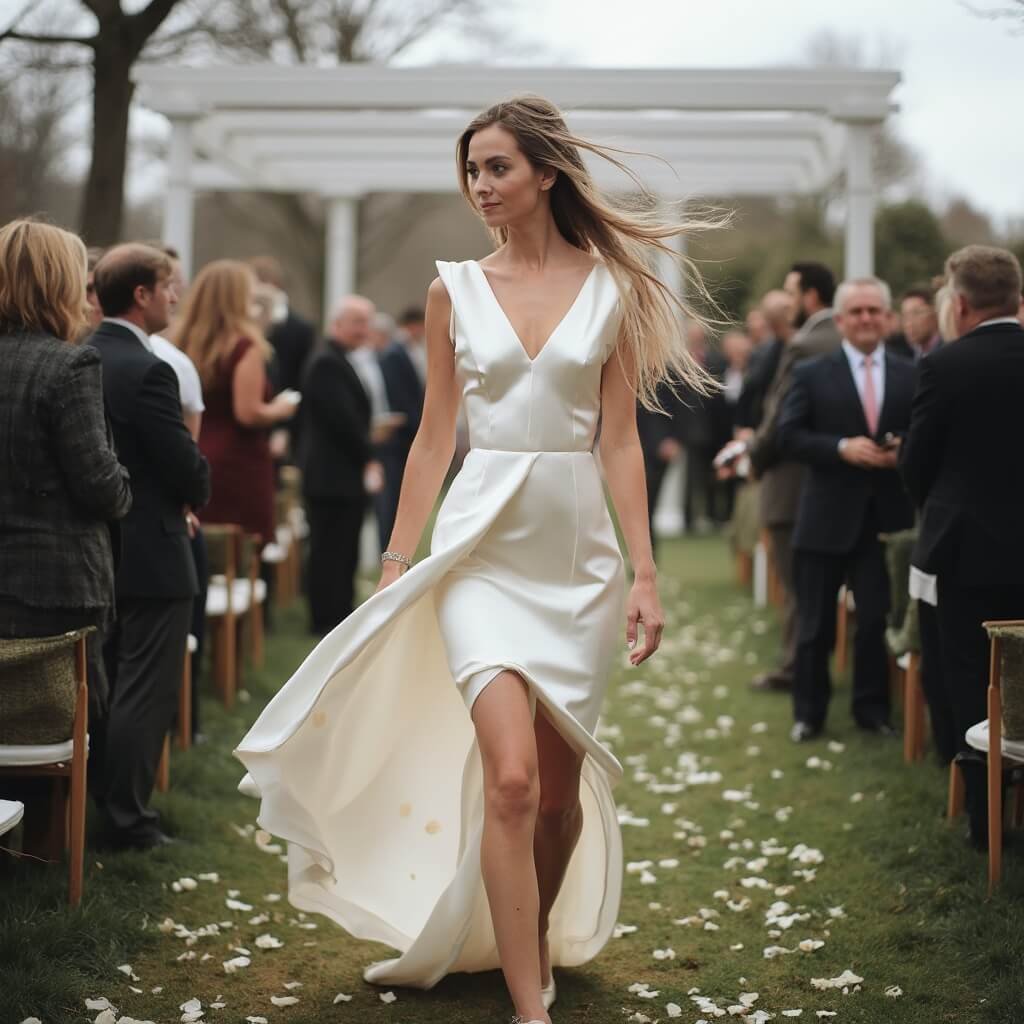
Necklines and sleeves do more work than people give them credit for. A strapless mini reads as party-ready; add long sleeves or a high neck to that same silhouette and suddenly it feels considered, almost old-world. Square necklines and off-the-shoulder cuts have both had a real moment recently, and I’d say sleeve choice is often the single easiest way to shift a short dress from “fun” to “formal” without changing the length at all. Puff sleeves in particular seem to be everywhere this year — they add a bit of drama up top that balances out all the leg on show below.
Embellishment is where a short dress earns its bridal credentials, frankly. A plain mini can look like something you’d wear to a summer party; add pearl detailing, a scattering of sequins, or 3D floral appliqués, and it becomes unmistakably a wedding dress. I’ve also seen more brides opting for detachable elements — a bow at the back, an overskirt that unclips for the reception, a lace cape that covers the shoulders for the ceremony and comes off for dancing. It’s a clever way of having the formal version and the practical version without buying two dresses.
Weighing Up the Trade-Offs Honestly
The practical case for a short dress is strong. You can actually dance in one. You can bend down to pick up a flower girl, sit through a long meal without wrestling fabric, walk across gravel or grass without your hem soaking through. I always tell brides to test this properly at the fitting — sit, bend, take a full stride — because a dress that looks perfect standing still can still ride up awkwardly the moment you move.
Cost is a genuine advantage too. Less fabric, less labour, generally a lower price tag, and a short dress opens the door to shopping outside dedicated bridal retailers altogether — plenty of “short white dress” collections from fashion brands work just as well for a wedding as anything labelled bridal, often for a fraction of the price. And because a short dress doesn’t scream “wedding” in the way a full gown does, many brides get proper re-wear out of them afterwards, at parties or anniversaries, which is something you simply can’t do with six metres of tulle sitting in a garment bag in the loft.

Short Wedding Dresses: Stunning Styles to Consider
None of that means it’s the right choice for every wedding, though. I’ve officiated in a couple of venues — grand old churches mostly — where a very short hemline sat slightly at odds with the surroundings, not because of any rule, but because the formality of the space asked for more coverage than the dress gave. Family and cultural expectations matter here too, and it’s worth having that conversation early rather than discovering a strong opinion from a grandmother the week of the wedding. Weather is the other practical snag — bare legs in a marquee in October is a specific kind of misery, so a wrap, a jacket, or decent hosiery isn’t optional so much as essential.
Getting the Styling Right
This is where a short wedding dress either looks fully intentional or slightly undercooked, and the difference usually comes down to accessories rather than the dress itself. Shoes matter enormously — with a hemline that short, your footwear is on full display for the entire day, so a statement heel or a beautifully strappy sandal earns its keep. I’ve also married couples where the bride went barefoot for a beach ceremony, and it worked perfectly precisely because everything else about the day was relaxed.
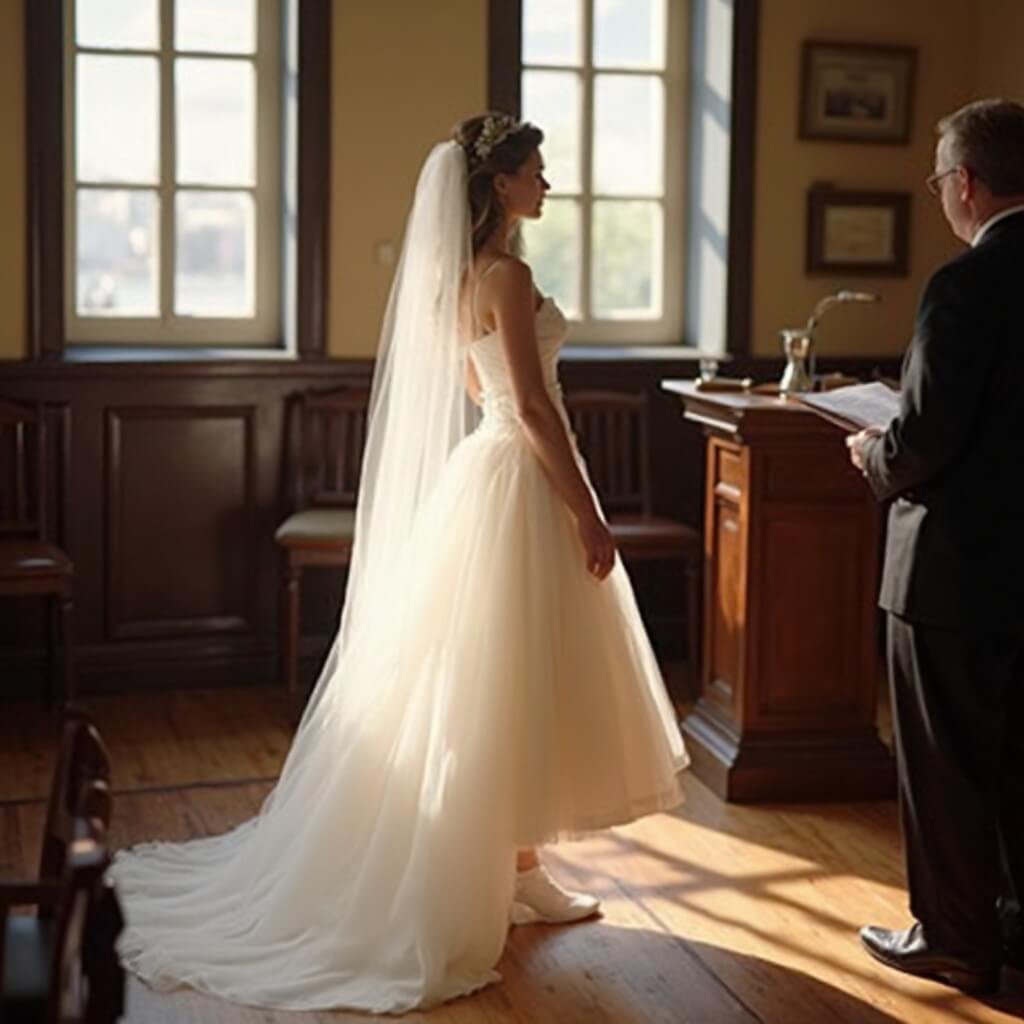
A veil, somewhat counterintuitively, is often what convinces the room this is a proper wedding dress rather than a party dress. Pair a knee-length mini with a fingertip veil and the whole look shifts back toward traditional in an instant. For cooler months, a faux fur wrap or a tailored jacket does double duty — keeping the bride warm and adding a bit of visual weight to balance the shorter skirt. Jewellery is worth thinking about too: minimal gold pieces suit the cleaner, modern minis, while something bolder can carry a very simple slip-style dress that would otherwise look underdressed.
The Best Short Wedding Dresses for Every Bride
My Honest Take
If you’re drawn to a short wedding dress, don’t treat it as the “lesser” option or a consolation prize for not wanting a big traditional gown — it isn’t, and bridal collections now reflect that properly. My only real piece of advice is to try the dress on and actually move in it before you commit, and to think honestly about your venue and your guest list before you settle on hemline. A tea-length dress in the right fabric will carry a formal church wedding just fine; a micro-mini probably won’t, and that’s fine too — it just means it’s better suited to your reception look or your afterparty rather than the vows themselves. Choose the short wedding dress that matches the day you’re actually having, not the day you think you’re supposed to be having, and you won’t go far wrong.
explore stunning mini wedding dress styles | discover timeless full-length wedding gown inspiration | browse ethereal wedding dress silhouettes | see figure-flattering mermaid gown styles | view elegant long-sleeve wedding dress options
👇Shop the Look here 👇
Want to keep this one?
We'll email you the link so you can find it again later.