Wrap Bridesmaid Dresses: The Complete Guide to Styling, Tying, and Looking Amazing on Every Body Type
Wrap Bridesmaid Dresses: The Complete Guide to Styling, Tying, and Looking Amazing on Every Body Type
Wrap bridesmaid dresses are honestly one of the best things to happen to wedding fashion in a long time.
I’m not just saying that because they look gorgeous in photos.
I’m saying it because I’ve seen bridesmaids go from stressed-out and uncomfortable to genuinely happy in their dresses — just because someone chose a wrap style instead of a standard fitted gown.
And if you’re a bride trying to dress a group of women who all have completely different body types, heights, and comfort levels?
Wrap dresses are basically your answer.
But there’s more to it than just picking a pretty color and calling it done.
There’s fabric to think about.
Tying techniques.
Body type styling.
Color coordination.
And yes, even how to shoot and share these looks if you’re creating content around them.
This guide covers all of it.
Let’s get into it.
—
What Makes Wrap Bridesmaid Dresses Different From Everything Else
Most bridesmaid dresses are designed with one body in mind.
You know the type — stiff, structured, and absolutely unforgiving if you’ve got curves or a shorter torso.
Wrap bridesmaid dresses are different because they adjust to the body, not the other way around.
The wrap style creates a natural V-neckline, cinches at the waist, and flows over the hips.
That silhouette is genuinely flattering on almost every body type.
And if you go a step further and choose a convertible infinity bridesmaid dress, you’re looking at a dress that can be tied at least a dozen different ways.
That means one dress.
Dozens of necklines.
Every bridesmaid happy.
It sounds too good to be true but honestly it isn’t.
—
The Quick Facts You Actually Need Before You Start
Before diving into all the styling details, here’s a fast breakdown of what you’re working with.
Budget:
- Most quality wrap bridesmaid dresses fall in the $80–$150 range
- Accessories can mostly come from what your bridesmaids already own
- You don’t need expensive gear to shoot content — a modern smartphone works fine
Difficulty Level:
- Styling the dress itself: beginner-friendly
- Mastering multiway tying techniques: intermediate, but it gets easier fast
What You’ll Need:
- Wrap or infinity dresses in your chosen colors and fabrics
- Bandeau tops or slips for added coverage
- A steamer (wrinkles in chiffon are not cute)
- Fashion tape for keeping everything in place
- Jewelry, heels, a clutch, and maybe a shawl depending on the season
Time Commitment (if you’re creating content too):
- Planning and research: about 1–2 hours a week
- Shooting: 2–4 hours per session
- Editing and publishing: 2–3 hours
Seasonal Use:
- Spring and summer: chiffon and pastel wrap dresses
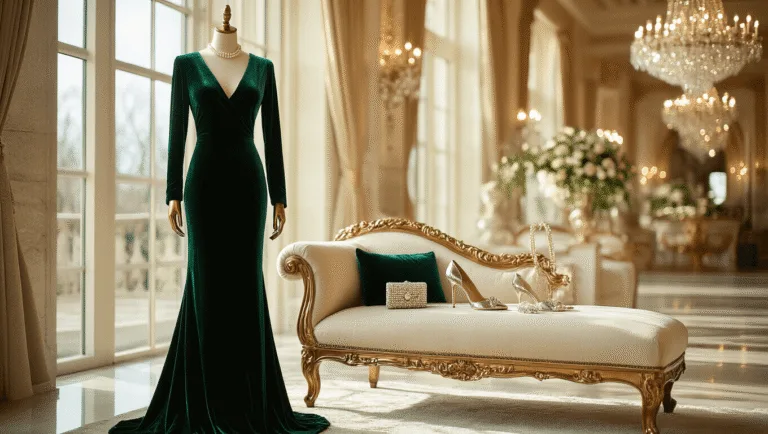
- Autumn and winter: velvet, satin, and deeper jewel tones
Save this article
Enter your email and we'll send it straight to your inbox.
—
Choosing the Right Fabric for the Season and Vibe
Not all wrap bridesmaid dresses are made the same.
The fabric makes a massive difference — both in how the dress looks and how comfortable it is to wear for six-plus hours.
Here’s a simple breakdown:
Chiffon:
- Lightweight and flowy
- Moves beautifully in photos and video
- Great for outdoor spring and summer weddings
- Flatters most body types with its soft drape
Satin:
- Sleek and elegant
- Works well for evening or formal weddings
- Holds its shape beautifully in photos
- Best for cooler months because it has a slight weight to it
Velvet:
- Rich, luxurious texture
- Perfect for autumn and winter weddings or black-tie events
- Photographs incredibly well under warm lighting
- Looks stunning in jewel tones like emerald and burgundy
Jersey:
- Stretchy and comfortable
- Great for active bridesmaids who plan to actually dance
- Wraps and knots easily without slipping
- More casual feel, best for relaxed or boho-style ceremonies
The fabric you choose should match both the formality of your wedding and the time of year.
A chiffon wrap dress at a December evening wedding feels a little out of place.
A velvet wrap dress at a garden party in July? Also a no.
Match the fabric to the moment.
—
The Color Palette Guide: How to Coordinate Without Being Matchy-Matchy
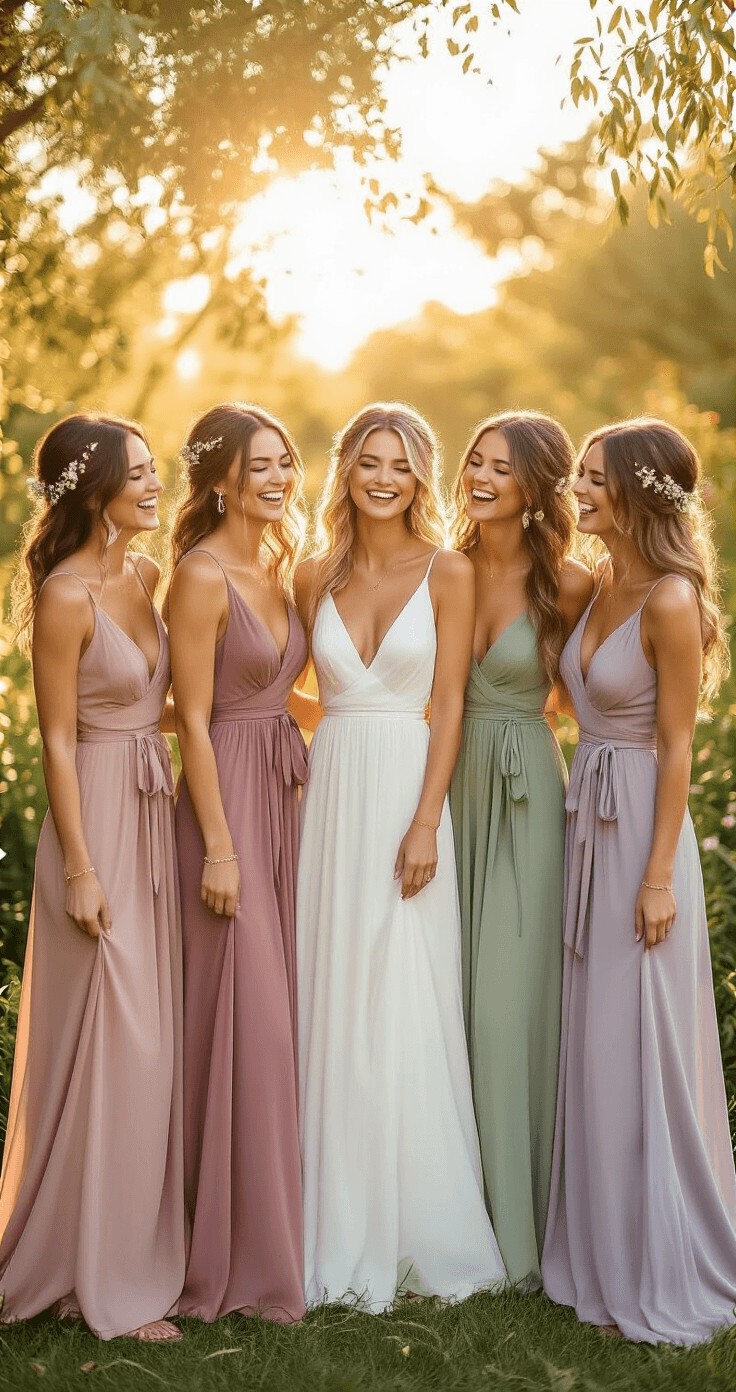
One of the best things about wrap bridesmaid dresses is how well they work in a mix-and-match bridal party.
But “mix and match” doesn’t mean “everyone just picks their favorite color and hopes for the best.”
There’s actual strategy to it.
For romantic, garden-style weddings:
- Soft blush
- Dusty rose
- Sage green
- Lavender
- Powder blue
For timeless and elegant weddings:
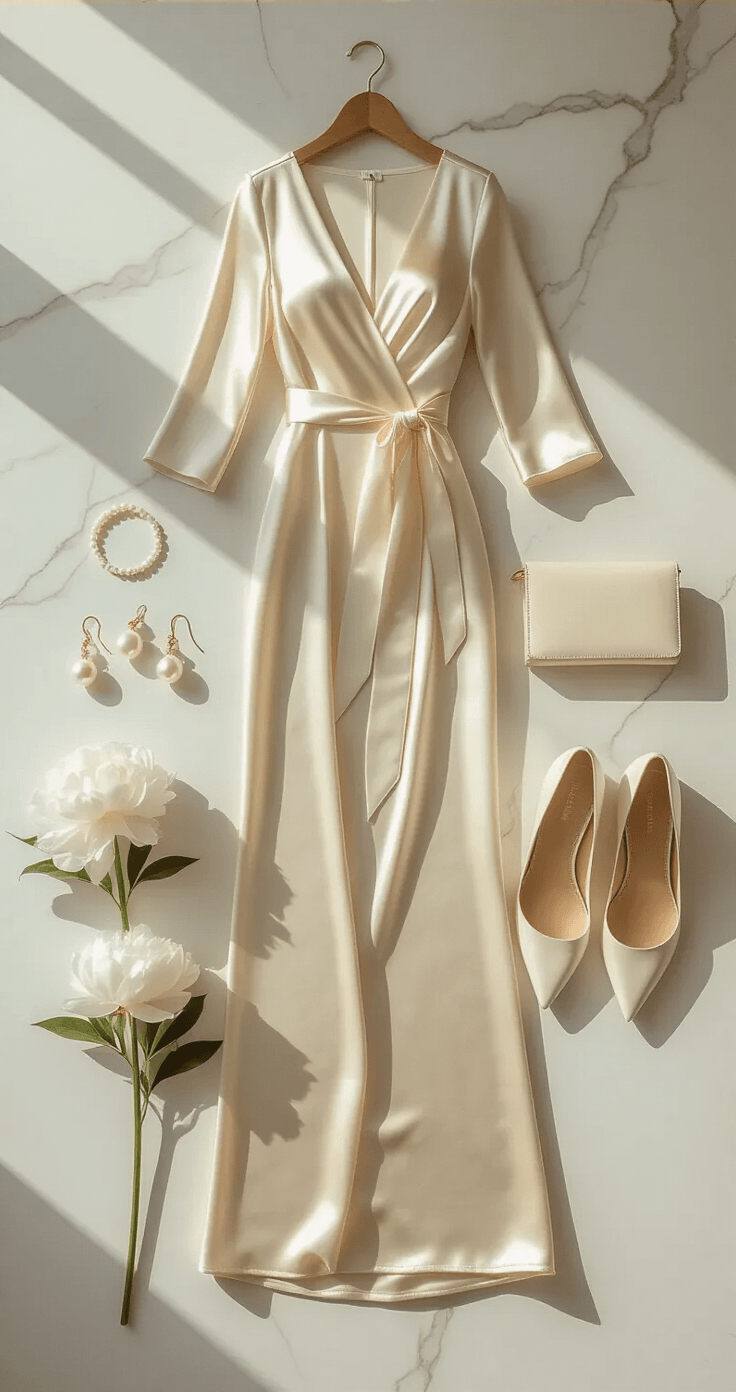
- Champagne
- Oyster
- Ivory
- Classic black
- Warm nude
For autumn and winter or evening weddings:
- Burgundy
- Emerald green
- Navy
- Dusty mauve
- Deep plum
How to make mixed colors look cohesive:
- Choose one main color and let bridesmaids pick shades within that family
- Use the same fabric across different colors so it still reads as coordinated
- Keep accessories consistent — same metallic, same shoe style, same flower type
The goal is harmony, not uniformity.
It’s fine if one bridesmaid is in sage and another is in dusty blue as long as the overall palette feels pulled together.
—
How to Tie a Wrap Bridesmaid Dress (The Styles You Actually Need to Know)
This is where most people get a little lost.
Infinity and convertible bridesmaid dresses come with straps — sometimes very long straps — and they can feel overwhelming if you’ve never tied one before.
But once you know the main styles, it clicks pretty fast.
Here are the most popular tying options and when to use them:
1. Classic V-Neck Wrap
- The most common and universally flattering tie
- Straps cross at the front and wrap to the back
- Gives a deep V
Want to keep this one?
We'll email you the link so you can find it again later.