Wedding Rings: Everything You Need to Know Before You Buy
What Is a Wedding Ring, Really?
A wedding ring is exchanged during the marriage ceremony as a symbol of your commitment to your partner.
Simple enough, right?
But the meaning behind that little circle of metal runs surprisingly deep.
The circular shape isn’t just a design choice. It’s intentional. A circle has no beginning and no end — and that’s exactly the point.
It’s a physical, wearable symbol of a love that doesn’t stop.
In cultures all over the world, the wedding ring stands for:
- Eternal bond between two people
- Partnership and shared life
- Lifelong commitment — not just on your wedding day, but every day after
It’s one of the most universal symbols humans have ever created. No matter where you go on this planet, almost everyone understands what a ring on that finger means.
Wedding Ring vs. Wedding Band — Is There Actually a Difference?
Here’s something that trips up almost every couple shopping for the first time.
You’ll hear both terms thrown around constantly — sometimes in the same sentence.
So what’s the deal?
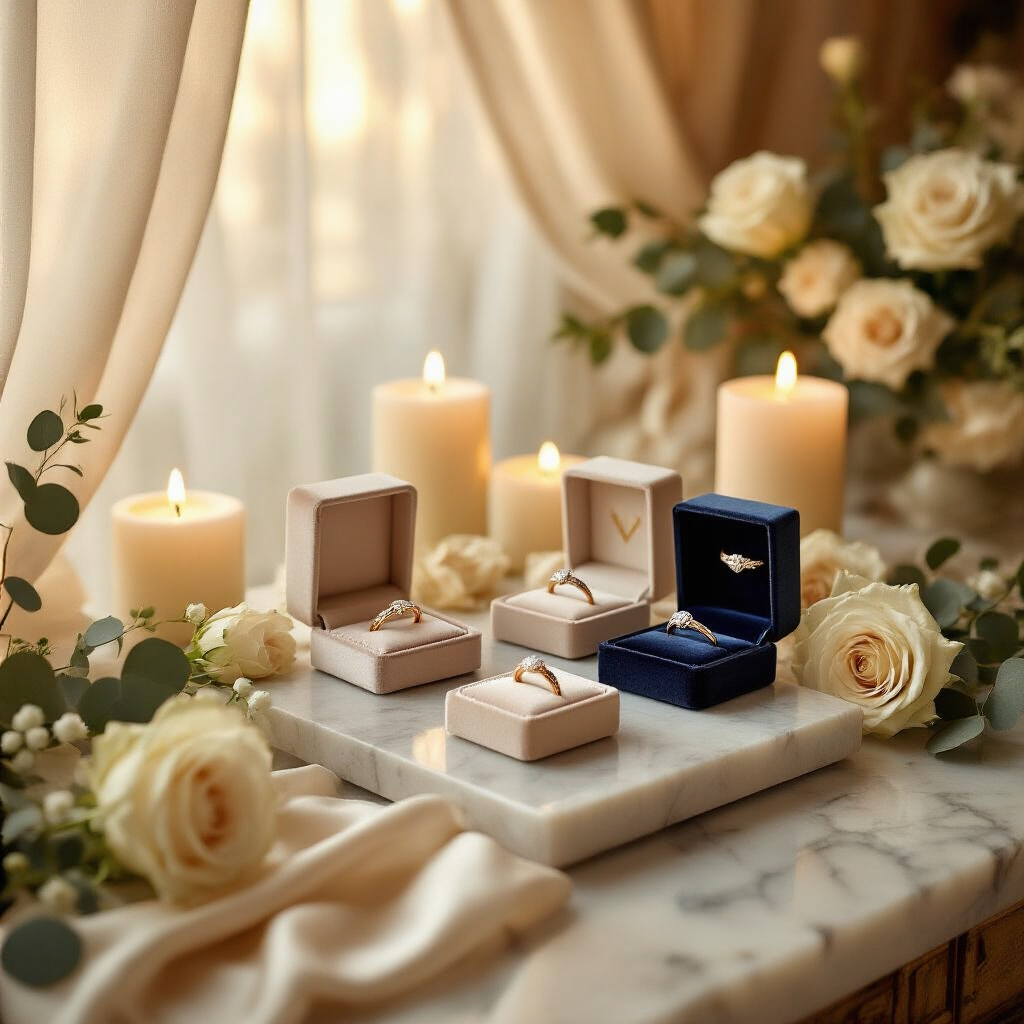
In the United States, the two terms are used interchangeably. Most jewelers won’t correct you either way.
But technically, there IS a subtle distinction:
| Term | What It Usually Means |
|---|---|
| Wedding Band | A plain metal ring with no stones |
| Wedding Ring | A ring that features diamonds or other gemstones |
Both are exchanged during the ceremony. Both serve the exact same purpose. The difference is really just about style.
If you want something sleek, minimal, and metal-only — that’s a wedding band. If you want some sparkle added to the mix — that’s typically called a wedding ring.
Honestly? Call it whatever you want. What matters is that it means something to you.
What Are Wedding Rings Made Of?
This is where things get really interesting — and where a lot of couples get overwhelmed.
The material you choose affects:
- How the ring looks
- How it holds up over time
- How much it costs
- How it feels on your finger every single day
Here’s a breakdown of the most popular options right now:
🥇 Yellow Gold
The classic. The timeless. The one your grandparents probably wore.
Yellow gold has been the go-to wedding ring material for centuries, and for good reason. It’s warm, rich, and immediately recognizable.
Save this article
Enter your email and we'll send it straight to your inbox.
- Best for: Traditional or vintage-inspired styles
- Things to know: Pure gold (24K) is actually too soft for daily wear — most rings are 14K or 18K gold, which mixes gold with stronger metals
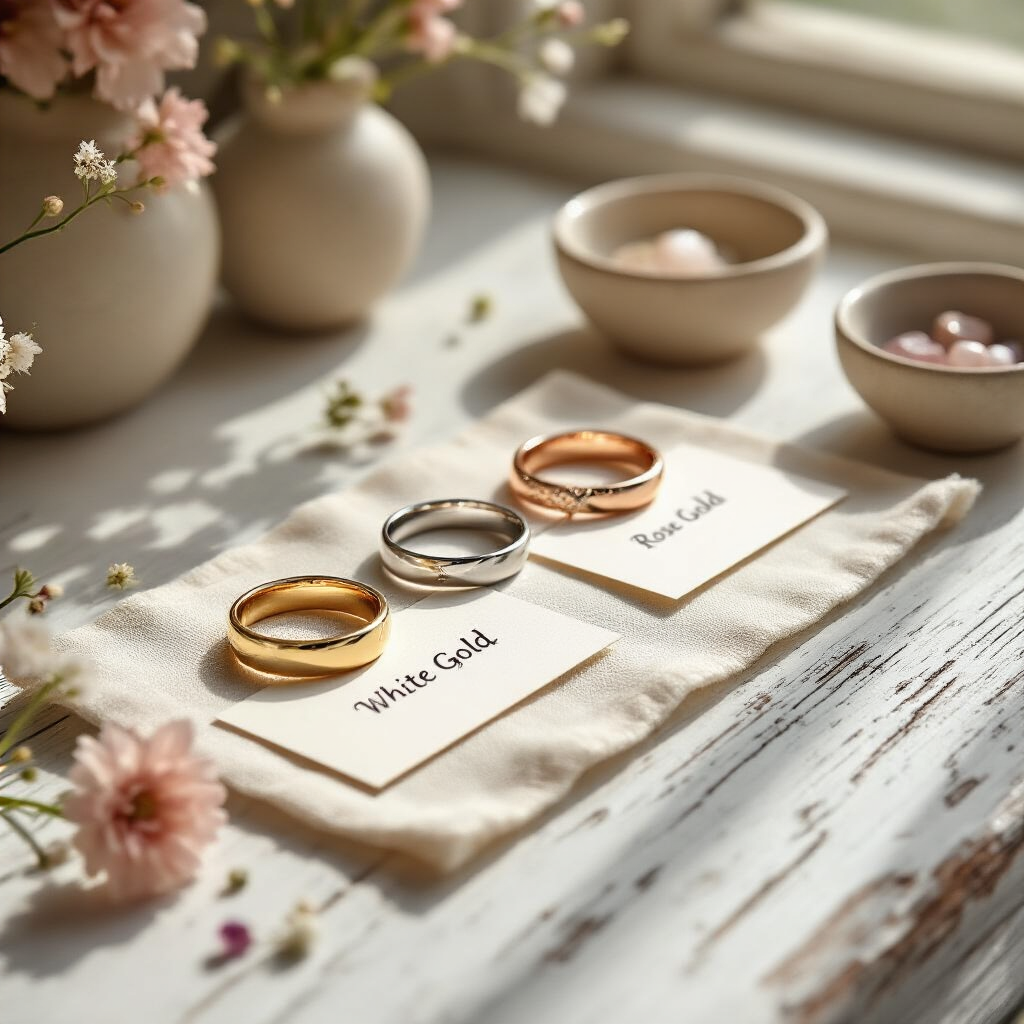
🤍 White Gold
White gold has a cool, silvery look that pairs beautifully with diamonds.
It’s actually yellow gold mixed with white metals like palladium or silver, then coated with rhodium to get that bright, polished finish.
- Best for: Modern, sleek, or diamond-heavy designs
- Things to know: The rhodium coating does wear off over time and may need replating every few years
🌹 Rose Gold
Rose gold has had a serious moment in recent years — and honestly, I understand why.
That warm, pinkish tone is incredibly flattering on most skin tones.
It’s made by mixing yellow gold with copper, which gives it that distinctive blush color.
- Best for: Romantic, vintage, or unique styles
- Things to know: The copper content makes it very durable — often more so than yellow or white gold
⚪ Platinum
If you want the absolute best in terms of durability and prestige, platinum is it.
It’s heavier than gold, naturally white (no plating needed), and incredibly resistant to wear.
- Best for: People who are hard on their hands, or anyone who wants a ring that will outlast everything
- Things to know: It’s the priciest option on this list
Other Modern Options
The world of wedding rings has expanded massively in recent years. You’re no longer limited to just gold or platinum.
- Palladium — lightweight, naturally white, more affordable than platinum
- Mixed metal designs — combining two or more metals for a unique two-tone look
- Titanium or tungsten — ultra-durable, budget-friendly, popular for men’s bands
If you want to explore some stunning options, check out these gold wedding bands and platinum wedding rings to get a feel for what’s out there.
Which Finger Does a Wedding Ring Go On?
In Western culture — think the US, UK, Canada, Australia — the wedding ring goes on the ring finger of the left hand.
That’s the fourth finger, right next to your pinky.
But why that finger?
The tradition comes from an ancient Roman belief called the “Vena Amoris” — which translates to the “Vein of Love.”
The Romans believed there was a vein running directly from the left ring finger straight to the heart.
Romantic, right?
Modern anatomy has since confirmed that’s not actually how veins work — but the tradition stuck around anyway. And I think that’s kind of beautiful.
What About Other Cultures?
Not everyone follows the left-hand rule.
In many countries, the wedding ring is worn on the right hand instead:
- Germany
- Russia
- Norway
- Spain
- Greece
- India (in some regions)
Neither hand is more “correct” than the other. It’s all about what’s culturally meaningful to you and your partner.
Want to keep this one?
We'll email you the link so you can find it again later.