South Indian Wedding Garlands: Everything You Need to Know Before You Buy or Make One
South Indian Wedding Garlands: Everything You Need to Know Before You Buy or Make One
South Indian wedding garlands — known as kalyana maalai, varmala, or jaimala — are so much more than just pretty flowers around your neck.
They carry the weight of tradition, love, and spiritual meaning in every single petal and pod.
And yet, when you’re actually trying to plan them for your big day?
It gets overwhelming fast.
Which flowers are right for your community? How long will they last in the heat? Do you go fresh or traditional spice garlands? What even is a cardamom garland and why do people love them so much?
I’ve pulled together everything you need to know — the meaning, the flowers, the styles, the buying tips — so you can make a confident choice without the stress.
What Makes the Kalyana Maalai So Special in a South Indian Wedding?
The garland exchange isn’t just a cute photo moment.
It’s one of the most important rituals in the entire ceremony.
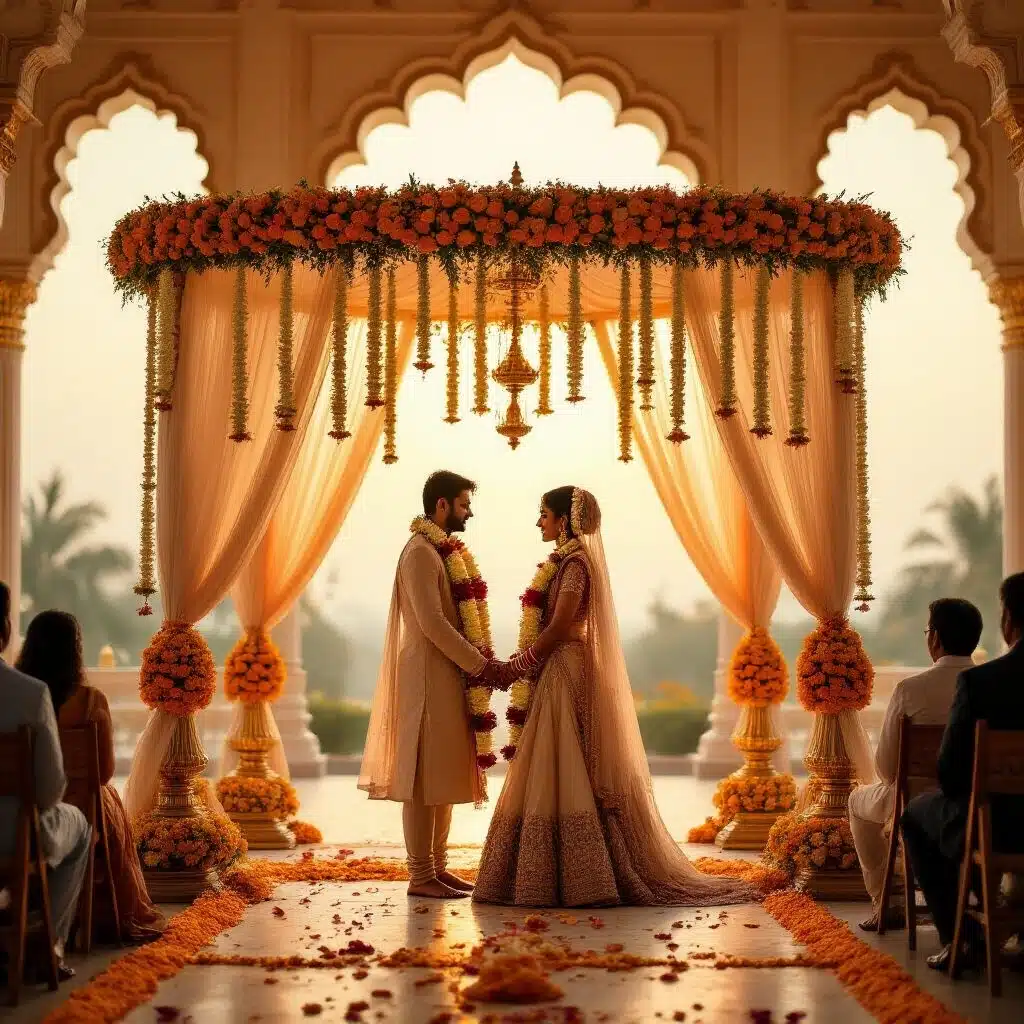
When the bride and groom exchange garlands, they’re publicly saying to each other — and to everyone watching — “I choose you.”
No rings, no papers, no words needed in that moment. Just two garlands and one very powerful gesture.
Here’s what the garlands actually represent:
- Love and acceptance — choosing each other in front of family and the divine
- Respect — honoring your partner as an equal
- Unity — two lives becoming one
- Prosperity — the abundance and richness of a shared future
- Divine blessings — connecting the sacred with the personal
South Indian kalyana maalai garlands are also notably longer and more elaborate than many North Indian varmala styles.
This isn’t just for show. The length and fullness reflect devotion, prosperity, and the importance placed on the union in South Indian traditions.
The Flowers That Show Up Again and Again (And Why)
If you’ve been to a South Indian wedding, you already know the smell.
That unmistakable wave of jasmine that hits you at the entrance and doesn’t let go.
Here’s a breakdown of the most commonly used flowers and materials, and what makes each one meaningful:
Jasmine (Mallipoo / Mullai) — The Undisputed Queen
Jasmine is the heartbeat of South Indian wedding florals.
It’s deeply fragrant, spiritually significant, and woven into Tamil and Karnataka wedding traditions for centuries.
If you’re doing a traditional garland, jasmine is almost always part of it — either as the base or as a fragrant accent woven between other flowers.
I always say: if you want your guests to feel like they’re at a South Indian wedding the moment they walk in, jasmine does that better than anything else.
You can find fresh jasmine garlands online if you’re not near a South Indian florist.
Roses — Classic, Beautiful, and Versatile
Roses show up in South Indian wedding garlands in red, pink, and white.
They work beautifully on their own, or layered with jasmine or marigold for a fuller, more colorful look.
Red roses carry that universal language of love. White roses add elegance and purity. Pink roses keep things soft and romantic.
Save this article
Enter your email and we'll send it straight to your inbox.
Marigolds — The Workhorse of Wedding Florals
Bright yellow and orange marigolds are incredibly durable and auspicious.
They’re the flower you want in your garland if your ceremony is outdoors, runs long, or happens in hot weather.
Marigolds don’t wilt as quickly as jasmine or roses, they photograph beautifully, and they layer well with almost any other flower.
Lotus — Sacred and Stunning
The lotus holds serious spiritual weight in South Indian Hindu traditions.
It represents purity, spiritual awakening, and divine grace — which is exactly what you want surrounding you on your wedding day.
Lotus garlands or lotus-and-rose combinations are especially popular in Tamil weddings and temple-style ceremonies.
Other Flowers Worth Knowing
- Tuberose (Sambangi) — intensely fragrant, used often for temple and wedding garlands
- Chrysanthemums — add strength and longevity, great for long ceremonies
- Orchids and Carnations — durable, modern-feeling, sometimes added for elegance
- Gypsy (Baby’s Breath) — used as filler to add texture and airiness
The Traditional Spice Garlands Nobody Talks About Enough
Okay, this is where things get really interesting.
A lot of people outside South Indian culture have never heard of spice garlands for weddings.
But they are deeply traditional, incredibly fragrant, and honestly?
They’re having a bit of a moment right now.
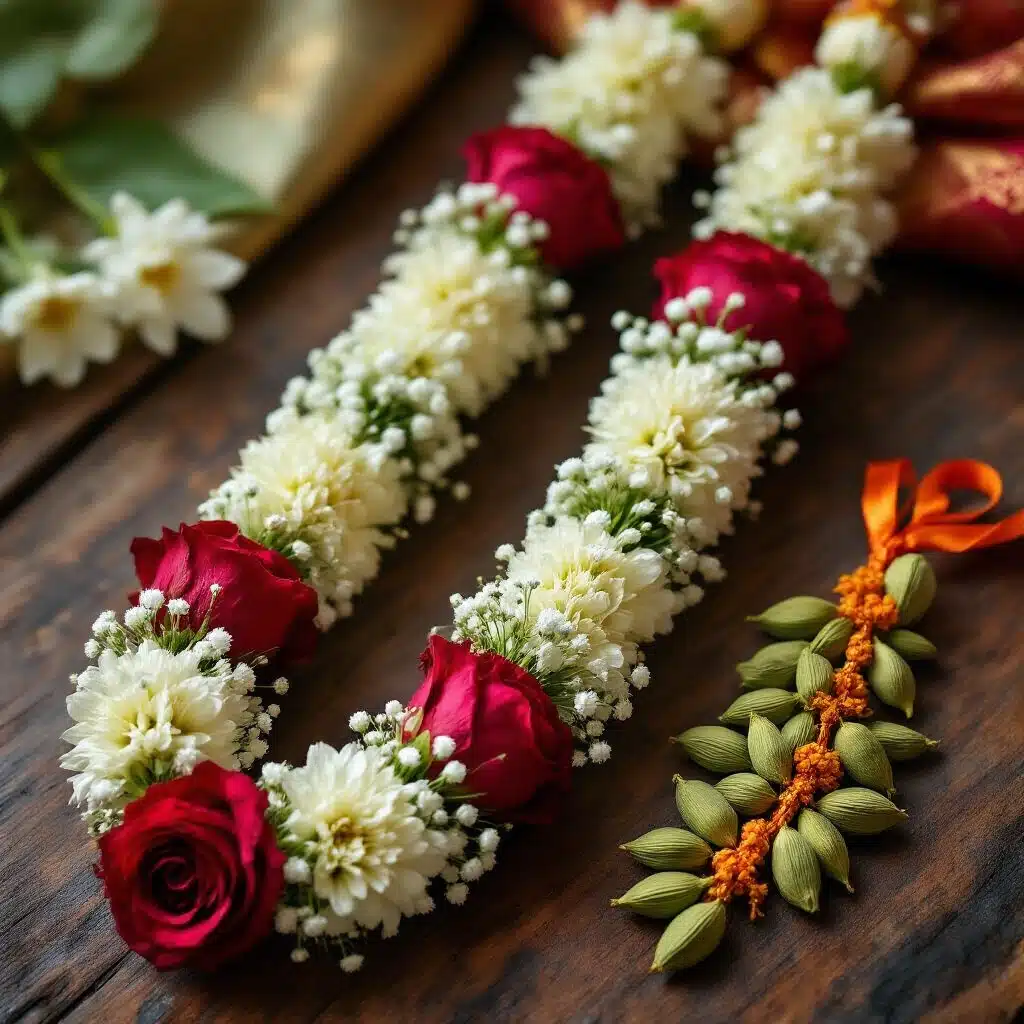
Cardamom (Elaichi) Garlands
These are made from whole green cardamom pods, sometimes decorated with beads and ribbons.
They smell absolutely incredible — warm, spicy, and totally unique.
Here’s what makes them practical too:
- They can stay fresh and usable for up to 3 months when kept dry
- They don’t wilt, droop, or brown in the heat
- They’re used for wedding exchanges, honoring elders, and devotional ceremonies
If you’re having an outdoor summer wedding or a long ceremony, a cardamom garland is genuinely one of the smartest choices you can make.
Cardamom + Clove Garlands
This is the “spice mala” style — combining cardamom and cloves in a traditional pattern.
The result is a deeply aromatic garland that feels both ancient and absolutely intentional.
Used in weddings, honoring ceremonies, and devotional décor across South India.
Betel Leaf Garlands
Betel leaves are everywhere in South Indian rituals — and turning them into garlands gives your ceremony a lush, green, incredibly traditional feel.
Sometimes combined with flowers, sometimes used alone. They’re also great for honoring guests and elders during the ceremony.
Tulsi (Holy Basil) Garlands
Tulsi garlands carry serious spiritual significance in South Indian weddings.
They bring a natural, spiritual, slightly rustic quality to the couple’s look that you simply cannot replicate with flowers alone.
If you’re going for a boho-meets-traditional aesthetic, tulsi garlands
Want to keep this one?
We'll email you the link so you can find it again later.