Comprehensive Outline: Beach Wedding Dress
Beach wedding dress shopping throws up a problem most bridal shops don’t prepare you for: the gowns that look stunning on a studio model, under controlled lighting, often fall apart the moment they meet sand, sun, and a stiff onshore breeze. I’ve stood on enough shorelines in a waistcoat, waiting for a bride to arrive, to know exactly which dresses handle a coastal ceremony with grace and which ones become a fifteen-minute wrestling match with wind and hemline. So let’s get into what actually works.
A beach wedding dress needs to cope with *heat, humidity, wind, sand* underfoot, and surfaces that are rarely flat. That’s the whole brief, really. The ideal gown holds bridal elegance while staying light enough to move in and resistant to dragging through anything gritty. And here’s where I’ll push back on a common assumption: beach doesn’t automatically mean casual. I’ve conducted barefoot ceremonies with the bride in cut-off shorts, and I’ve conducted beach weddings so formal they’d have looked at home in a cathedral. The setting tells you about climate and terrain — it tells you very little about formality.
What actually determines the right dress is a longer list than most couples expect:
- the dress code you’ve set (or not set)
- the time of day
- whether ceremony and reception happen in the same spot
- the climate and realistic weather for that week
- how formal the day is meant to feel
- your own taste, which matters more than any of the above
Why Beach Gowns Need Different Thinking Than Ballroom Gowns
A heavily structured gown with boning, multiple underskirts, and a long train was built for flat marble floors and air conditioning, not for soft sand at 28 degrees. Heavy layers trap heat fast. I’ve watched a bride go pale under a corseted bodice in May sunshine before we’d even reached the vows — we finished the ceremony in the shade of a beach hut instead, which wasn’t the plan but worked out fine.
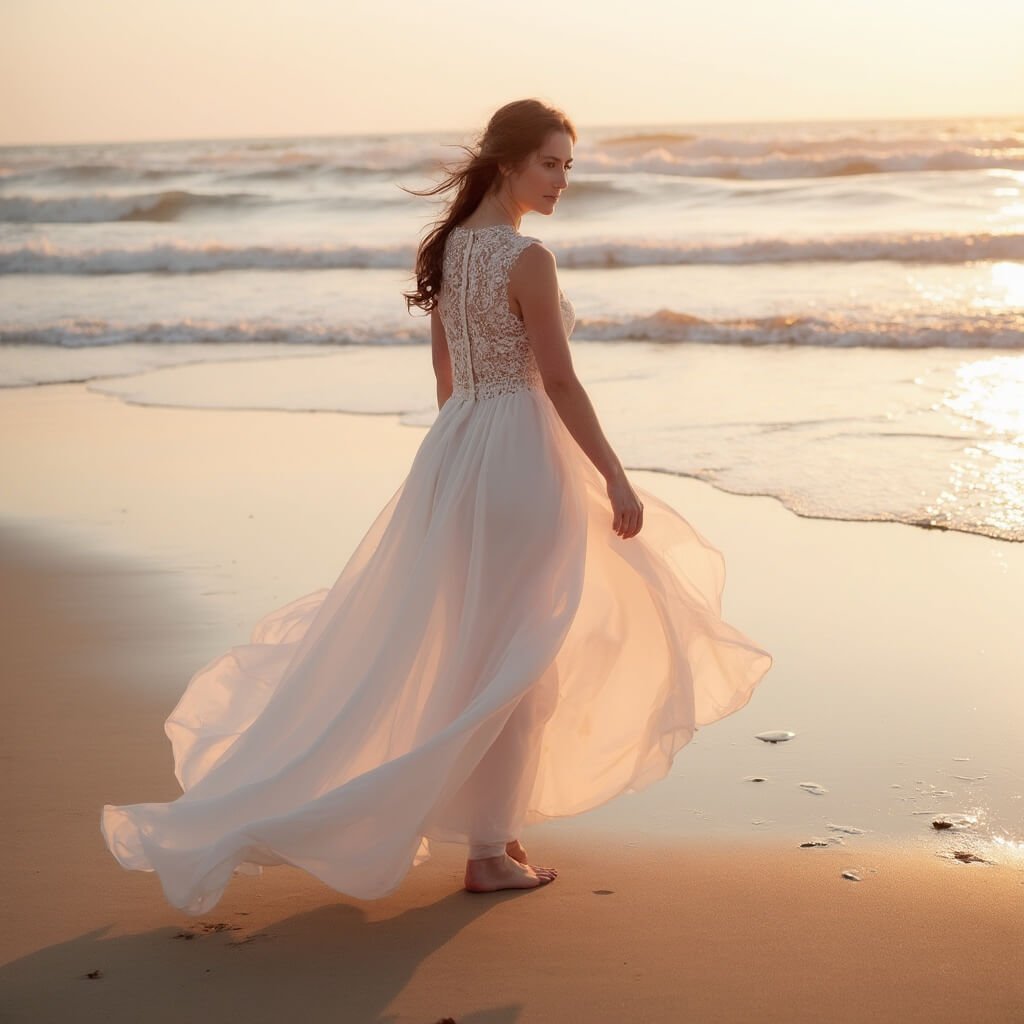
Lighter fabrics and fluid shapes move with a sea breeze rather than fighting it. Shorter, more manageable hemlines mean less sand collection and fewer trip hazards — genuinely a bigger issue than people think, because sand shifts underfoot in a way solid ground doesn’t. Thin stiletto heels are close to useless on sand; they sink, they tilt, they turn a graceful entrance into a slow stagger. And then there’s the environmental side — wind, sun, humidity and salt air all have opinions about your hair, your makeup, your accessories, and the dress fabric itself.
The One Principle That Matters Most
Comfort first, formality second — never the other way round. That’s not me being soft on tradition; it’s practical advice from someone who’s watched brides fidget through their own vows because a bodice was too tight or a hem kept catching underfoot. The dress has to work while standing at the altar, walking across sand, sitting for a meal, dancing, and posing for photos that will outlast the day itself. Try all of that in the fitting room, not just the standing-still part.
Match the gown to the actual venue, not to a Pinterest board. Is the ceremony directly on the sand, or on a boardwalk, or on grass near the water? Will the reception move indoors afterwards, into air conditioning, or stay outside as the temperature drops? These details change which dress is right far more than any photograph can tell you.
Choosing the Right Silhouette
A-line dresses remain the safest, most universally flattering choice, and there’s a reason they’re still everywhere. A fitted bodice with a skirt that flares gradually gives you movement without the bulk of a ball gown. They suit pear, hourglass, and rectangle shapes particularly well, and they read as traditional without feeling heavy. Go for chiffon, crepe, organza, or a lightweight lace — skip the heavily layered satin versions, which hold heat.
Sheath and column dresses sit close to the body and read as modern and minimal. They’re excellent for narrow beach walkways and smaller destination weddings where a huge skirt would be impractical anyway. Stretch crepe or jersey gives you the ease of movement a rigid column shape sometimes lacks — though do check the skirt doesn’t restrict your stride on uneven sand, because a too-narrow hem can turn a confident walk into tiny, careful steps.
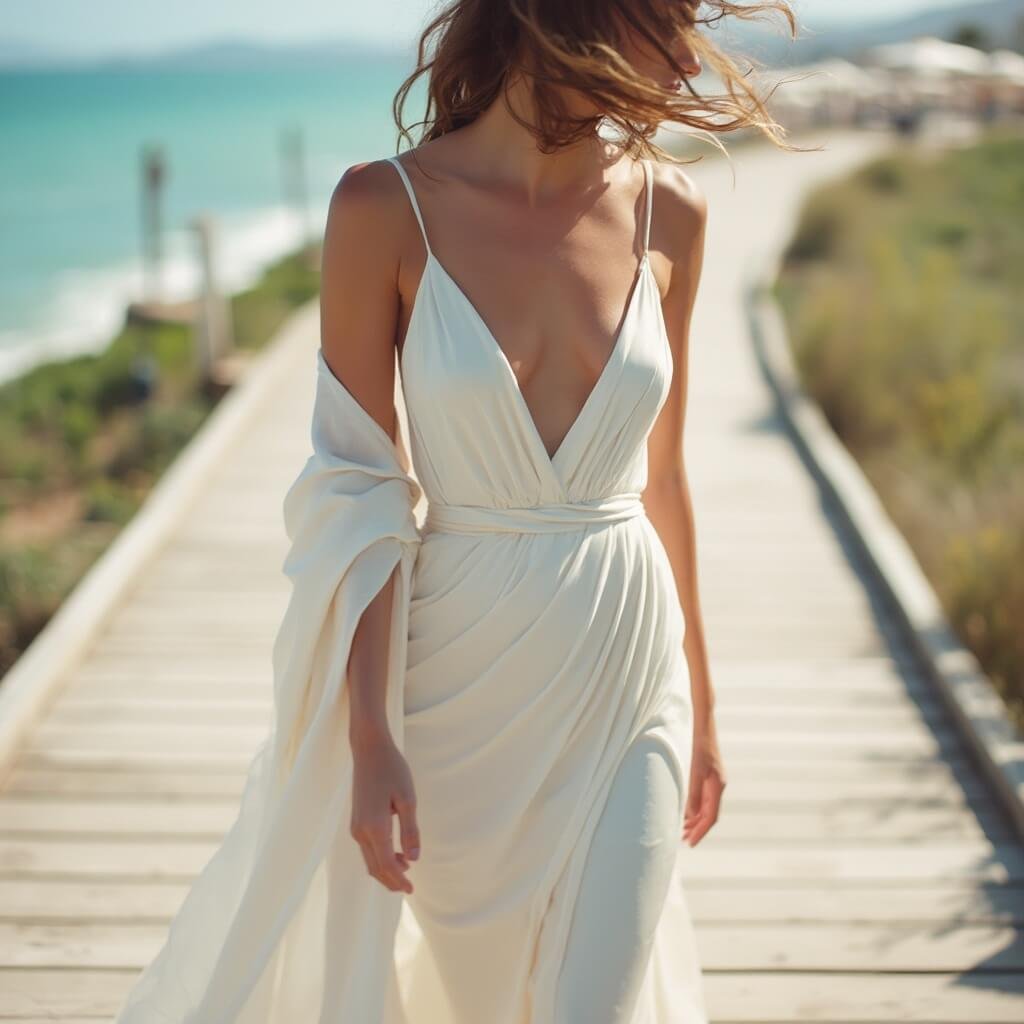
Slip dresses are everywhere in 2026 bridal collections, and for good reason on a beach. Simple lines, narrow straps, fluid fabric that drapes rather than structures — it’s an understated, destination-friendly look that photographs beautifully against water. Style it with a detachable veil, pearl or shell accessories, a sheer overskirt, or a light wrap for evening. The drawback worth knowing about upfront: minimal construction can mean minimal bust support, and thin fabric needs proper lining or you’ll be dealing with transparency issues in strong sun.
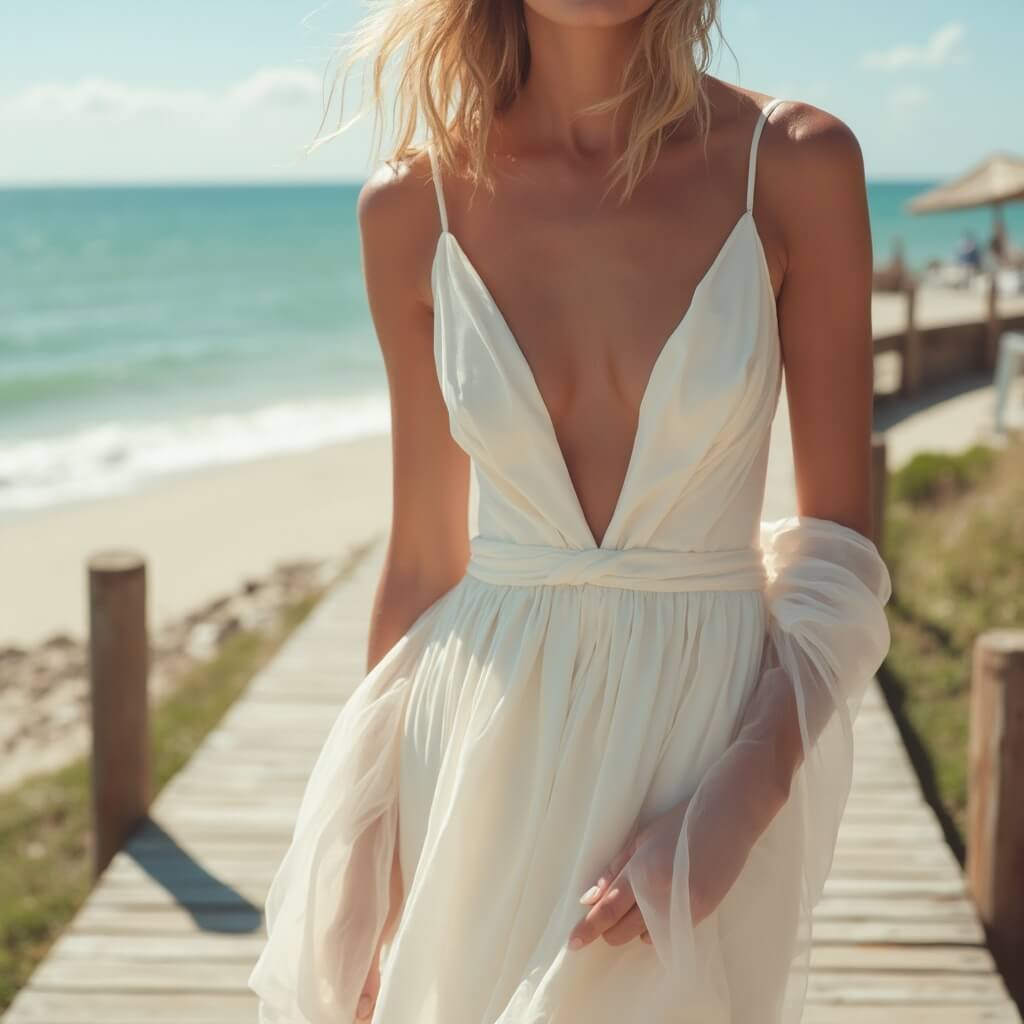
Empire-waist gowns sit the waistline below the bust and let the skirt fall freely from there — a genuinely comfortable choice, particularly for bohemian or romantic destination weddings. Chiffon, georgette, and soft tulle all create that breezy effect well. Just check the waist seam doesn’t dig in; it’s a small detail that causes outsized discomfort over a long day.
Fit-and-flare and trumpet styles give you a more defined, glamorous shape while staying lighter than a full ball gown. They work best on firmer ground, with a short train or a train built to bustle easily. I’d steer clear of an extremely tight skirt if you’re walking any real distance through soft sand — I’ve seen a bride have to take tiny shuffling steps the whole length of an aisle because the skirt simply wouldn’t allow more, and it wasn’t the elegant effect she’d imagined.
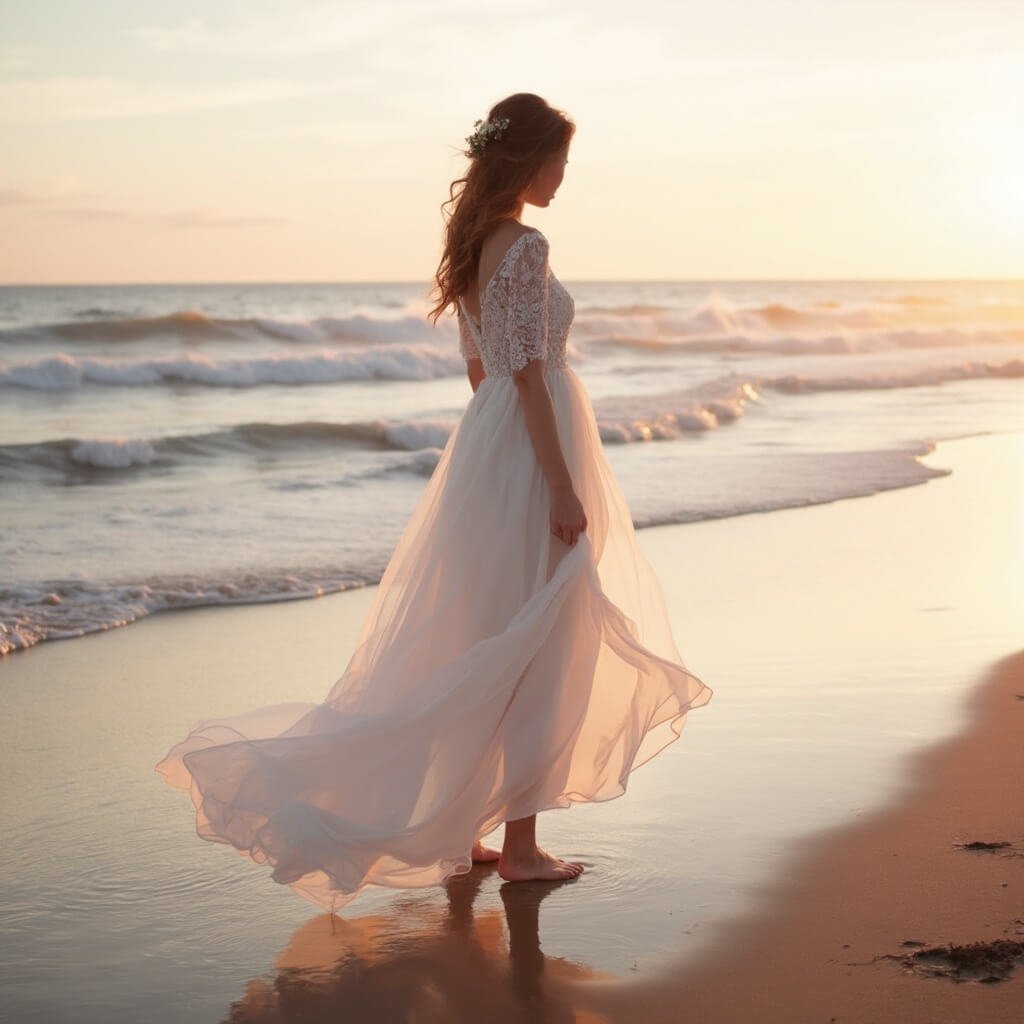
Ball gowns can absolutely work for a formal beach wedding, but the fabric choice matters enormously. Lightweight tulle, airy organza, minimal underskirts, breathable lining — yes. Excessive crinoline and dense beading in a hot climate — no, not unless you enjoy suffering for photographs. A detachable overskirt is a clever compromise: dramatic for the ceremony, then lighter for the reception once it’s unclipped.
Short, tea-length, and high-low dresses are the practical choice for sand, heat, and informal ceremonies. Tea-length has a lovely vintage quality while keeping the hem well clear of the ground. High-low gowns give you a formal front view with an easier hem to actually walk in. These suit civil ceremonies, elopements, and brunch receptions particularly well — though if you want that classic long-aisle photograph, consider a second, longer look for the ceremony itself and something shorter for the party after.
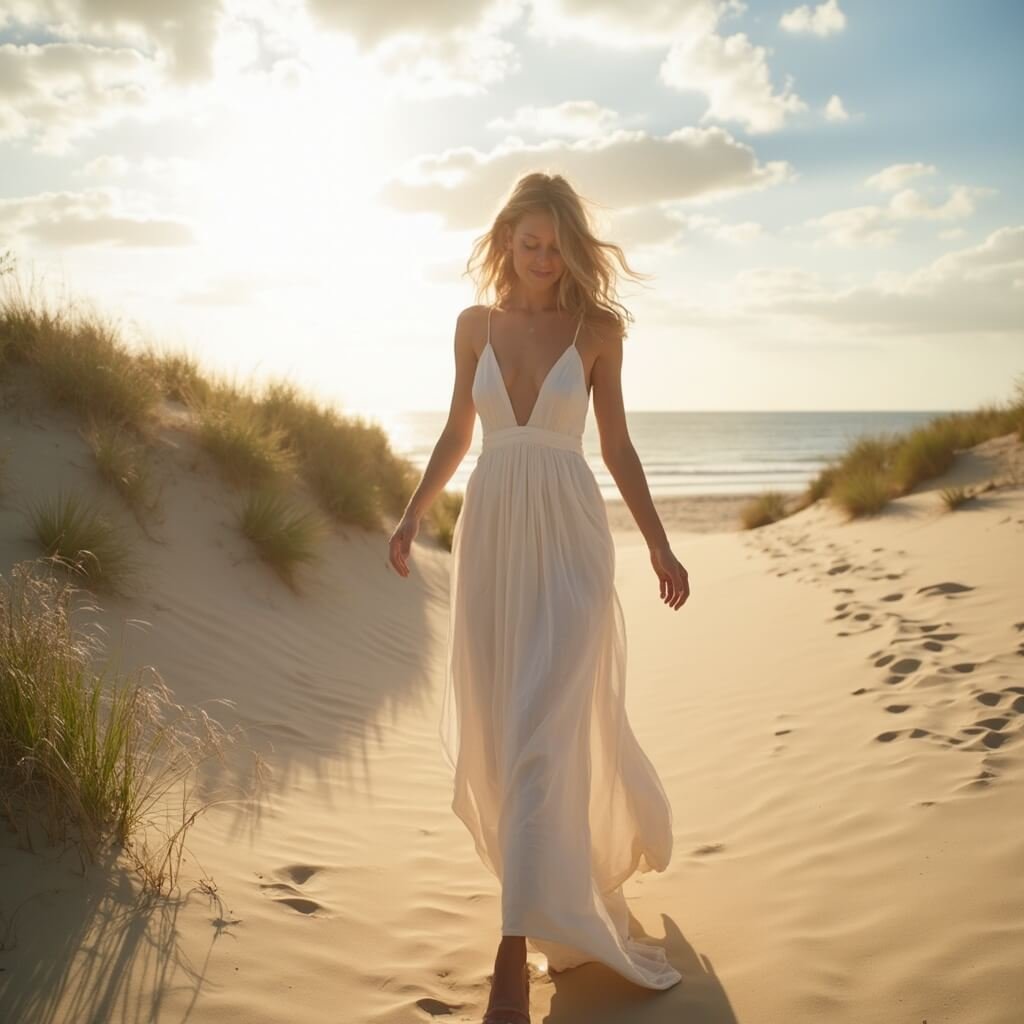
Jumpsuits and two-piece alternatives offer mobility that a conventional gown simply can’t match, and they’re increasingly common for travel weddings and courthouse-to-beach celebrations. Look for wide-leg cuts in crepe, linen blends, or fluid silk. A detachable skirt or cape attached over the top can soften the look for a more traditional ceremony moment, then come off for dancing.
Choosing Fabric for a Coastal Climate
Fabric choice probably matters more on a beach than anywhere else, because the environment is actively working against the wrong one.
Chiffon is lightweight and fluid, moves beautifully in sea air, and suits A-line skirts, empire waists, and flowing sleeves alike. Use a proper lining, though — strong sunlight has an unflattering way of revealing exactly what chiffon alone cannot hide.
Georgette behaves similarly but holds slightly more structure, which makes it a good middle ground if you want movement without quite so much transparency to manage.
Organza gives light structure with a crisp, airy look — lovely for overskirts or subtle sleeve details — but dense layers of it in extreme heat start to feel more like armour than fabric.
Crepe has a smooth surface with a little stretch, suiting sheath and column shapes well. Matte crepe in particular cuts down on glare in direct sun, which satin simply can’t manage.
Lightweight silk looks genuinely luxurious and suits an evening beach wedding especially well, but it comes with real caveats — it shows water spots, it wrinkles in transit, and some silk weaves need far more careful handling than a bride wants to think about on her wedding morning. If you want silk, choose a durable, breathable blend rather than the most delicate option in the shop.
Linen and linen blends breathe beautifully and have a naturally relaxed look that suits bohemian or courthouse-style weddings. Pure linen wrinkles fast — a linen-cotton or linen-rayon blend softens that tendency considerably. It can read as less traditionally bridal unless you dress it up with lace or embroidery.
Cotton and cotton blends are comfortable in heat and work well for short or casual dresses. Polished cotton voile or a cotton-silk blend gives you that breathable comfort without looking like loungewear.
Lace adds texture and romance without needing heavy embellishment, and lightweight lace in particular suits boho or vintage-inspired coastal themes — it’s one of the standout trends for 2026 bridal, alongside softer silhouettes and vintage-style veils. Just avoid the thick, heavily layered varieties if you’re marrying somewhere genuinely hot.
A few fabrics I’d steer you away from altogether: heavy satin, which retains heat and throws unflattering glare in sunlight; velvet and brocade, wrong on every count for sand and heat; dense beading and sequins, which add weight you’ll regret by hour three; and very delicate silks, which stain and water-spot more easily than brides expect.
Explore more about ethereal beach wedding dress inspiration or check out different short wedding dress styles for beach ceremonies.
👇Shop the Look Here👇
Getting the Length and Train Right
Short and midi lengths keep the hem away from sand and water altogether, which sounds like a small thing until you’ve actually tried dancing in a floor-length gown on compacted sand with a drink in your hand. They make walking, sitting, and queuing for the loo considerably easier too — nobody puts that in the brochure, but it’s real.
Floor-length gowns remain entirely appropriate for a formal beach wedding; just have the hem finished so it skims the ground rather than trails through it, and do the final fitting in the actual shoes you’ll wear on the day. I’ve seen hems hemmed perfectly for a two-inch heel, then the bride swaps to flat sandals that morning because of the sand, and suddenly she’s standing on four extra inches of fabric.
Save this article
Enter your email and we'll send it straight to your inbox.
A sweep train — the kind that extends just slightly behind the dress — strikes a sensible balance. You get the traditional bridal silhouette without dragging half a metre of fabric through wet sand, and most planners I know would point a bride here first if she wants “some train” without the maintenance headache of anything longer.
Court trains offer more drama but need a proper bustle for the reception, and they’re really only sensible on a stable platform or firmly packed sand rather than the soft, dry stuff further up the beach. Long and cathedral trains can produce genuinely striking photographs — the kind that end up printed and framed — but they’re far more vulnerable to sand, moisture, wind, and snagging on anything underfoot. If you want that look, accept the trade-off going in: you’ll need an attendant managing the train constantly, or you’ll want a detachable version you remove the moment the ceremony photos are done.
On bustling: get a bustle designed specifically for your dress’s fabric weight and train style, not a generic version the seamstress has used on ten other dresses. Practice it beforehand — actually practice, with someone other than you doing the fastening, because you won’t be the one bustling your own dress on the day. Ask for reinforcement at the bustle points, hem edges, straps, and hooks, and bring your actual wedding shoes and underwear to every single fitting. Fittings done in the wrong shoes are fittings that need redoing.
Necklines, Sleeves, and Keeping Things in Place When It’s Windy
V-necklines elongate the torso and suit a flowing skirt nicely. Sweetheart necklines give you that classic bridal shape without fuss. Square necklines feel a bit more architectural and modern if that’s the direction you’re going. Halter and high necklines genuinely earn their keep in wind — there’s a security to them that a strapless dress just doesn’t offer, which matters more on an exposed stretch of coast than most brides anticipate. One-shoulder styles are having a moment in beach bridal right now, but test the fit properly before committing; an asymmetric neckline that slips is a problem you’ll be fixing all afternoon.
Strapless dresses can absolutely work in calm weather and high heat, but they need serious internal structure and a proper fit through the bust, done by someone who alters bridal wear specifically. In strong wind, or if you’re the sort of bride who moves around a lot rather than standing still for photos, a strapless gown becomes more work than it’s worth.
Sleeves are underrated. Flutter, cap, and short sleeves give you coverage without blocking airflow, which matters more than people assume once you’re standing in direct sun for twenty minutes during the ceremony. Sheer long sleeves look romantic in photos but run warm in humidity — I’d only recommend them for an evening wedding or a cooler climate. Loose sleeves beat tight ones every time in heat, and they’ll also protect your shoulders from sunburn, though you still need sunscreen underneath; fabric alone isn’t SPF.
On support: choose built-in cups or a structured bodice if you need it, pick breathable and seamless undergarments, and test any body tape in actual warm conditions before the day — tape that holds in an air-conditioned fitting room can behave very differently once you’re sweating gently in 30-degree heat. And check lightweight fabrics against pale undergarments in daylight, not just under shop lighting, because what looks fine indoors can look very different outside.

Matching the Dress to the Actual Dress Code
A casual beach wedding gives you the most freedom — a short white dress, a linen-blend gown, a simple midi, even a relaxed jumpsuit all work, paired with flat sandals or bare feet, minimal jewellery, and hair left loose or simply pinned back from the wind.
Semi-formal or beach-formal weddings call for something a touch more polished: a midi, tea-length, or floor-length gown in chiffon, crepe, or a refined lace, worn with dressier sandals or a low block heel, pearl jewellery, and perhaps a short veil.
Formal beach weddings deserve an elegant floor-length gown with a controlled train — I’d favour sophisticated construction over sheer volume here. Draping, understated beading, structured bodices, and detachable sleeves or overskirts all read as properly formal without fighting the setting. And I’ll say this plainly because couples get it wrong constantly: a beach setting does not lower the dress code automatically. If the invitation says black tie, the beach outside the window changes nothing. Check the wedding website.
Beach wedding suit ideas for the groom and bridesmaids can help maintain the dress code consistency.
Evening beach weddings can lean into slightly richer fabric and deeper accent colours, and you’ll want a shawl, cropped jacket, or lightweight wrap on hand once the sun goes down and the temperature drops faster than guests expect. Don’t assume an evening coastal wedding is automatically relaxed — some of the most formal weddings I’ve worked were timed for sunset specifically because of how the light looks in photographs.
Destination weddings add a logistical layer most people don’t think through until they’re standing at an airport check-in desk with a garment bag that won’t fit in the overhead locker. Confirm your airline’s policy, favour wrinkle-resistant fabric blends, and look for a dress with detachable components that pack down smaller. Ask your venue directly whether they offer professional steaming on arrival — many beachfront hotels do, and it’ll save you from steaming a silk gown yourself in a bathroom with questionable water pressure, which I’ve watched a bridesmaid attempt once with mixed results.
Colour, Embellishment, and Coastal Details
Bright white reads as a strong, clean contrast against sand and sea, which some brides love and others find a bit stark in photographs. Ivory and champagne soften that contrast considerably in strong sunlight — worth trying both against your actual skin tone outdoors, not just under shop lighting, because the difference is more noticeable on a beach than almost anywhere else. Blush, nude, and pale blue suit a more romantic or less conventional ceremony.
Beyond traditional bridal shades, a lot of coastal brides are drawn to a softer natural palette: sea glass green, pale blue, sand, shell pink, coral, soft sage, pearl, and warm ivory all sit comfortably against a beach backdrop in a way that a stark white sometimes doesn’t.
On embellishment, lighter is almost always better here. Lightweight embroidery, small pearls, shell-inspired details, or subtle sequins add interest without adding the discomfort of heavy beading in heat. Place them where they’ll actually be seen — bodice, waistline, sleeve edge, veil hem — rather than scattering them everywhere, and ask your seamstress to check embellishments against delicate fabric so nothing snags during the day.
Boho wedding dress inspiration for beach ceremonies can provide ideas for incorporating coastal motifs like pearls, shells, raffia-inspired accessories, botanical embroidery, and wave-like draping.
Shoes That Actually Work on Sand
Barefoot ceremonies suit informal weddings directly on soft sand, and a barefoot sandal, ankle chain, or simple foot jewellery can look lovely for photos — just keep proper shoes nearby for the walk back, the reception, and any receiving line that involves standing on hot pavement.
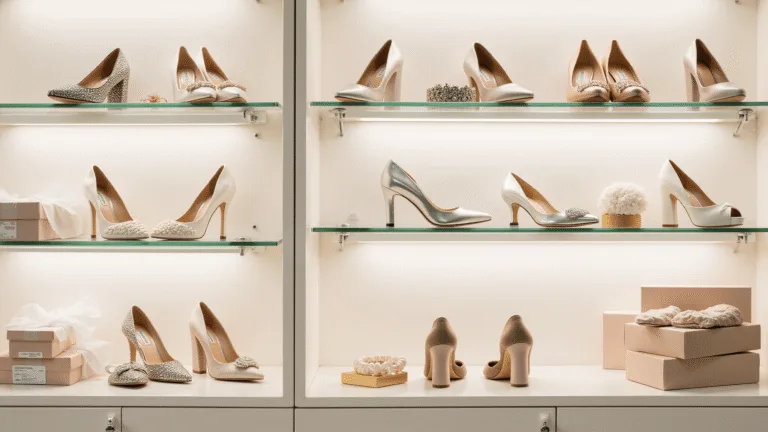
Flat sandals are the dependable option: stable, simple, and they pair well with short dresses, midi gowns, and slip silhouettes alike. Wedges and espadrilles give you height without the instability of a narrow heel, and their broader base genuinely does cope with sand and grass far better than a stiletto ever could — just have the wedge height confirmed before your final hem alteration, not after. Block heels are the right call for a more formal venue with hard flooring or firmly packed sand.
What to avoid is a short list but an important one:
- thin stilettos on soft sand, which sink and tilt with almost every step
- shoes that trap sand inside them
- brand-new shoes with no break-in time beforehand
- delicate materials that stain the moment they touch damp sand
- heels so high they turn walking into a genuine hazard
Accessories Worth Thinking Through Properly
Shorter veils — fingertip, birdcage, shoulder-length, or short chapel length — are far easier to manage outdoors than anything longer. A cathedral veil photographs beautifully but catches wind in a way that can genuinely take over a ceremony; I’ve watched one wrap itself around a groomsman’s arm mid-vow. Secure whatever length you choose with a comb, pins, or hidden grips, and actually walk around in it beforehand so you know how it behaves.
For hair, pearl pins, shell combs, floral crowns, woven or raffia headpieces, and simple metal clips all suit the coastal mood without fighting the wind too much. For jewellery, pearls and mother-of-pearl lean naturally into the setting, gold warms up nicely against ivory and sunset light, and silver or platinum suits a cooler, blue-toned palette — just avoid anything oversized that might catch in lace or a fluttering hemline.
Bring a cover-up regardless of forecast. A lightweight shawl, sheer cape, cropped jacket, or lace bolero earns its place the moment the sun dips and the temperature drops faster than anyone accounted for. And pack the unglamorous essentials too: sunscreen, blotting papers, water-resistant makeup, fashion tape, a small sewing kit, stain wipes, comfortable shoes for the reception, a travel steamer, and a proper garment bag for transport. None of this is exciting to pack, but I’ve yet to work a beach wedding where at least one of these items wasn’t needed within the first hour.
If I’m giving one final piece of practical advice, it’s this: try your shortlisted beach wedding dress on outdoors before you commit, even if that just means stepping into a garden or car park in the shop’s spare fabric samples. Studio lighting and indoor mirrors flatter almost anything, and the only honest test of a beach wedding dress is how it behaves in actual sun, wind, and uneven ground.
Explore long sleeve wedding dress options for cooler coastal climates or evening ceremonies.
Discover beach wedding guest dresses for ideas on what friends and family can wear to complement your beach theme.
For a comprehensive look at beach wedding attire, check out What to Wear to a Beach Wedding: A Complete Guide.
👇Shop the Look here 👇
Want to keep this one?
We'll email you the link so you can find it again later.