Do You Need a Floor-Length Gown for a Black Tie Wedding?
A black tie wedding guest dress causes more last-minute panic than almost any other line on an invitation. I get the emails every autumn — “the invite says black tie, does that mean I need a ballgown?” — usually sent at about 11pm, usually from someone who has three weddings that season and a budget that doesn’t stretch to three ballgowns. So let’s sort this out properly.
The short answer: yes, floor-length is still the safest bet, but there’s more room to move than most wedding blogs admit.
What “Black Tie” Actually Means
Black tie is a formality level, not a colour instruction. It originated as menswear shorthand — tuxedo, bow tie, the works — and by extension it tells guests the evening will be dressy, the venue probably grand, and the whole thing pitched several notches above your average Saturday wedding. Think ballrooms, museums, hotels with chandeliers you could hide a small car in. These weddings tend to start later too, often after 5.30 or 6pm, which matters because evening formality reads differently to daytime formality.
It sits below white tie (gloves, tails, a level of formality most of us will never encounter outside a period drama) and above cocktail or “formal” dress codes, which give you far more latitude on length and fabric. Black tie optional is its own animal — I’ll admit I think it causes more confusion than black tie itself, because it invites everyone to interpret “optional” completely differently. Black tie proper is, at least, a clear instruction: full eveningwear, no negotiating.
None of this means you have to wear black. That’s the misconception I hear most often. The dress code is about formality, not palette. The one genuine no-go is white, or anything that reads as white from six feet away — ivory, cream, eggshell, the lot. Save those for the bride, obviously.
The Length Question
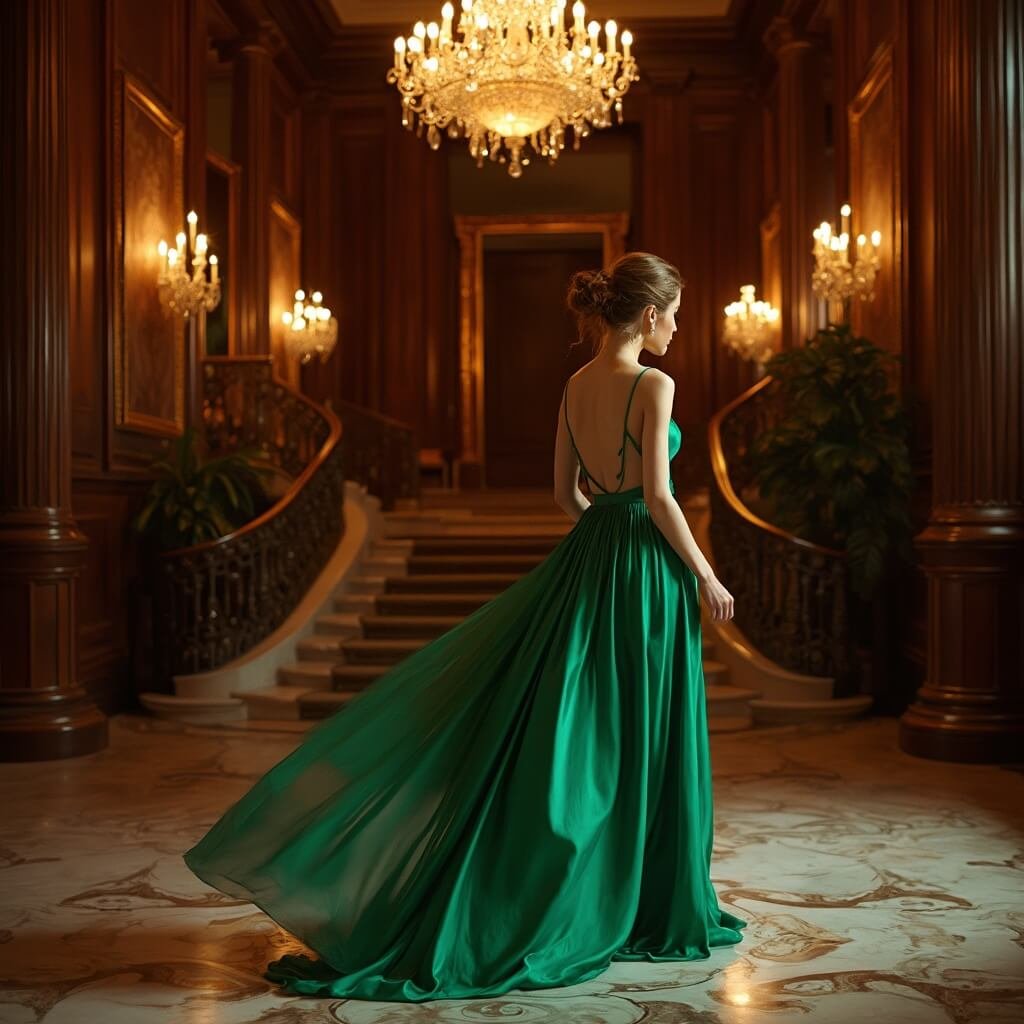
Floor-length remains the traditional, universally accepted standard for a reason: it visually matches the tuxedos in the room and it photographs beautifully against formal decor. If you’re unsure, a gown that skims the floor is never going to look wrong.
That said, modern etiquette has loosened slightly. A very formal midi or tea-length dress — think proper fancy-cocktail energy, not sundress — can work at more relaxed black tie weddings. If you go this route, keep the hem at or below the knee. Above-the-knee starts drifting into cocktail-party territory, and at a black tie wedding that reads as underdressed rather than fashion-forward.
There’s a trade-off either way. Floor-length is the safe, maximally formal choice, but it’s genuinely impractical for dancing, for warm venues, or for weddings held anywhere with gravel, grass, or cobblestones (ask me how I know — more on that in a minute). Midi and tea-length dresses are easier to move in and can feel fresher, younger, but only if the fabric and silhouette are elevated enough to carry the formality. A midi dress in printed cotton will not cut it. A midi dress in liquid silk satin, with a proper structured shape, absolutely can.
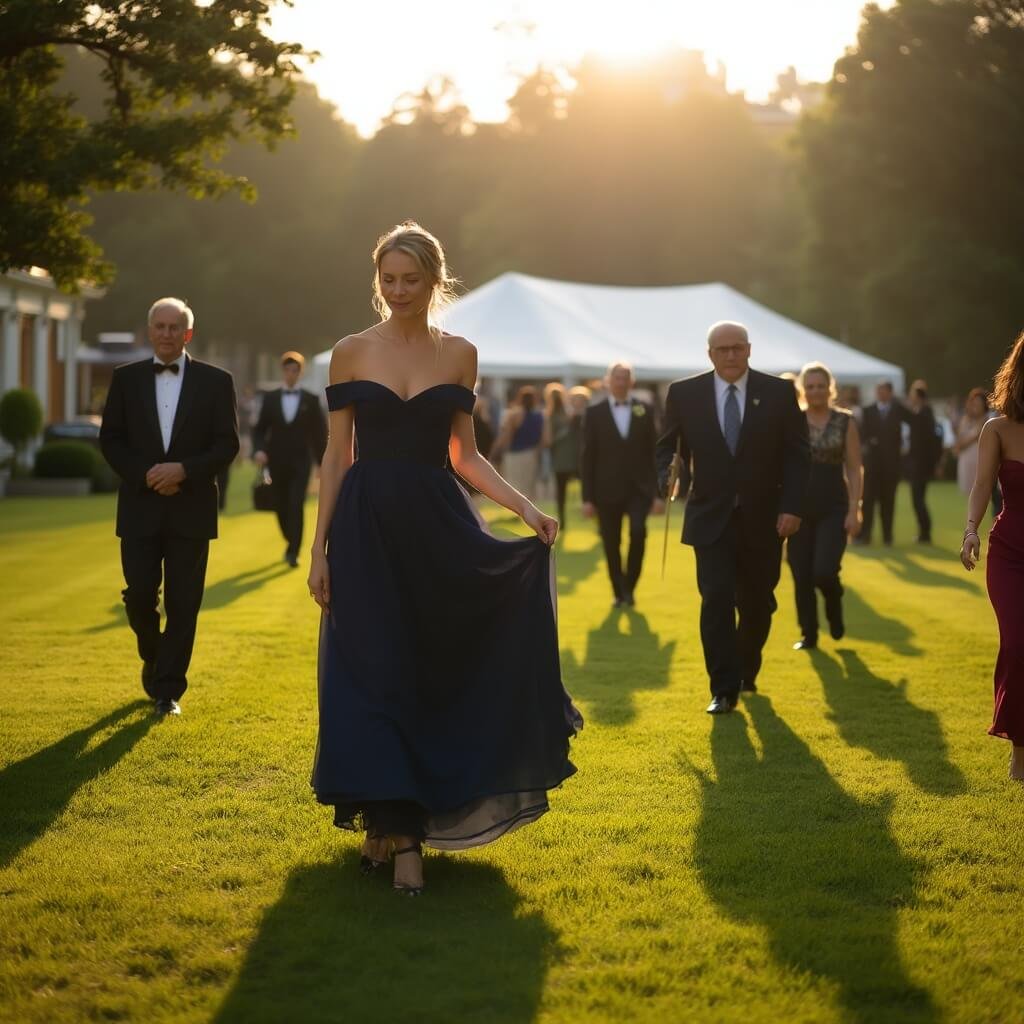
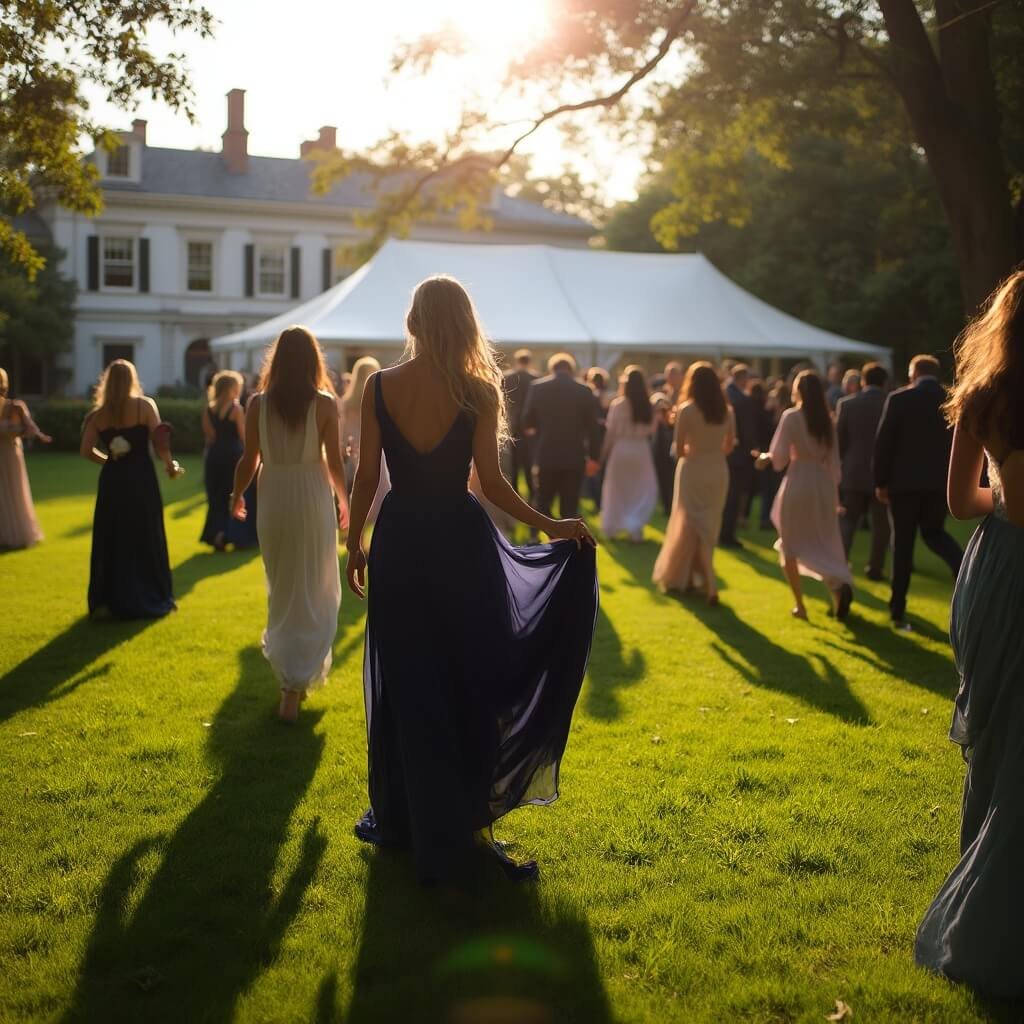
I officiated a black tie wedding a couple of years ago at a stately home with a lawn the size of a small park between the car park and the marquee. Watching guests navigate that lawn in floor-length gowns, heels sinking with every step, was its own small comedy. One woman gave up entirely and walked the last hundred yards barefoot, dress hoicked up in one hand, gown trailing grass stains along the hem. She looked completely elegant doing it, for what it’s worth. But it did make me think length and terrain deserve more consideration than most dress-code advice gives them.
Fabric Does More Work Than You’d Think
Here’s where I’ll be opinionated: fabric matters more than colour or even length when it comes to reading as “black tie appropriate.” A floor-length dress in cheap polyester still looks like fancy dress. A knee-length dress in proper silk crepe can look more expensive and more fitting than either.
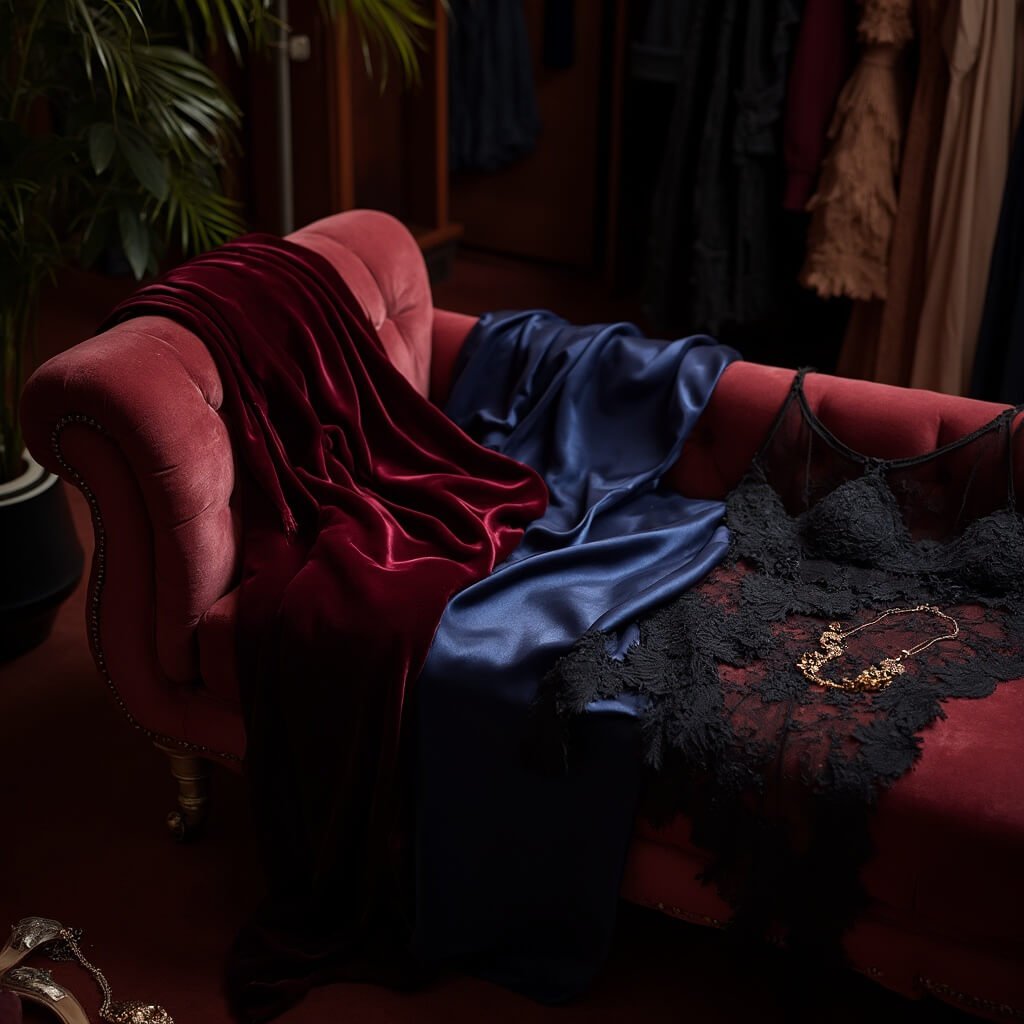
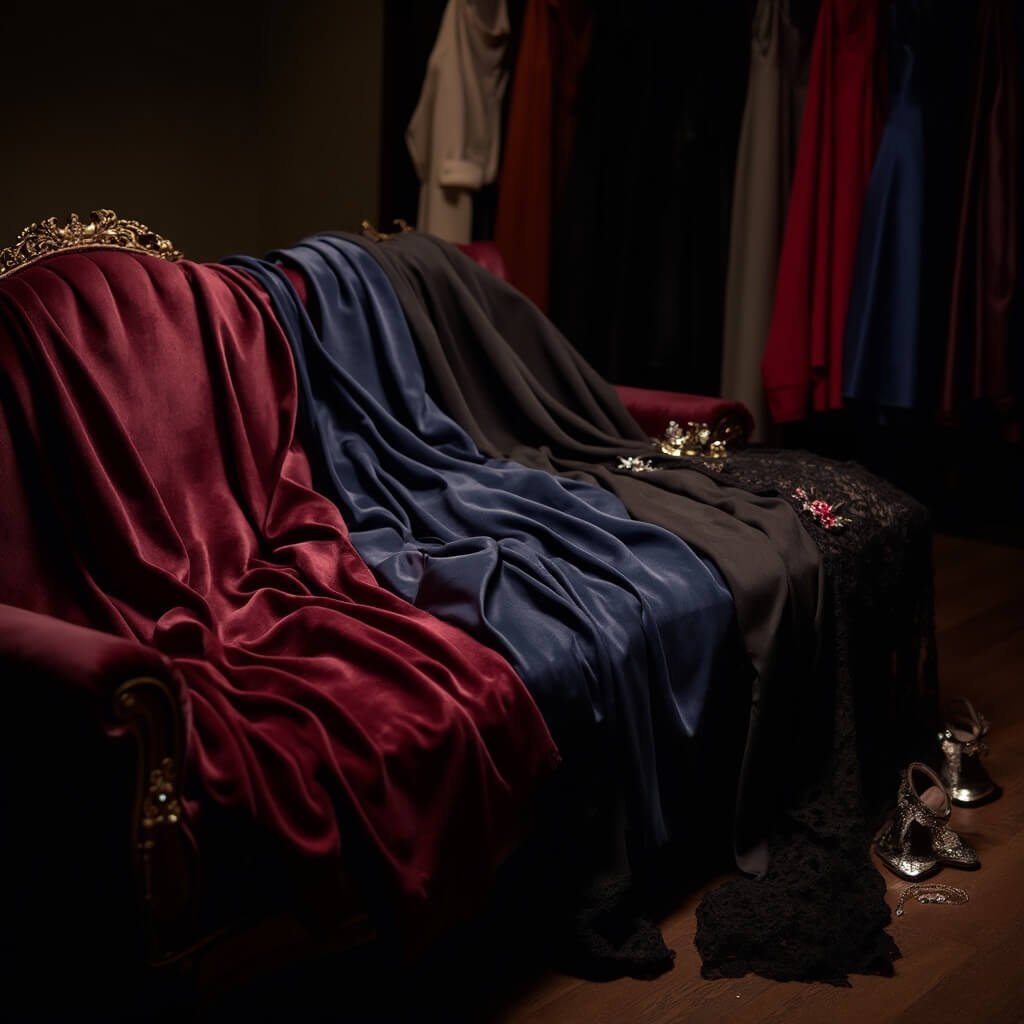
The fabrics that consistently work are the ones with weight and drape — silk, satin, velvet, chiffon, crepe, lace, organza, taffeta, that family of materials that catch light and move properly when you walk. Velvet in particular is underused, in my view; it reads as instantly formal and works beautifully for autumn and winter weddings.
Embellishment is fine, even expected, at this level of formality. Beading, sequins, jacquard weaves, subtle metallic threads — all of it signals evening dress rather than daywear. The only caution I’d offer is proportion: you want to look polished, not like you’re competing with the wedding party for attention.
What doesn’t work is anything that reads as casual regardless of how it’s styled. Denim, linen, seersucker, jersey, ordinary cotton — these fabrics carry a daytime or lounge-wear association that no amount of styling fully overrides. I’ve seen guests try to dress up a linen shift dress with heels and statement jewellery for a black tie do, and it never quite lands. The fabric gives it away before anyone even registers the cut.
Colour: Darker and Richer Wins
Classic black tie colours are dark and jewel-toned: black, navy, charcoal, deep grey for the safest end of the spectrum, and emerald, burgundy, aubergine, sapphire for something with more personality. Metallics — gold, bronze, silver — and deep neutrals like champagne or taupe also work well under evening lighting, which tends to be warm and low, flattering richer tones far more than pale, washed-out ones.
Pale pastels and neon brights are the colours to be cautious with. They’re not forbidden exactly, but they can look out of place against a formal indoor venue with dark wood panelling and low lighting — they tend to suit tropical or outdoor black tie weddings much better, where the whole atmosphere is lighter and less traditionally grand.
For more on dressing appropriately for a black tie event, check out our guide on elegant evening bridesmaid dresses or explore the appeal of a classic black tuxedo for men.
👇Shop the Look Here👇
Prints: Subtlety Over Boldness
Prints are where I see people get needlessly nervous. A subtle jacquard, a tonal floral that only reveals itself up close, a softly metallic brocade — these read as formal because the overall effect is still polished and controlled. Where prints go wrong is when they’re loud enough to become the main event. Save the bold tropical print for an actual tropical wedding, where the whole dress code shifts to match the setting. In a marble-floored hotel ballroom, it will look like you wandered in from a different party.
Save this article
Enter your email and we'll send it straight to your inbox.
Silhouette: Structure Over Skin
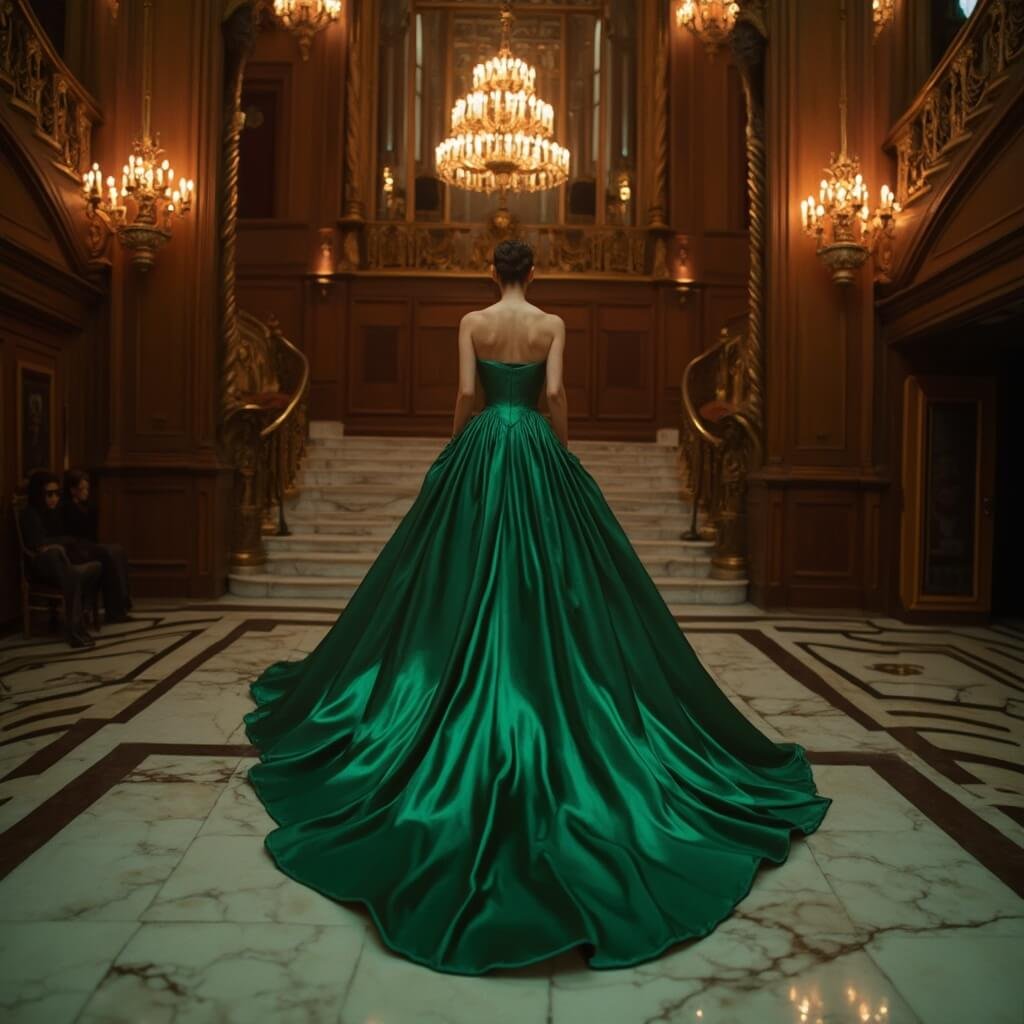
The classic black tie shapes haven’t changed much in decades, and that’s precisely why they still work. A clean column or sheath gown says modern minimalism. An A-line or fuller ballgown skirt says romantic and a bit more dramatic. A bias-cut slip dress in liquid satin says sleek, understated, slightly 1930s. All three are correct. What you’re aiming for is a shape that feels considered rather than an afterthought — nothing that looks like it was pulled from the “date night” section of a fast-fashion site and hoped for the best.
Newer silhouettes have crept into black tie territory too, and I don’t think that’s a bad thing. Asymmetric necklines, one-shoulder designs, draping that gathers at the waist, the odd scarf detail at the collarbone — these feel fashion-forward without dropping the formality. A structured bodice with a full skirt can be genuinely showstopping if you’ve got an event that calls for it.
Where I’d pull guests back is anything overly revealing — deep plunges, heavy cut-outs, fabric so tight it reads as clubwear. It’s not a moral judgement, it’s a formality one: black tie is about polish and coverage, and a dress that would suit a nightclub simply sits at odds with a room full of tuxedos and calligraphy place cards.
Beyond the Traditional Gown
Not everyone wants — or suits — a gown, and modern black tie weddings have genuinely made room for alternatives. A wide-leg jumpsuit in silk or crepe, in a dark or jewel tone, ticks every formality box a gown does, provided the tailoring is sharp and the fabric has proper weight to it. I’ve seen guests in a well-cut black silk jumpsuit look more put-together than half the gowns in the room, simply because the fit was so precise.
Timeless wedding dress inspiration
A women’s tuxedo is another option that’s moved from “bold statement” to “perfectly normal choice” in the space of a few years. Black or deep navy, styled with a silk camisole underneath rather than a shirt, paired with proper heels and polished hair — it reads as black tie formal while giving you something entirely different to wear than every other guest.
For guests who fall between these categories, a column skirt paired with a structured or embellished blouse can work, so long as the fabrics match the formality of everything around them. The failure point here is almost always the top — a cotton blouse or anything resembling office wear undermines a beautifully formal skirt in seconds. The whole outfit needs to read as one cohesive evening look, not separates borrowed from two different wardrobes.
A few guests need slightly different guidance, and it’s worth being specific rather than vague about it. If you’re pregnant, look for empire waistlines and soft draping in chiffon or jersey with a luxe overlay — comfort in the straps and bodice matters more than people admit, and you can still hit full black tie formality without underwiring digging in all evening. If you’re plus-size, wrap styles, A-line skirts, and corset-inspired bodices tend to be the most flattering starting points, and dark jewel tones with vertical detailing do a lot of the work for you. And if dresses simply aren’t your thing regardless of body shape or occasion, a tailored suit or tuxedo is not a compromise — it’s a legitimate, equally formal choice, provided the fabric and fit are held to the same standard as the gowns around you.
Finishing the Look
The dress is maybe sixty per cent of the outcome. Shoes, jewellery, and hair pull the rest of the weight, often more than people expect.
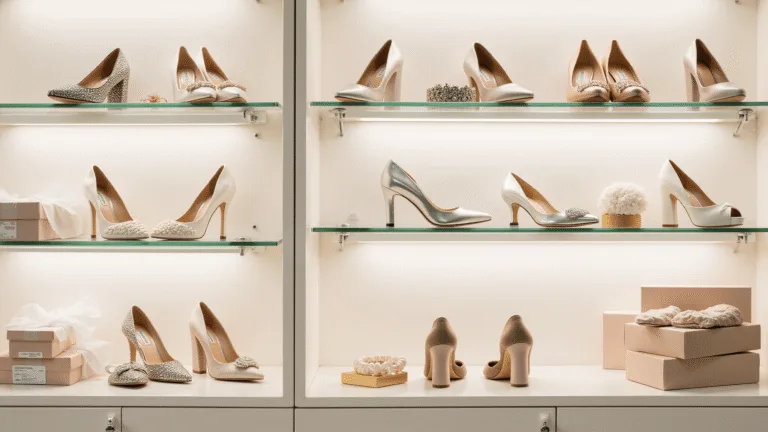
Heels should be dressy — strappy sandals, pumps, slingbacks, in metallics or a tone that either matches or deliberately contrasts your dress. Closed-toe formal shoes are the safer choice for a religious ceremony or a particularly traditional venue. What doesn’t work: anything that looks like it belongs on a beach or at a garden party, and I’d include most flip-flops and platform sandals in that category regardless of how expensive they were.
Jewellery works best restrained. One focal piece — statement earrings, a striking cuff — paired with something delicate rather than everything at once. A small structured clutch beats a tote or crossbody bag every time; black tie bags are meant to hold a lipstick and a phone, nothing more ambitious than that. If the venue’s cold, a proper evening wrap or tailored coat finishes things off — a denim jacket thrown over a satin gown, however practical, undoes the whole effort in one move.
Hair and makeup should match the formality rather than sit below it. A sleek bun, soft waves, a deep side part — any of these read as put-together without trying too hard. Makeup-wise, pick one focal point, a red lip or a smoky eye, rather than attempting both at once.
What This Actually Costs
None of this requires you to spend a fortune, whatever the wedding blogs imply. A genuinely appropriate black tie wedding guest dress typically lands somewhere between £150 and £400 if you’re buying new from a mid-range retailer, with fabric and construction quality doing most of the work in that price difference. If your budget’s tighter, plenty of online retailers do well-cut gowns in the £50–£120 range — you’ll just want to prioritise a simple silhouette in a good fabric over anything heavily embellished, since cheap beading and sequins are usually the first thing to give a lower price point away.
My honest advice: buy the simplest floor-length dress your budget allows, in a proper drapey fabric and a dark or jewel colour, and spend whatever’s left on decent shoes and one good piece of jewellery. That combination will see you through most black tie weddings you’re ever invited to, and it’s a far better use of money than one elaborate dress you’ll only wear once.
For further reading, consider checking out What to Wear (and Not Wear) to a Black Tie Wedding for more guidance on black tie attire.
👇Shop the Look here 👇
Want to keep this one?
We'll email you the link so you can find it again later.