Winter Bouquets That’ll Make You Forget It’s Freezing Outside
Winter Bouquets That’ll Make You Forget It’s Freezing Outside
Contents
Winter bouquets transform the dreariest months into something magical, and I’m here to show you exactly how to pull that off.
Look, I get it.
You’re staring out at a gray landscape wondering how on earth you’re supposed to create something beautiful when everything outside looks dead.
But here’s the thing nobody tells you: winter is actually one of the most spectacular seasons for flowers if you know what you’re doing.
The Flowers That Actually Work in Winter (And Why You Should Care)
I learned this the hard way at my first winter wedding back in 2019.
The bride wanted “summery” flowers in January, and let me tell you, that disaster taught me more about seasonal blooms than any textbook ever could.
The Real MVPs of winter include:
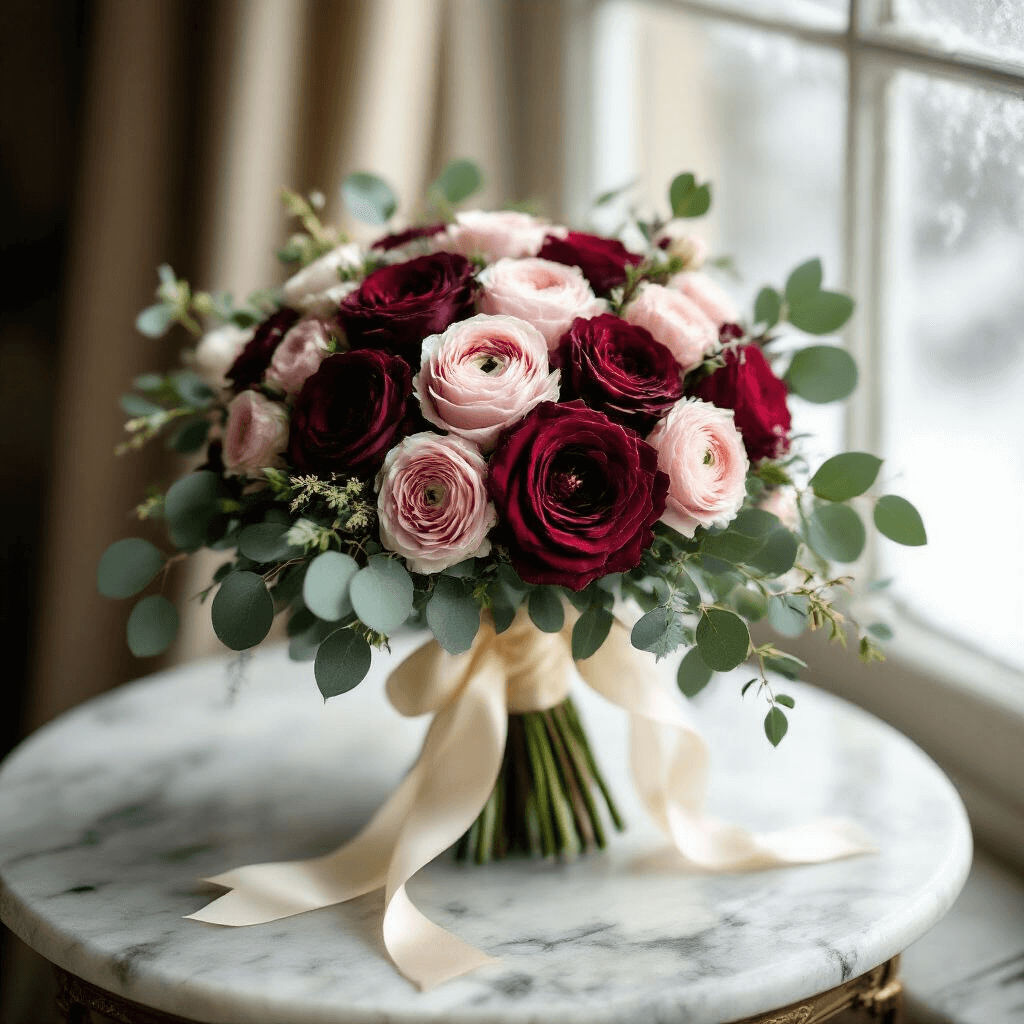
- Roses – They’re available year-round, but winter roses have this incredible depth of color
- Amaryllis – Massive, dramatic, and totally winter-appropriate
- Ranunculus – These paper-thin petals are actually at their peak in cooler months
- Anemones – Dark centers with delicate petals that scream sophistication
- Hellebores – Also called Christmas roses, and they bloom in actual snow
- Blue thistle – Adds texture that photographs like a dream
The secret weapon nobody talks about?
Evergreen elements.
Eucalyptus stems, white pine branches, dusty miller, and holly berries aren’t just filler.
They’re what make a winter bouquet actually look like it belongs in winter instead of fighting against the season.

Color Combinations That Won’t Make You Look Basic
I’ve seen approximately one million red-and-green winter bouquets.
They’re fine.
They’re predictable.
And honestly, we can do so much better.
Here’s what actually works:
- Deep burgundy with blush pink and sage green – This is my go-to when someone wants elegant without being stuffy. The burgundy roses or dahlias bring richness, the blush softens everything, and sage eucalyptus ties it together without screaming “Christmas.”
- Icy blue with silver and white – Perfect for winter weddings that aren’t happening near holidays. Think pale blue delphinium, white roses, silver brunia balls, and dusty miller. It’s like holding a snowstorm but prettier.
- Burnt orange with chocolate cosmos and copper accents – This one surprises people. It’s warm and cozy, perfect for late winter or early spring events. Add some copper wire fairy lights wrapped around the stems and you’ve got Instagram gold.
- All-white with varied textures – White roses, white ranunculus, white anemones with black centers, white tulips. Layer in different shades of green. This never looks boring if you pay attention to texture.
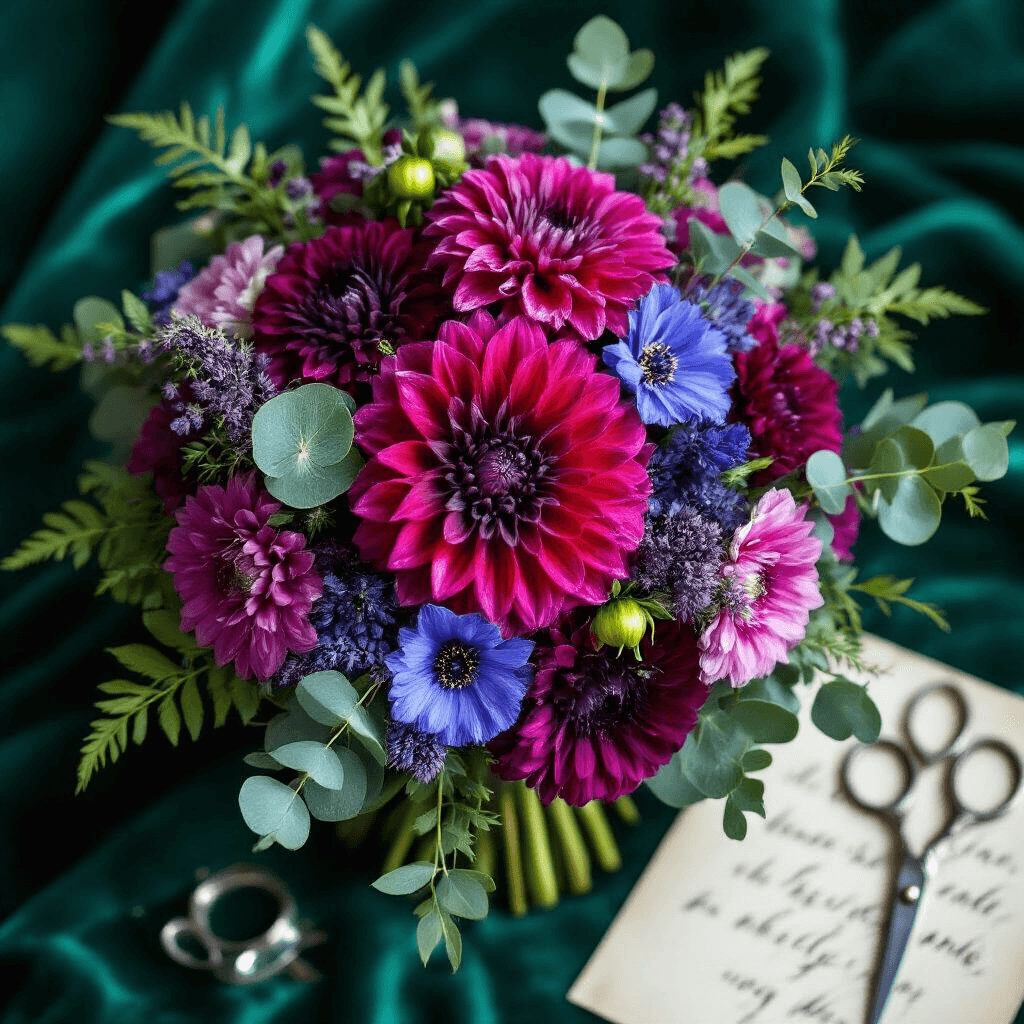
- Jewel tones gone wild – Fuchsia, deep purple, emerald green, sapphire blue. Winter is dark enough already. Sometimes you need flowers that punch you in the face with color.
How to Actually Arrange These Things
The arrangement style matters more than most people realize.
I watched a seasoned florist once spend forty minutes on a bouquet that took me three hours to replicate.
The difference wasn’t talent.
It was technique.
For Classic Formal Looks:
- Start with a bouquet holder with foam if you’re not confident in hand-tied arrangements.
- Build a base with your greenery first – this is the structure that holds everything together.
- Add your largest focal flowers at slightly different heights.
- Fill in gaps with smaller blooms.
- Finish with delicate elements like baby’s breath or astilbe around the edges.
- Wrap stems tightly with silk ribbon in a coordinating color.
For Organic Boho Vibes:
- This is where winter really shines.
- Start hand-tied, working in a spiral pattern.
- Mix fresh blooms with dried elements like pampas grass, bleached bunny tails, or preserved roses.
- Let some stems be longer than others – perfect imperfection is the goal.
- Add unexpected textures like air plants or small succulents tucked between flowers.
- Leave some stems visible instead of wrapping everything.
- Tie with leather cord or rough twine instead of fancy ribbon.
For Dramatic Cascading Styles:
- These take practice, but the photos are worth it.
- Weight is everything – you need sturdy flowers at the top and lighter blooms cascading down.
- Use trailing elements like ivy, jasmine vine, or amaranthus.
- The cascade should flow naturally, not look forced.
- This style drinks water FAST, so you’ll need a bouquet holder with good water retention.

The Mistakes Everyone Makes (Including Me)
- Ignoring seasonality – I cannot stress this enough. Stop trying to make peonies happen in December. They cost a fortune, they look sad, and everyone can tell they’re out of season.
- Forgetting about weight – A bouquet that looks stunning on the table becomes a nightmare when someone has to hold it for three hours. Your arm shouldn’t need a workout before the ceremony.
- Choosing all closed buds – They look tight and perfect when you make the arrangement, then nothing opens before the event. Mix bud stages.
- Skipping water – Even if you’re making the bouquet the morning of an event, those stems need water up until the last possible moment. Get yourself some
Post navigation
Similar Posts
DIY Anniversary Gifts for Him: Heartfelt Creativity That Speaks Volumes
Hey there, love-struck gift-giver!ContentsHey there, love-struck gift-giver!Why DIY Gifts are Relationship Gold5 Quick & Killer DIY Gift Ideas1. The Memory Explosion Box2. The “I Love…
Unforgettable Wedding Photo Ideas That Will Make Your Day Magical
Behind-the-Scenes: Getting Ready MagicContentsBehind-the-Scenes: Getting Ready MagicThe Ceremony: Your Love Story UnfoldsFamily Portraits: Keeping It Real and LovingReception: Party Central DocumentedTrendsetting Photo Ideas for 2025Pro…
The Ultimate Guide to Celebrating a Golden 50th Wedding Anniversary
The Ultimate Guide to Celebrating a Golden 50th Wedding AnniversaryContentsThe Ultimate Guide to Celebrating a Golden 50th Wedding AnniversaryWhy the 50th Anniversary is Pure Gold…
Purple Wedding Flowers: Your Ultimate Inspiration Guide
Purple Wedding Flowers: Your Ultimate Inspiration GuideContentsPurple Wedding Flowers: Your Ultimate Inspiration GuideWhy Purple Flowers Are Wedding MagicWhy You’ll Love Them:Top Purple Wedding Flowers You’ll…
Anniversary Scrapbook: A Love Story Captured in Pages
Anniversary Scrapbook: A Love Story Captured in PagesContentsAnniversary Scrapbook: A Love Story Captured in PagesWhy Create an Anniversary Scrapbook?What You’ll Need: The Ultimate Scrapbook ToolkitEssential…
Jewel Tone Wedding Flowers: A Luxurious Floral Symphony for Your Special Day
Jewel Tone Wedding Flowers: A Luxurious Floral Symphony for Your Special DayContentsJewel Tone Wedding Flowers: A Luxurious Floral Symphony for Your Special DayWhy Jewel Tones…