Why Your Living Room Still Feels Like a Furniture Showroom (And How to Actually Make It Yours)
Why Your Living Room Still Feels Like a Furniture Showroom (And How to Actually Make It Yours)
Creating a home that feels lived-in without looking like a Pinterest fail starts with understanding one simple truth: your space should tell your story, not IKEA’s.
I’ve walked into countless homes where everything matches perfectly, but something feels… off. The cushions are fluffed just so, the coffee table books are stacked at precise angles, and not a single personal item disrupts the “aesthetic.” It’s beautiful, sure, but it feels about as welcoming as a dental waiting room.
Stop Decorating Like You’re Staging an Open House
Here’s what nobody tells you about home decor: the goal isn’t perfection.
Your home should feel like someone actually lives there—because, you know, someone does. That means embracing the beautiful mess of real life while still maintaining a space that doesn’t stress you out every time you walk through the door.
I learned this the hard way after spending three months perfecting my living room only to realize I was afraid to sit on my own couch. What’s the point of decorative throw pillows if you’re constantly moving them off the furniture just to exist in your space?
The Real Questions You’re Actually Asking
Before we dive in, let’s address what you’re probably wondering:
“How do I make my space look put-together without spending thousands?” You don’t need a complete overhaul—you need strategic changes.
“Why does my room feel cold even though I followed all the design rules?” Because rules killed personality, and personality is what makes a house feel like home.
“Can I mix different styles without looking like I furnished my place from random yard sales?” Absolutely, and I’ll show you how.
Start With What You Actually Use
The biggest mistake I see people make is buying decor before understanding how they live.
Ask yourself these questions:
- Do you actually read on that reading chair, or is it a laundry collection point?
- Does your coffee table need to display art books, or do you need space for actual coffee cups?
- Are you displaying things you love, or things you think you should display?
I once spent $200 on a decorative tray for my entryway console. Within a week, it became a dumping ground for keys, mail, and random receipts. The fancy tray didn’t change my behavior—it just made my mess look slightly more contained.
Layer Your Lighting (This Changes Everything)
Overhead lighting alone makes every room feel like an interrogation chamber.
This is the single most impactful change you can make, and most people completely ignore it.
Here’s what you need:
- Ambient lighting: Your overhead fixture or recessed lights
- Task lighting: Desk lamps, reading lights, under-cabinet strips
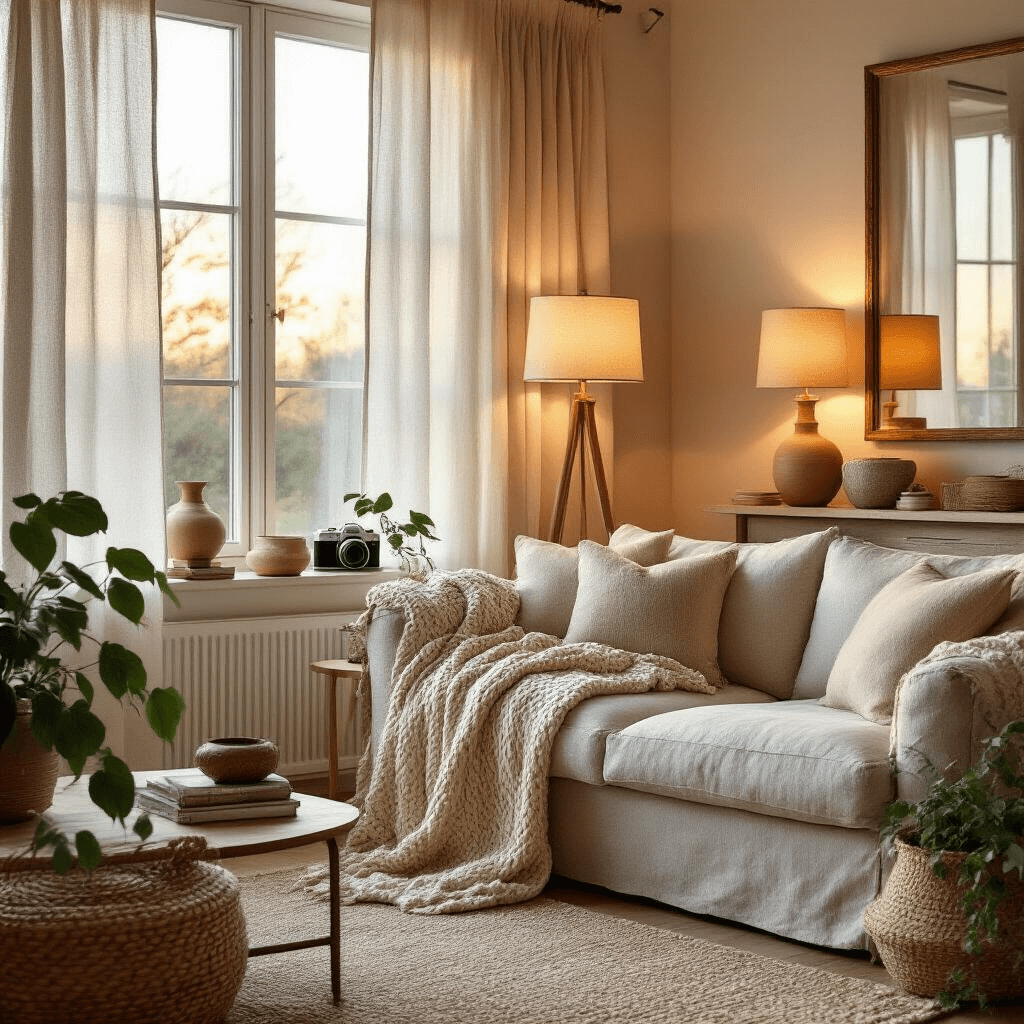
- Accent lighting: Table lamps, floor lamps, candles
I transformed my bedroom from “generic hotel room” to “actual sanctuary” by adding two bedside lamps and ditching the overhead light entirely. Now when I walk in at night, I can create the exact mood I want instead of being assaulted by fluorescent brightness.
Pro tip: Put your lamps on different circuits or use dimmers so you can control the ambiance throughout the day.
Texture Matters More Than Color
Everyone obsesses over color schemes, but texture is what makes a room feel rich and interesting.
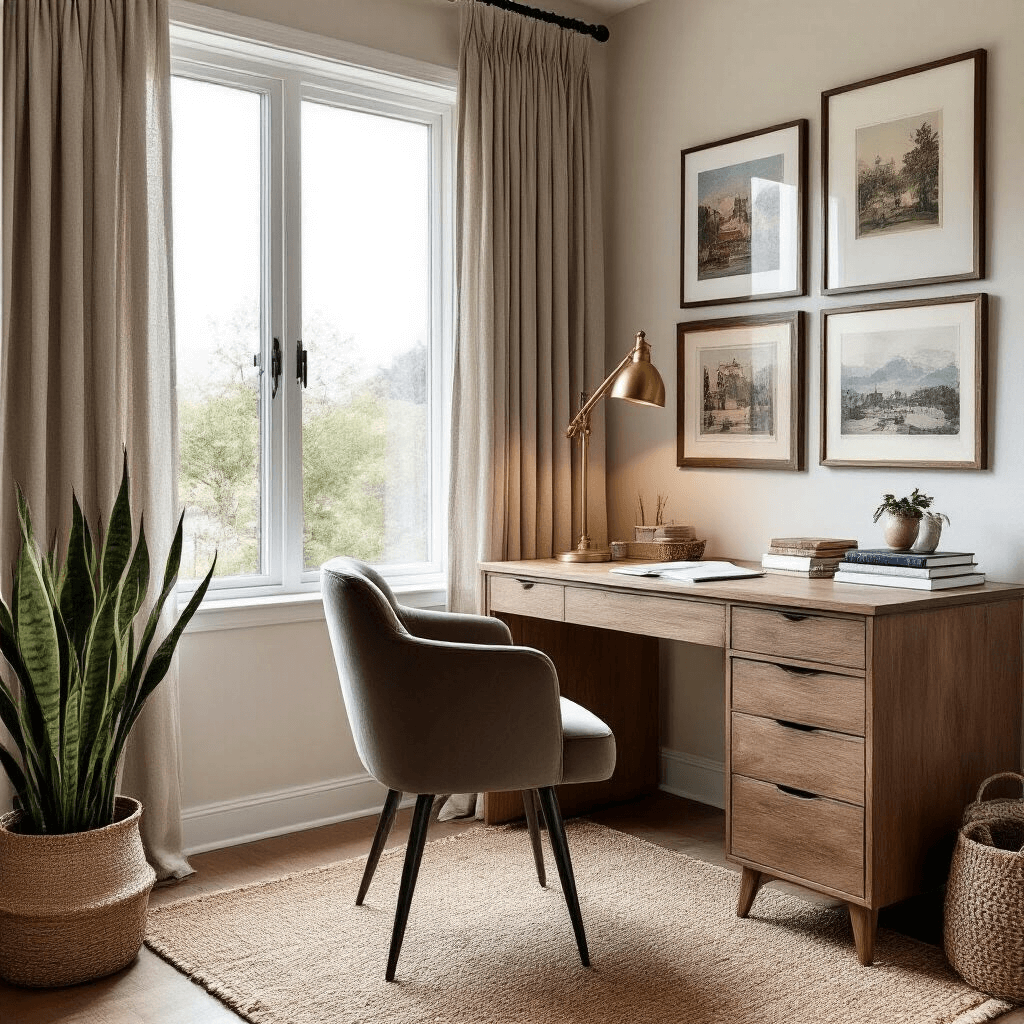
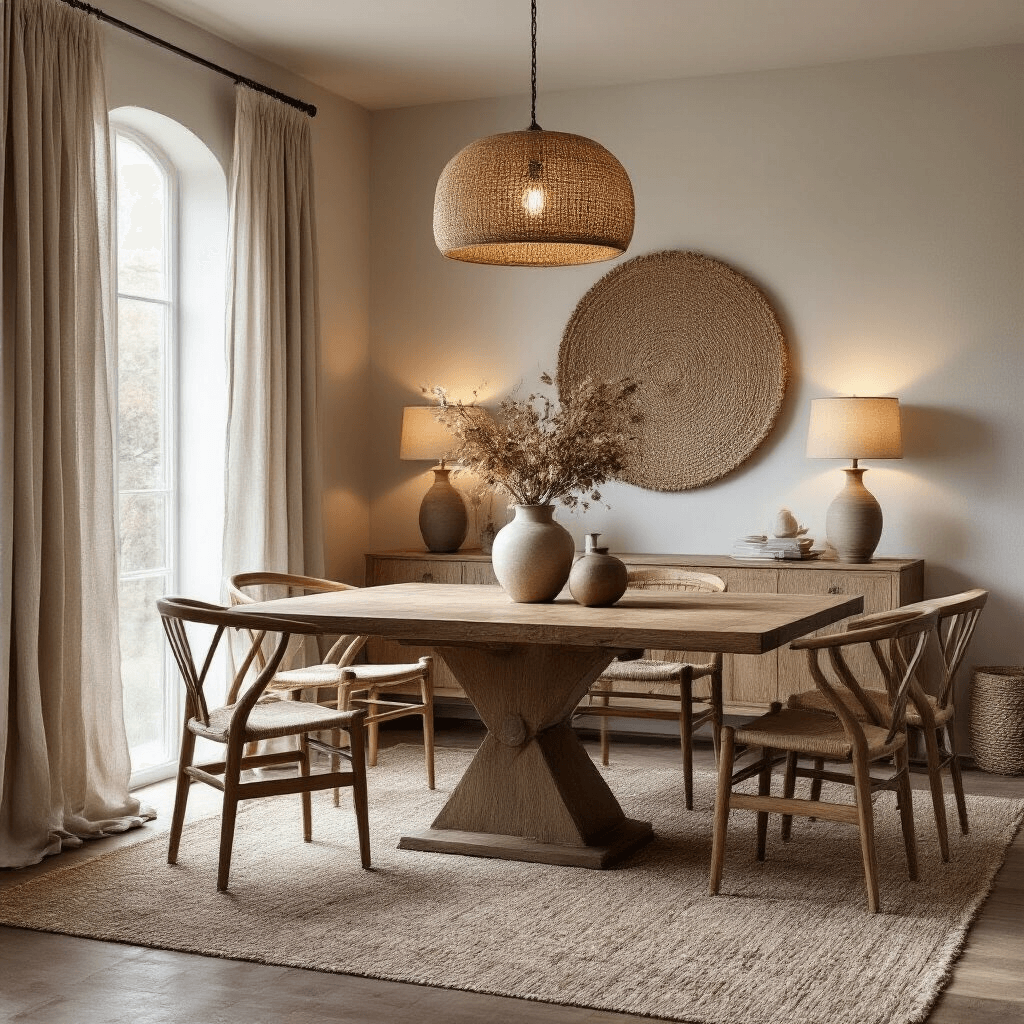
Think about it: an all-white room with smooth walls, a leather couch, and glass tables feels cold. That same room with a chunky knit throw, linen curtains, a jute rug, and some velvet cushions suddenly feels inviting.
Mix these textures in every room:
- Something soft (throws, cushions, upholstered furniture)
- Something natural (wood, stone, plants)
- Something woven (baskets, rugs, wall hangings)
- Something smooth (glass, metal, ceramic)
I added a woven wall basket to my dining room not because I needed storage, but because that flat wall was screaming for dimension. Cost me fifteen bucks and completely changed how the space felt.
Your Walls Are Lying to You
That blank wall isn’t waiting for the perfect piece of art—it’s making your room feel unfinished right now.
Stop waiting for inspiration to strike or for the “perfect” piece to appear. Your walls need something on them, even if it’s temporary.
Here’s what actually works:
- Gallery walls: Mix frames, sizes, and art types (prints, photos, objects)
- Oversized mirrors: Make small spaces feel bigger and bounce light around
- Floating shelves: Display books, plants, and collected objects
- Textile wall hangings: Add warmth and sound absorption
I had a massive wall in my living room that stayed blank for two years because I was waiting to find the “right” art piece. Finally, I bought a large framed mirror on sale, hung it up in twenty minutes, and immediately wondered why I’d waited so long.
Plants Aren’t Optional (But They Can Be Fake)
Every room needs something living or at least something that looks living.
Plants add color, texture, height variation, and visual interest to spaces that feel flat. They also make spaces feel cared for and inhabited.
If you kill everything green:
- Snake plants and pothos are nearly indestructible
- High-quality faux plants have come a long way
- Even dried arrangements add organic shapes
I’m not a plant person by nature. I’ve killed succulents, which supposedly survive neglect. But after adding just three low-maintenance plants to my apartment, the difference was undeniable. The space felt alive instead of static.
The Coffee Table Test
Everything in your home should pass this simple test: Is it beautiful, useful, or meaningful?
If an item doesn’t check at least one of those boxes, it’s just clutter dressed up as decor.
Your coffee table is the perfect place to practice this principle:
- Beautiful: A sculptural bowl, an interesting book