Lotus Garlands for Indian Weddings: Everything You Need to Know About This Sacred Tradition
Lotus Garlands for Indian Weddings: Everything You Need to Know About This Sacred Tradition
Contents
Lotus garlands for Indian weddings aren’t just pretty decorations you throw into your ceremony because they look good in photos.
These sacred floral arrangements carry centuries of spiritual meaning, cultural significance, and emotional weight that transforms your wedding from a simple exchange of vows into something deeper and more profound.
I’ve witnessed countless couples overlook the importance of choosing the right garland, treating it like an afterthought rather than the powerful symbol it represents.
That mistake can diminish one of the most meaningful moments of your entire celebration.
Why Lotus Flowers Matter More Than You Think
The lotus isn’t just another flower.
In Hindu tradition, this bloom represents purity, enlightenment, spiritual awakening, and divine beauty rising from the mud.
Think about it—the lotus grows in murky water, pushing through darkness to bloom pristine and perfect above the surface.
That’s exactly what your marriage represents: two people creating something beautiful despite life’s challenges.
Key symbolic meanings:
- Purity and innocence – The untouched beauty despite muddy origins
- Spiritual growth – Rising above earthly challenges
- New beginnings – Fresh starts and transformation
- Divine connection – Associated with multiple Hindu deities
- Enlightenment – The journey from darkness to light
Every Hindu deity you’ve seen in paintings and sculptures either holds a lotus or sits on one.
That’s not coincidence.
When you exchange lotus wedding garlands during your varmala ceremony, you’re connecting your marriage to thousands of years of sacred tradition.
The Varmala Ceremony: More Than Just Exchanging Flowers
I need you to understand something crucial about the varmala ceremony.
This isn’t just a photo opportunity or a cute ritual to please your grandparents.
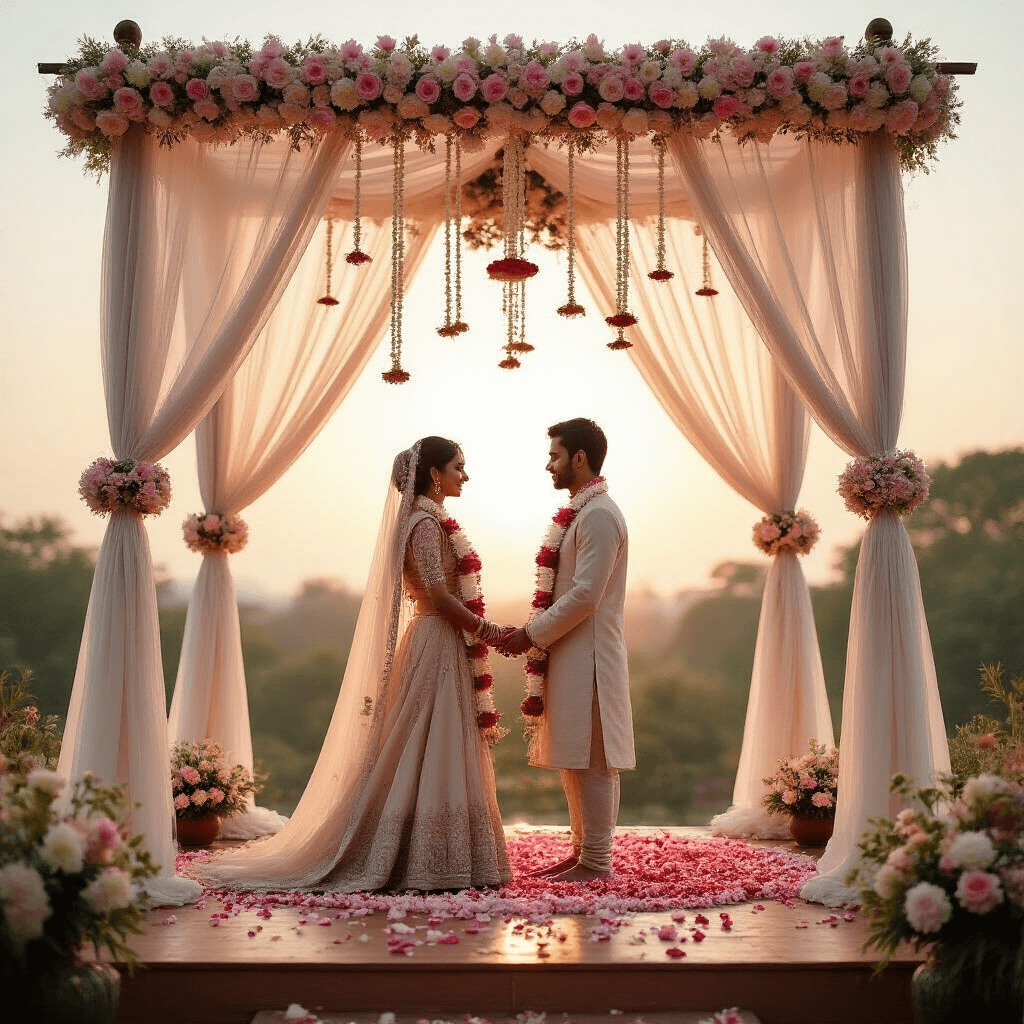
The moment you place that garland around your partner’s neck, you’re making a public declaration of acceptance before everyone who matters to you.
What happens during varmala:
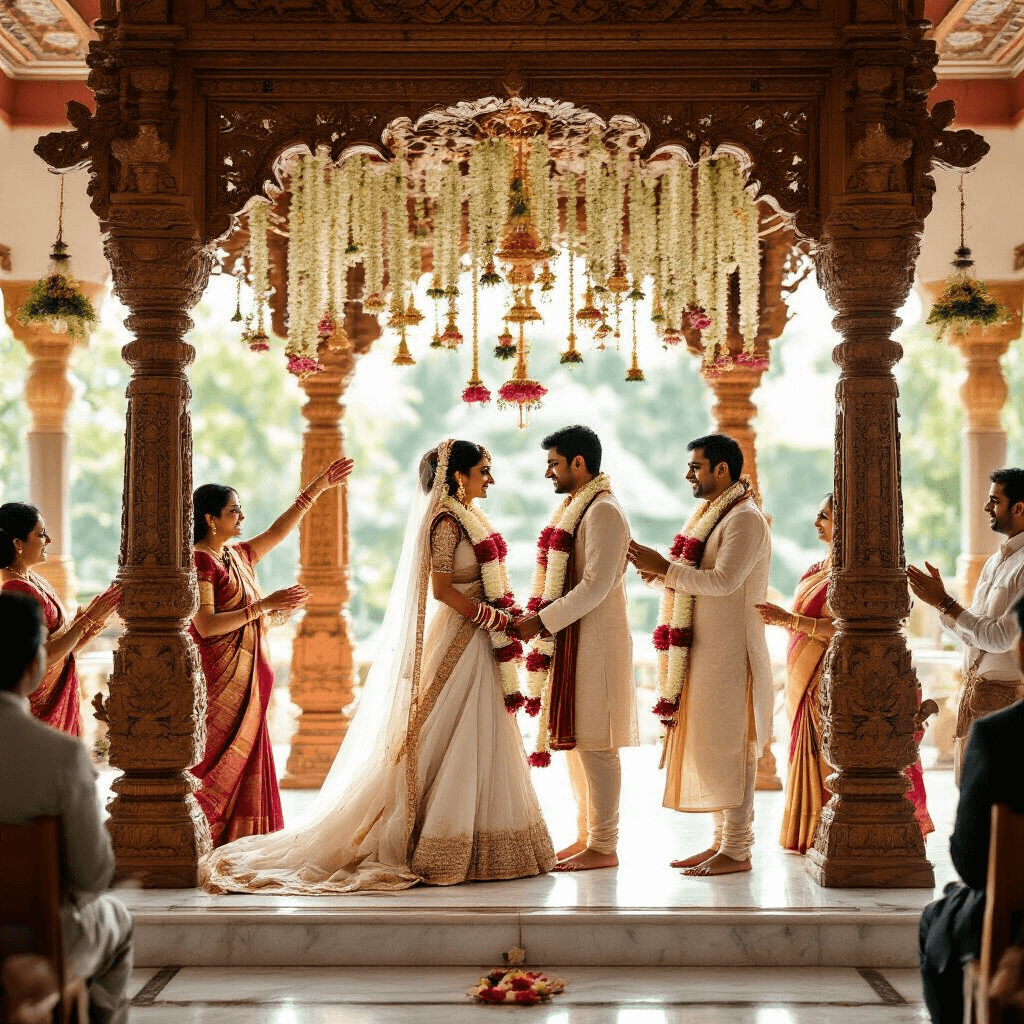
- The bride and groom face each other on the mandap
- Each holds their garland, often with family members playfully lifting them
- They exchange garlands as a symbol of choosing each other
- The act represents mutual respect, acceptance, and commitment
- Guests cheer, creating a joyful atmosphere
The tradition dates back to the Vedic period, appearing in the Mahabharata and in stories of Shiva and Parvati.
When Shiva and Parvati exchanged garlands, they weren’t just getting married—they were uniting cosmic forces.
Your ceremony echoes that same eternal bond.
Here’s what makes this powerful: the individual flowers will wilt and fade after your wedding day.
But the thread holding them together?
That remains strong.
That thread represents your marriage—the invisible bond that holds you together even when the initial excitement fades and real life begins.
Choosing the Perfect Lotus Garland: What Actually Matters
I’m going to save you from making expensive mistakes.
Not all lotus garlands are created equal, and the wrong choice can leave you with wilted flowers, broken stems, or garlands that simply don’t photograph well.
Color options and their meanings:
- White lotus – Spiritual perfection, mental purity, and peace
- Pink lotus – The supreme lotus, associated with Buddha and the highest deity
- Red lotus – Compassion, love, and passion
- Blue lotus – Wisdom, knowledge, and victory of spirit over senses
Most traditional Indian weddings use pink and white combinations because they create that soft, elegant aesthetic while maintaining deep spiritual significance.
The subtle blend photographs beautifully and complements both traditional and modern wedding attire.
Fresh vs. Artificial: Making the Right Call
Let me be brutally honest with you.
Fresh lotus garlands smell incredible, look authentic, and carry that traditional weight you want.
But they’re also fragile, expensive, and need to arrive at precisely the right moment.
Fresh lotus garlands:
- ✅ Authentic appearance and fragrance
- ✅ Traditional and spiritually resonant
- ✅ Biodegradable and eco-friendly
- ❌ Wilt quickly in heat
- ❌ Expensive and difficult to source
- ❌ Cannot be preserved long-term
- ❌ Require careful handling and timing
Artificial lotus garlands:
- ✅ Can be ordered months in advance
- ✅ Won’t wilt during lengthy ceremonies
- ✅ Can be preserved as keepsakes forever
- ✅ Often more affordable
- ❌ Lack the authentic fragrance
- ❌ May look less natural in close-up photos
- ❌ Some traditional families may disapprove
I’ve seen couples use artificial flower garlands that looked so realistic even the priest didn’t notice until the ceremony ended.
The technology has improved dramatically.
If you’re having an outdoor summer wedding in scorching heat, artificial might actually be the smarter choice.
Design Elements That Elevate Your Garland
Basic lotus garlands are beautiful on their own.
But modern couples are incorporating additional elements that make these pieces truly spectacular without losing traditional significance.
Enhancement options:
- Pearl strands woven throughout for elegance
- Shaded beads matching your outfit colors
- Gold or silver thread instead of standard binding
- Jasmine flowers interspersed for fragrance
- Marigold accents for vibrant color pops
- Crystal embellishments for subtle sparkle
I watched a bride incorporate tiny pearl beads throughout her lotus garland that matched the pearl work on her lehenga.
The coordinated look was absolutely stunning.
The garland didn’t compete with her outfit—it complemented it perfectly.
Size Matters: Getting the Length Right
Too short and you’ll struggle to place it properly during the ceremony.
Too long and it looks awkward, dragging down or overwhelming your frame.
Standard garland lengths:
- 48-54 inches – Standard for most adults
- 60 inches – For taller individuals or fuller designs
- 36-42 inches – Shorter, more modern style
Measure from your partner’s shoulder, around the neck, and back to the starting shoulder.