How to Freeze Wedding Cake: The Complete Guide to Preserving Your Sweet Memories
How to Freeze wedding celebration ideas wedding cake inspiration: The Complete Guide to Preserving Your Sweet Memories
Contents
- How to Freeze wedding celebration ideas wedding cake inspiration: The Complete Guide to Preserving Your Sweet Memories
- Why Bother Freezing Wedding Cake Anyway?
- The Golden Window: Timing Is Everything
- Strip It Down: Removing Decorations
- The Pre-Freeze Chill: Your Secret Weapon
- The Fort Knox Method: How to Actually Wrap Your Cake
- Where to Stash It: Freezer Real Estate Matters
Freezing wedding cake isn’t rocket science, but mess it up and you’ll end up with a crystallized disaster that tastes like freezer burn wrapped in regret.
I learned this the hard way when I tried to save my own wedding cake top tier using nothing but a roll of cling film and blind optimism. Spoiler alert: it didn’t end well.
The cake looked like it had survived a nuclear winter, and tasted about as romantic as licking the inside of my freezer.
Let me save you from that anniversary ideas disappointment.

Why Bother Freezing Wedding Cake Anyway?
Look, I get it. You’ve just survived the most expensive party of your life, you’re exhausted, and the last thing you want to think about is cake storage.
But here’s the tradition: saving that top tier for your first anniversary symbolizes the sweet continuation of your marriage. Plus, it’s a genuine time machine back to your wedding day—if you do it right.
Do it wrong, and you’ll be ordering a replacement cake at midnight before your anniversary, trust me.
The Golden Window: Timing Is Everything
Act fast or forget it.
Your wedding cake needs to hit the freezer within 2-3 days after your wedding, maximum. Every hour that cake sits at room temperature, it’s losing moisture and collecting bacteria like a college dorm room collects pizza boxes.
Here’s your timeline:
- Day of wedding: Get that top tier into the fridge immediately after cutting
- Within 24 hours: Remove all non-edible decorations (we’ll talk about this)
- Day 2-3: Wrap and freeze following my method below
- Beyond day 3: You’re pushing your luck, friend
I stored mine in the fridge for five days because we were on our honeymoon. Big mistake. Huge.
 wedding flower ideas and a cake topper from a cake, with precision tools like tweezers and small spatulas neatly arranged, captured in crisp macro photography.” style=”max-width: 100%; height: auto;” title=””>
Strip It Down: Removing Decorations
Not everything on your cake should see the inside of a freezer.
Before you even think about wrapping, you need to remove:
- Fresh flowers (they’ll turn to brown mush)
- Sugar flowers (they’ll absorb moisture and dissolve)
- Cake toppers (unless they’re specifically freezer-safe)
- Ribbons and non-edible decorations
- Any metal wires or supports
Take photos of your decorated cake before dismantling it. You’ll want these reference shots when you’re trying to recreate the look a year later.
Store those decorative cake toppers separately in a safe, dry place.
The Pre-Freeze Chill: Your Secret Weapon
This step separates the amateurs from the professionals.
Before wrapping anything, pop that naked tier into the fridge for 1-3 hours.
Why? Because cold frosting doesn’t stick to plastic wrap like warm frosting does.
I’ve watched perfectly piped buttercream roses get absolutely massacred because someone couldn’t wait an extra hour. Don’t be that person.
This firming-up process is especially critical if you have:
- Buttercream frosting (the most freezer-friendly option)
- Cream cheese frosting
- Ganache
- Any piped decorations
The Fort Knox Method: How to Actually Wrap Your Cake
Triple protection isn’t overkill—it’s insurance.
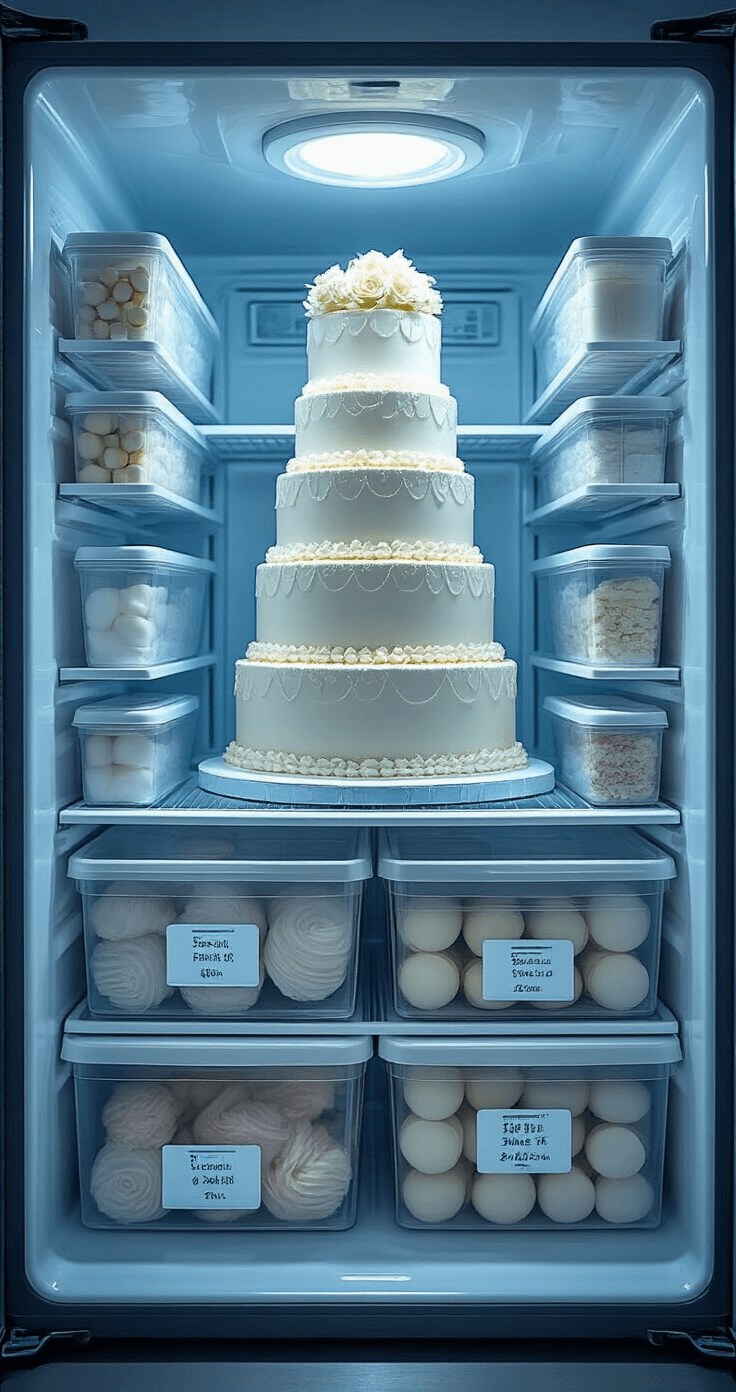
This is where most people screw up. One layer of plastic wrap won’t cut it. Your cake needs to be wrapped like you’re preparing it for space travel.
Layer 1: Plastic Wrap Foundation
Start with high-quality plastic wrap or Press & Seal.
- Begin at the base of the cake
- Wrap horizontally around the sides first
- Pull it taut but not tight (you don’t want to damage frosting)
- Overlap by at least 2 inches with each pass
- Cover the top last
- Make sure there are ZERO gaps, holes, or exposed areas
Go around the entire cake at least 2-3 times with plastic wrap. Yes, it seems excessive. No, it’s not.
Layer 2: The Aluminum Armor
Next comes the aluminum foil.
Critical point: The foil never touches the cake directly. It only goes over the plastic wrap layer.
Direct contact between foil and frosting = freezer burn city.
- Wrap the foil the same way you did the plastic wrap
- Sides first, then top
- At least 2 layers
- Seal every edge like you’re trying to keep out radioactive material
Layer 3: The Container Shield
Now place your mummified cake into one of these:
- A freezer-safe airtight container (best option)
- The original cake box wrapped in 2 more layers of plastic wrap
- A large freezer bag with all air removed (but don’t vacuum seal—we’ll get to why)
Label everything clearly:
- Date of freezing
- Cake flavor
- “TOP TIER – DO NOT EAT UNTIL ANNIVERSARY”
Because at 2 AM when someone raids your freezer for ice cream, that label might be the only thing standing between them and your memories.
Where to Stash It: Freezer Real Estate Matters
Location, location, location.
Not all freezer spots are created equal.
The Best Spots:
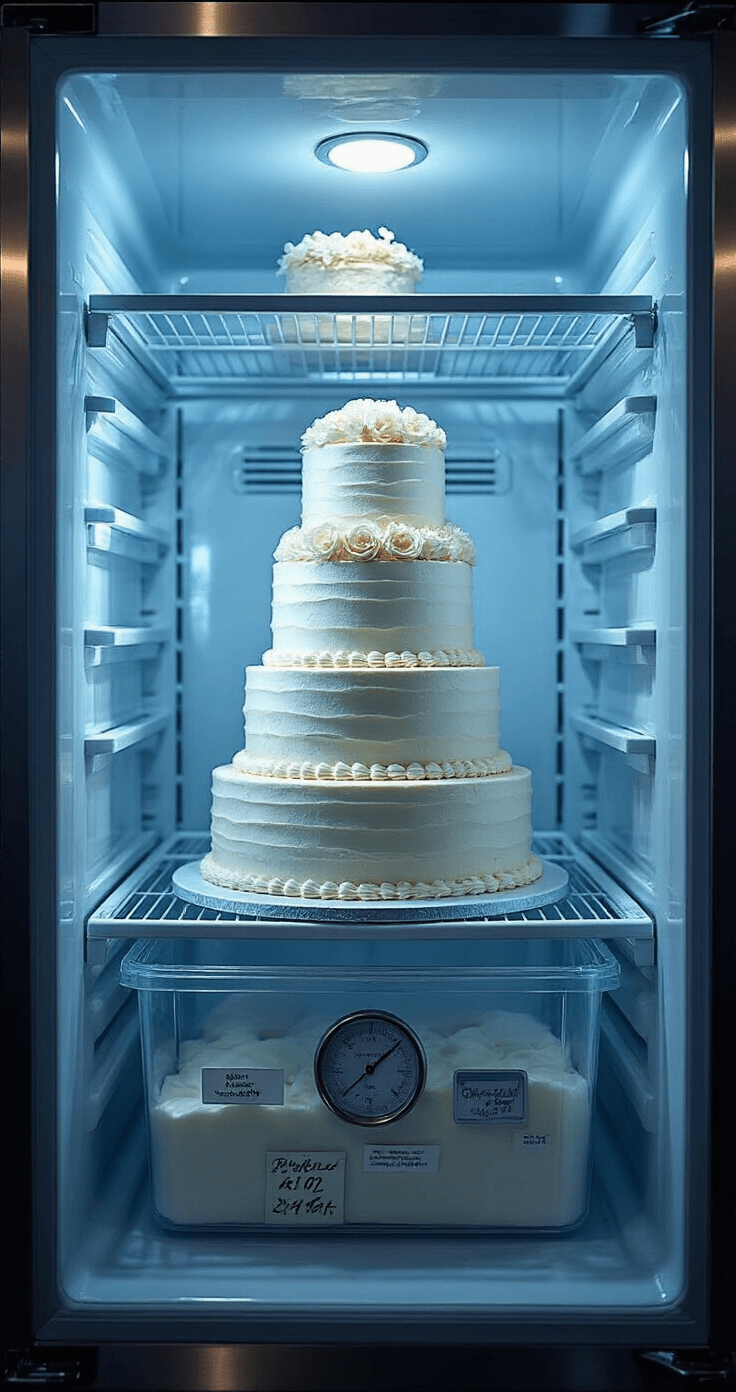
- Back of the middle shelf in a deep freezer
- Far back corner of a chest freezer
- Anywhere with consistent 0°F (-18°C) temperature
The Worst Spots (Never Put Your Cake Here):
- Near the freezer door (temperature fluctuates constantly)
- In the door compartment itself (absolute worst)
- Next to something with a strong smell (your anniversary cake shouldn’t taste like last year’s freezer-burned fish)
- Under heavy items that could crush it
I’ve got a
What is Tinsel Garland?ContentsWhat is Tinsel Garland?Quick Decor Wins with Tinsel GarlandChoosing the Perfect Tinsel GarlandMaterial and TextureColor StrategyStyling Secrets: Where to Use Tinsel GarlandTop… Unforgettable Alternative Wedding Reception Ideas: Break Free from TraditionContentsUnforgettable Alternative Wedding Reception Ideas: Break Free from TraditionOutdoor Adventures: Nature’s Ultimate Wedding VenuePicnic ParadiseGarden Party MagicFoodie… Getting Married Without the Chaos: How to Politely Tell Guests Your Wedding is Adults-OnlyContentsGetting Married Without the Chaos: How to Politely Tell Guests Your Wedding… Flower Garland DIY: Create Stunning Floral Decor for Any OccasionContentsFlower Garland DIY: Create Stunning Floral Decor for Any OccasionWhy Make Your Own Flower Garland?What You’ll… Why Fall Dates Are MagicalContentsWhy Fall Dates Are MagicalTop Outdoor Fall Date AdventuresPumpkin Patch ParadiseScenic Autumn HikesCozy Indoor Fall DatesBaking AdventuresMovie Marathon NightsBudget-Friendly Romance IdeasFirst… The Symbolism Behind the 9th AnniversaryContentsThe Symbolism Behind the 9th AnniversaryStunning Gift Ideas to Celebrate Your LoveTraditional Pottery GiftsWillow-Inspired PresentsModern Leather GiftsGemstone and Color InspirationSpecial…Post navigation
Similar Posts
Tinsel Garland: The Ultimate Guide to Stunning Event Decor and Photography
Unforgettable Alternative Wedding Reception Ideas: Break Free from Tradition
Getting Married Without the Chaos: How to Politely Tell Guests Your Wedding is Adults-Only
Flower Garland DIY: Create Stunning Floral Decor for Any Occasion
Spice Up Your Romance: Ultimate Fall Date Ideas for Every Couple
9th Wedding Anniversary: A Comprehensive Guide to Gifts, Traditions, and Celebration