Your Complete Guide to Christmas Garlands: Everything You Need to Know
Real vs. Artificial: Which One Actually Makes Sense?
Contents
Artificial garlands win for most people, and I’m not just saying that because I’m lazy about watering plants.
Fresh garlands smell amazing for about three days, then they start dropping needles everywhere like a tiny evergreen crime scene.
You’ll spend your holidays vacuuming instead of enjoying eggnog.
Here’s what makes artificial garlands worth your money:
- They last for years (I’m still using garlands from 2015)
- No watering, no mess, no brown needles on your carpet
- You can find them pre-lit, pre-decorated, or completely customizable
- Storage is simple—just coil them up and toss them in a bin
That said, if you’re hosting one big event and want that authentic pine smell, go for a fresh evergreen garland. Just know what you’re signing up for.
The Materials That Actually Matter
Not all artificial garlands are created equal, and the material makes a massive difference.
PVC garlands are the budget option. They’re made from thin plastic strips that sort of look like pine needles if you squint. They’re lightweight, cheap, and honestly? They look cheap too.
PE garlands (polyethylene) are where things get interesting. These are molded from real branches, so they have that realistic texture and color variation. When I upgraded to PE garlands, guests actually asked if they were real.
Mixed PE/PVC garlands give you the best of both worlds—realistic outer branches with PVC filler for fullness without the premium price tag.
For something different, consider:
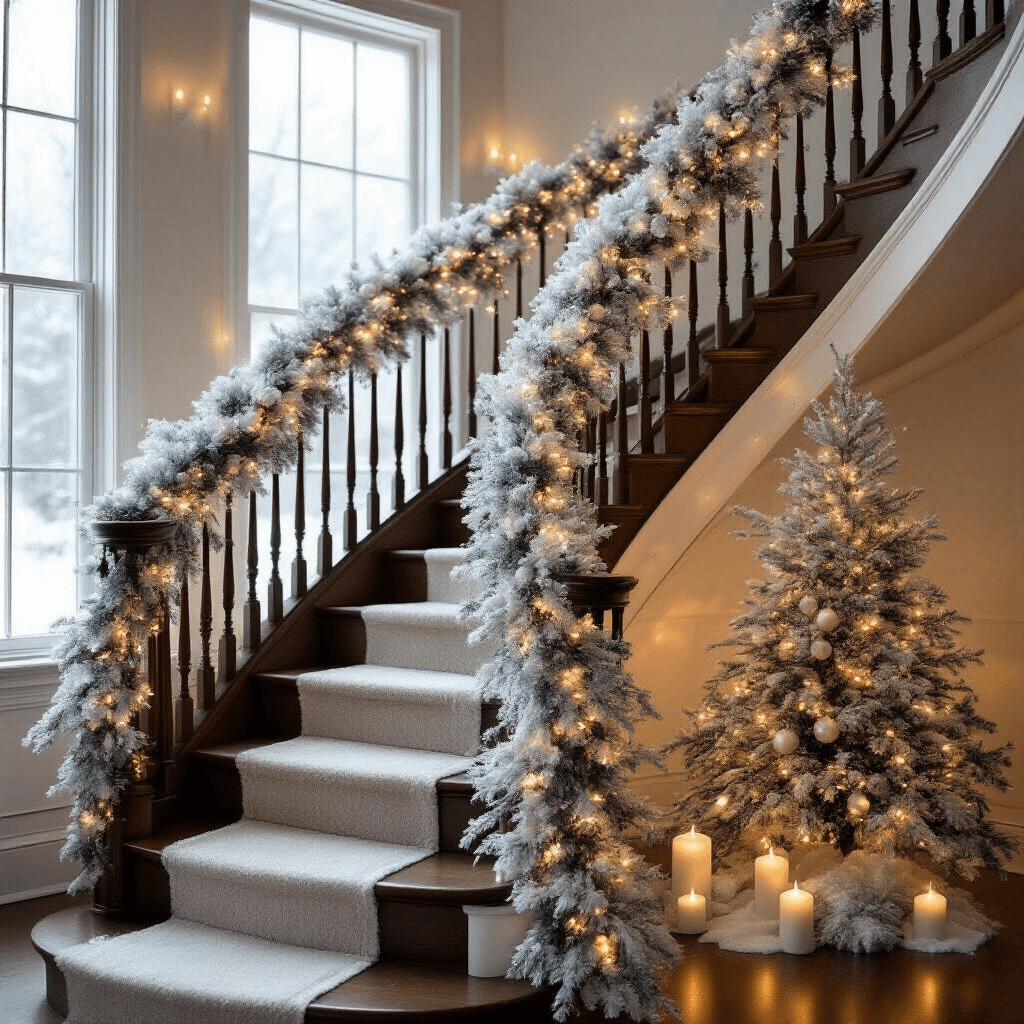
- Flocked garlands that look snow-covered (perfect for that winter wonderland vibe)
- Tinsel garlands for retro glamour
- Berry or beaded garlands for a pop of color
- Eucalyptus garlands for a modern, minimalist look

How Long Should Your Garland Actually Be?
I learned this the hard way: always measure twice, buy once.
Nothing’s worse than getting home and realizing your garland is three feet too short for your banister.
Standard lengths include:
- 6 feet – Perfect for mantels and doorways
- 9 feet – Great for staircases and larger spaces
- 12+ feet – When you’re going big or connecting multiple areas
For staircases, measure the length of your railing and add 20% for draping and fullness.
For mantels, measure the width and add 12-18 inches on each side for that cascading effect.
Pro tip: It’s easier to shorten a garland than to stretch one that’s too short.
Where to Actually Put These Things
Garlands are ridiculously versatile, which is why I probably own seven of them.
My favorite spots:
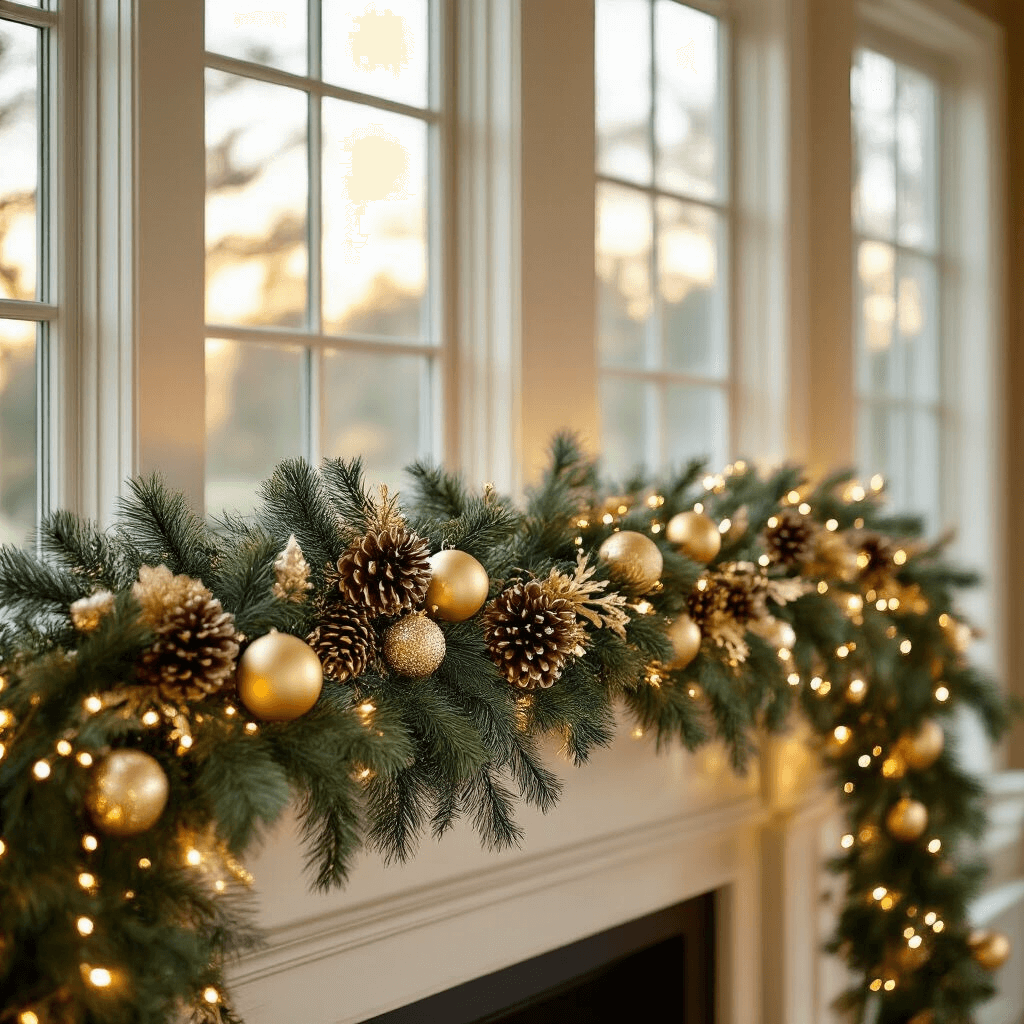
- Mantels – This is garland’s natural habitat. Drape it, let it cascade down the sides, and add battery-operated string lights woven through.
- Staircases – Wind it around the banister, secure it with zip ties (hide them behind the branches), and watch your entryway transform.
- Doorways – Create an arch effect by draping garland across the top and down both sides. Secure with removable hooks so you don’t destroy your paint job.
- Dining tables – Use garland as a table runner down the center. Add candles, ornaments, or pinecones for a centerpiece that costs half what a florist would charge.
- Windows – Frame windows with garland secured with clear command hooks. Looks incredible from both inside and outside.
- Front porch columns – Spiral garland around porch columns for serious curb appeal.
- Christmas tree – Layer pine garland through tree branches for extra fullness (this saved my sad, sparse tree last year).
Pre-Lit or Plain? Let Me Save You Some Regret
I used to think pre-lit garlands were a gimmick.
Then I spent two hours trying to evenly weave string lights through a 9-foot garland while balanced on a ladder.
Pre-lit garlands are worth it if:
- You want consistent, even lighting without the hassle
- You’re decorating high or hard-to-reach places
- You’re short on time (or patience)
Skip them if:
- You want specific light colors or styles
- You enjoy customizing (some people do, weirdly enough)
- You’re worried about one bulb dying and ruining the whole strand
When choosing pre-lit options, look for:
- LED lights (they last longer and use less power)
- Battery-operated options for spots without outlets
- Timer functions so you don’t have to manually turn them on and off
Making Your Garland Look Expensive (Even When It’s Not)
Here’s my favorite trick: layer cheap garlands to create expensive-looking fullness.
Buy a basic Canadian pine garland as your base (the kind that costs $15 at Walmart).
Then add:
- A second garland on top (different texture, like cedar or fir)
- Ribbon woven through in your color scheme
- Pinecones, berries, or small ornaments tucked into the branches
- Picks of eucalyptus or holly for pops of variation
This layering technique makes a $30 investment look like you spent $200.
Bold your branches. When you first unbox artificial garland, it looks flat and sad. Spend five minutes fluffing and separating each branch. Bend them at different angles. Create depth by pulling some branches forward and pushing others back.
Color strategies that actually work:
- Traditional green with red berries and gold accents
- Winter white with silver and crystal elements
- Rustic natural with burlap ribbon and wooden ornaments
- Modern glam with eucalyptus, white, and copper