How to Create a Stunning Front Door Garland That Makes Your Neighbors Green with Envy
How to Create a Stunning Front Door Garland That Makes Your Neighbors Green with Envy
Creating a garland around your front door might seem like one of those Pinterest projects that looks gorgeous online but turns into a hot mess when you try it yourself.
Trust me, I’ve been there.
Standing in my driveway at 8 PM with a sad-looking string of pine needles, wondering why my “simple” garland project looked more like roadkill than holiday magic.
But here’s what I learned after years of trial and error (and one spectacular garland failure that still makes my family laugh): the secret isn’t having perfect artistic skills.
It’s knowing the right materials, understanding the layering technique, and securing everything properly so your beautiful creation doesn’t end up scattered across your front yard after the first strong wind.
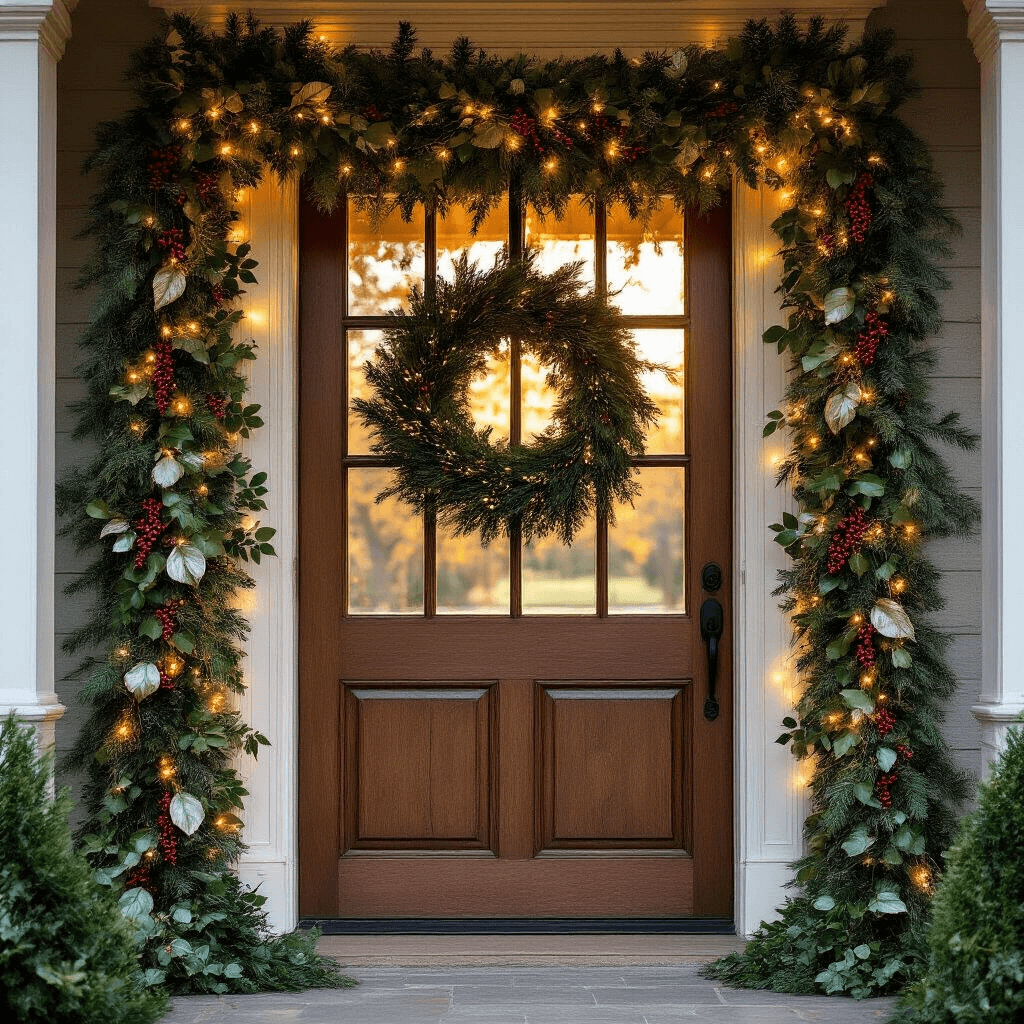
Why Your Previous Garland Attempts Failed (And How to Fix It)
Most people make the same three mistakes I made during my early garland days:
They skip the foundation layer
Starting with expensive, delicate greenery instead of building on a solid base
They don’t layer properly
Grabbing random branches and hoping they’ll magically look cohesive
They use terrible hanging methods
Relying on a single nail or hook that can’t support the weight
Let me walk you through exactly how to avoid these pitfalls and create a garland that actually stays put and looks professionally made.
Choosing Your Garland Foundation: The Make-or-Break Decision
Your garland foundation is like the underwear of home decor – nobody sees it, but everything falls apart without it.
I learned this the hard way during my second year attempting holiday decorating.
I spent $60 on beautiful fresh cedar branches and tried to wire them directly to my door frame. Within three days, half the branches had fallen off, and my “lush” garland looked like it had a bad case of pattern baldness.
The Smart Foundation Options
Option 1: Pre-made Base Garland
Start with an inexpensive artificial garland as your foundation.
- Dense needle coverage
- Sturdy wire backing
- 6-foot minimum length for standard doors
- Natural green color (avoid the obviously fake bright green)
Option 2: DIY Rope Foundation
Use thick jute rope (about 4cm diameter) as your base.
This method gives you complete control but requires more time:
Save this article
Enter your email and we'll send it straight to your inbox.
- Cut rope 12-15 feet long for adequate draping
- Allows custom sizing for any door
- Creates authentic rustic texture
- Costs less than pre-made bases
Option 3: Chicken Wire Base (For Seriously Lush Results)
When I want to create a garland that stops traffic, I use chicken wire as my foundation.
Roll the wire into a loose tube shape:
- 2-3 inches diameter
- Fill with various greenery types
- Creates incredibly full appearance
- Perfect for large doors or dramatic entrances
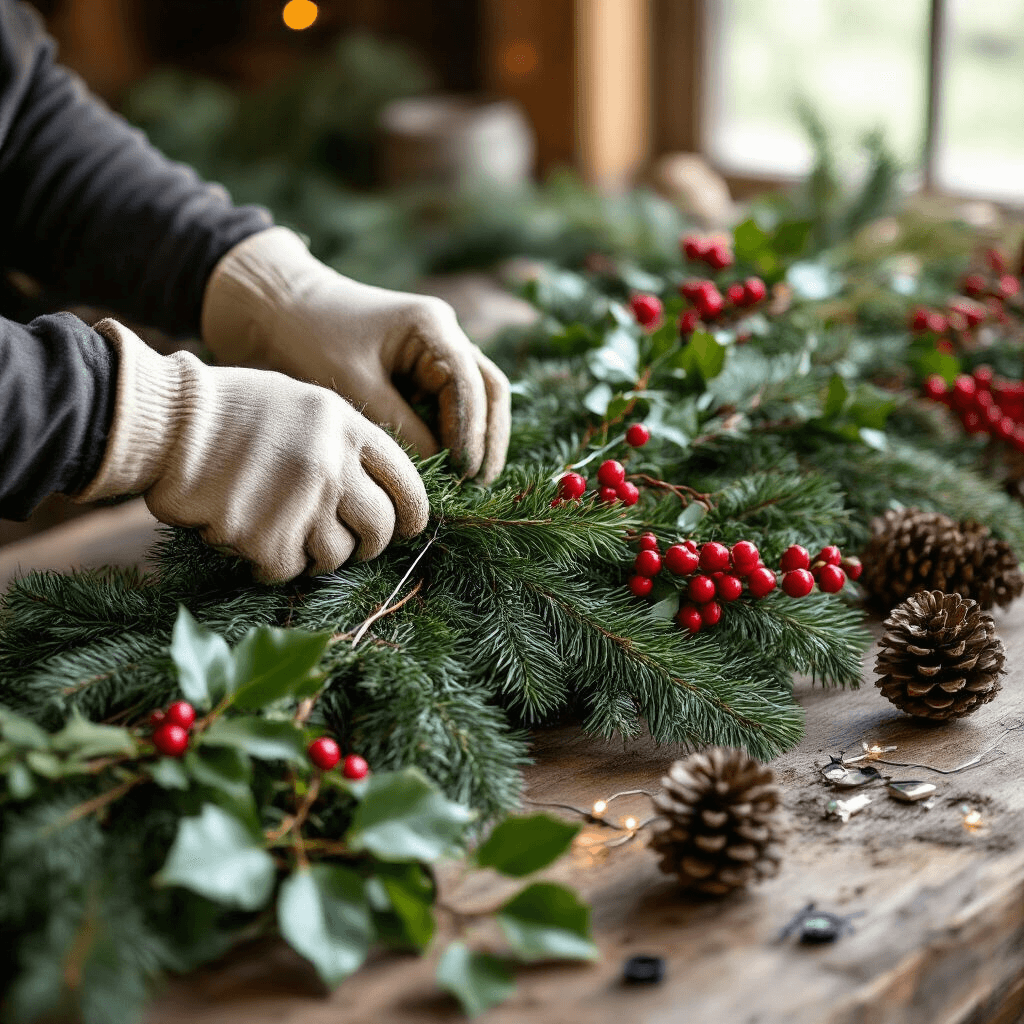
Gathering Your Greenery: Fresh vs. Faux Strategy
Here’s my controversial opinion: the best garlands combine both fresh and faux elements.
Pure fresh garland looks amazing for exactly 10 days, then starts dropping needles everywhere and turning brown. Pure artificial garland often looks obviously fake and lacks that organic, just-cut texture.
The Hybrid Approach That Actually Works
Base layer: Artificial garland or rope foundation
Provides structure and longevity
Middle layer: Fresh hardy greens
- Cedar branches (last 4-6 weeks outdoors)
- Pine with flexible needles
- Magnolia leaves (surprisingly durable)
- Holly branches with berries
Accent layer: Textural elements
- Ivy for trailing softness
- Dried hydrangea heads
- Pine cones
- Ribbon or burlap strips
Where to Source Materials Without Breaking the Bank
Free options:
- Trim branches from your own evergreens
- Ask neighbors with large pine or cedar trees
- Check with local tree trimming services
- Collect fallen branches after storms
Budget-friendly purchases:
- Buy fresh greenery after Christmas sales for next year
- Purchase wholesale from farmer’s markets
- Split bulk orders with neighbors
- Use grocery store floral departments

The Layering Technique That Creates Professional Results
This is where most DIY garland attempts go wrong. People grab handfuls of greenery and randomly stick them into their base, hoping it’ll look intentional.
After ruining my third garland attempt with this scattered approach, I finally learned the professional layering method.
Step 1: Establish Your Base Coverage
Attach your foundation garland or rope to your door frame first. Don’t add any other elements yet.
Step back and look at the shape:
- Does it hang in a pleasing curve?
- Are there obvious gaps or thin spots?
- Is the proportion right for your door size?
Fix these issues before moving forward.
Step 2: Add Your Primary Greenery Layer
Choose one type of greenery as your dominant element – usually cedar or pine.
Using floral wire, attach branches every 8-10 inches along your base:
- Start at the center top and work outward
- Overlap branches to hide attachment points
- Keep all branches pointing in the same general direction
- Step back frequently to check for balance
Step 3: Layer Secondary Textures
Now add contrasting textures and colors:
- Tuck ivy between existing branches
- Wire in holly branches with berries
- Add magnolia leaves for silvery contrast
- Insert dried elements like hydrangea or pine cones
The key is restraint – add elements gradually and step back to assess after each addition.
Want to keep this one?
We'll email you the link so you can find it again later.