How to Drape Christmas Tree Garland Like a Pro: The Ultimate Guide to Picture-Perfect Holiday Trees
How to Drape Christmas Tree Garland Like a Pro: The Ultimate Guide to Picture-Perfect Holiday Trees
Christmas tree garlands are decorative strands that add texture, color, and fullness to your tree, creating a polished and festive appearance.
I’ll be honest with you – the first time I tried to put garland on my Christmas tree, it looked like a craft store exploded.
The garland was bunched up in some spots, barely hanging on in others, and my beautiful tree looked more like a hot mess than a holiday masterpiece.
Sound familiar?
You’re not alone.
Most people struggle with garland placement because nobody teaches you this stuff.
But after years of trial and error (and a few Pinterest fails), I’ve cracked the code on creating magazine-worthy garland displays.
What Exactly Is Christmas Tree Garland?
Christmas tree garlands are those gorgeous decorative strands that wrap around your tree like jewelry on a beautiful woman.
They’re the secret weapon that separates amateur decorators from the pros.
Think of garland as the foundation of your tree’s personality.
Without it, your tree is just lights and ornaments hanging in space.
With it, you’ve got depth, movement, and that “wow factor” that makes people stop and stare.
Types of Garland Materials That Actually Work
Here’s where most people get overwhelmed.
The craft store has approximately 47 different types of garland, and half of them look exactly the same under those fluorescent lights.
Let me break down the real players:
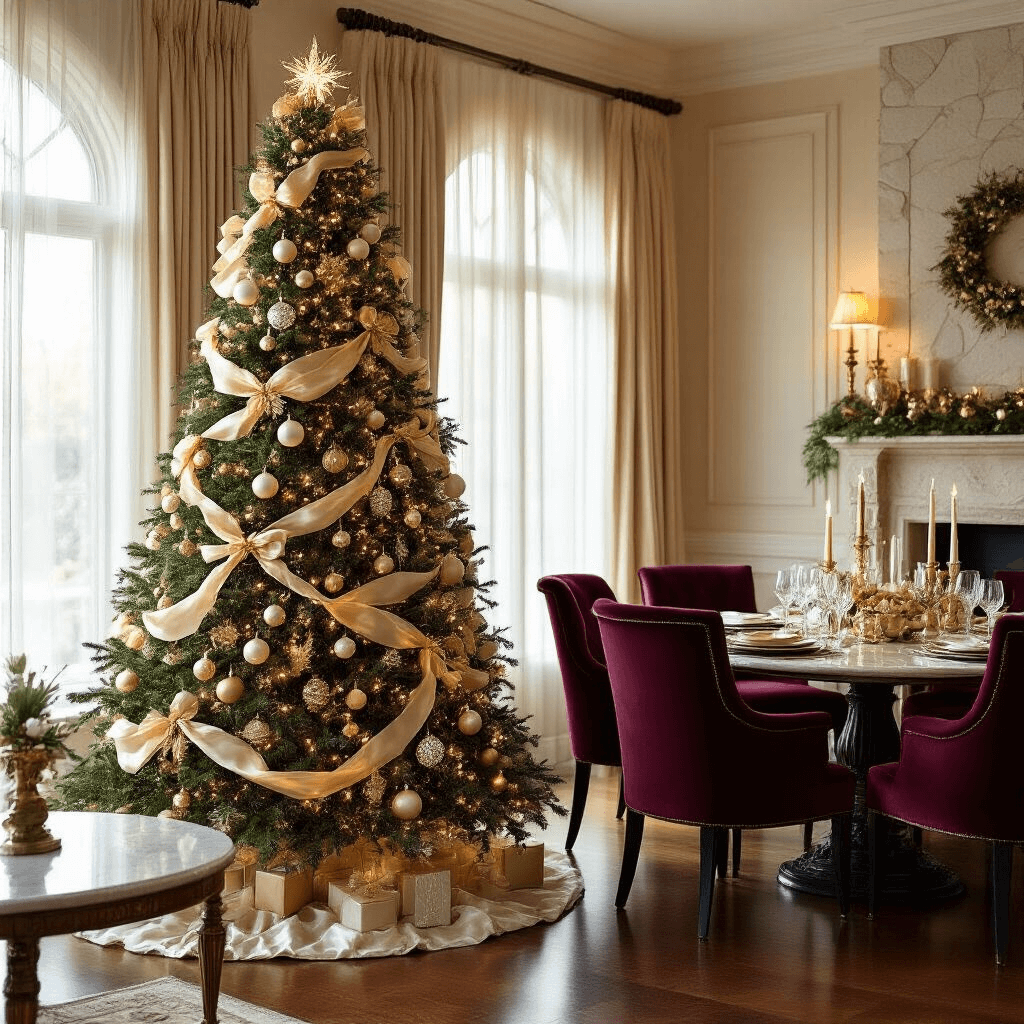
Ribbon Garlands: The Elegant Choice
These babies are my go-to for sophisticated looks.
Wired ribbon garland holds its shape better than anything else I’ve tried.
You can twist it, loop it, and it stays exactly where you put it.
Best for:
- Formal dining rooms
- Traditional color schemes
- Trees that need to look “grown up”
Tinsel: Your Grandmother’s Secret Weapon
Don’t roll your eyes at tinsel yet.
The vintage, shimmering effect is making a serious comeback.
Modern silver tinsel garland isn’t the cheap stuff from the 80s.
Pro tip: Use tinsel sparingly as an accent, not the main event.
Beaded Garlands: Instant Glamour
These are pure magic for adding sparkle without looking like a disco ball.
Pearl beaded garland gives you elegance.
Glass or crystal beads give you drama.
My favorite trick: Layer different sizes of beaded garland for texture that photographs beautifully.
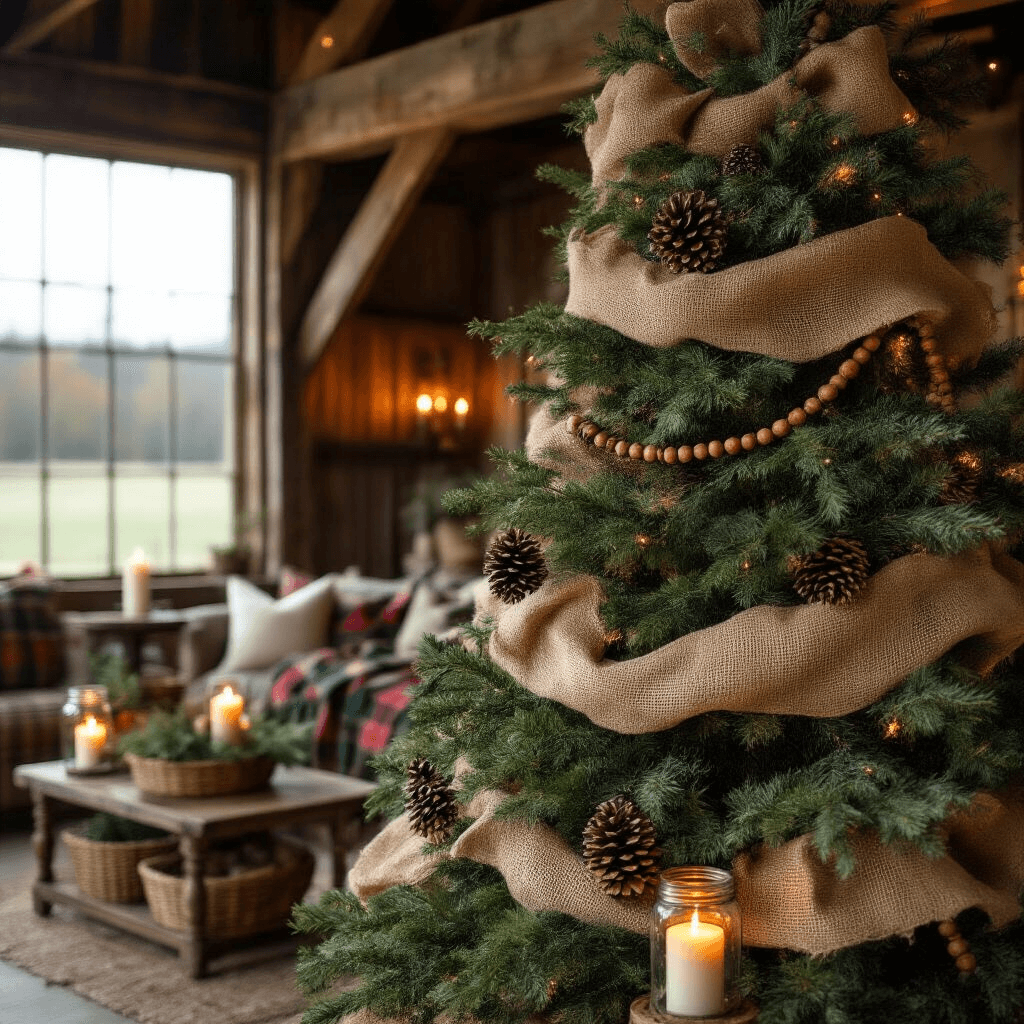
Natural Elements: The Pinterest Darling
Burlap, popcorn strands, pinecones – this stuff screams “farmhouse chic.”
Burlap rope garland pairs perfectly with mason jar ornaments and wooden accents.
Warning: Natural garland can shed, so vacuum accordingly.
Pre-lit Garlands: The Lazy Person’s Dream
Pre-lit Christmas garland combines your garland and extra lighting in one step.
Save this article
Enter your email and we'll send it straight to your inbox.
Perfect if you’re short on time or patience.
Just plug and drape.
The Magic Formula: How Much Garland Do You Actually Need?
Here’s the rule that changed everything for me:
You need approximately 9 feet of garland for every foot of your tree’s height.
So your 6-foot tree needs about 54 feet of garland.
Your 8-foot tree needs 72 feet.
I know it sounds like a lot, but trust me on this.
Most people use half of what they need and wonder why their tree looks bare.
Quick calculation:
- 4-foot tree = 36 feet of garland
- 6-foot tree = 54 feet of garland
- 8-foot tree = 72 feet of garland
- 10-foot tree = 90 feet of garland

The Step-by-Step Method That Actually Works
Forget everything you think you know about putting on garland.
Most tutorials get this completely wrong.
Step 1: Start at the Top (Not the Bottom)
This is where 90% of people mess up.
Always start at the top of the tree and work your way down.
Attach your garland near the tree topper.
If you start at the bottom, you’ll run out of garland before you reach the top, or you’ll have weird bunching issues.
Step 2: Create Loose, Flowing Loops
Don’t wrap your garland around branches like you’re tying up a prisoner.
Drape it loosely to create gentle, flowing loops.
Think graceful curves, not tight spirals.
Each loop should dip down slightly between branches.
This creates natural movement and prevents the “strangled tree” look.
Step 3: Work in Sections
Don’t try to drape all 54 feet at once.
Work with 6-8 foot sections at a time.
This prevents tangling and gives you better control over placement.
Step 4: Step Back and Adjust
After each section, take a few steps back and look at your work.
Are there bare spots?
Is one side heavier than the other?
Fix it now before moving to the next section.
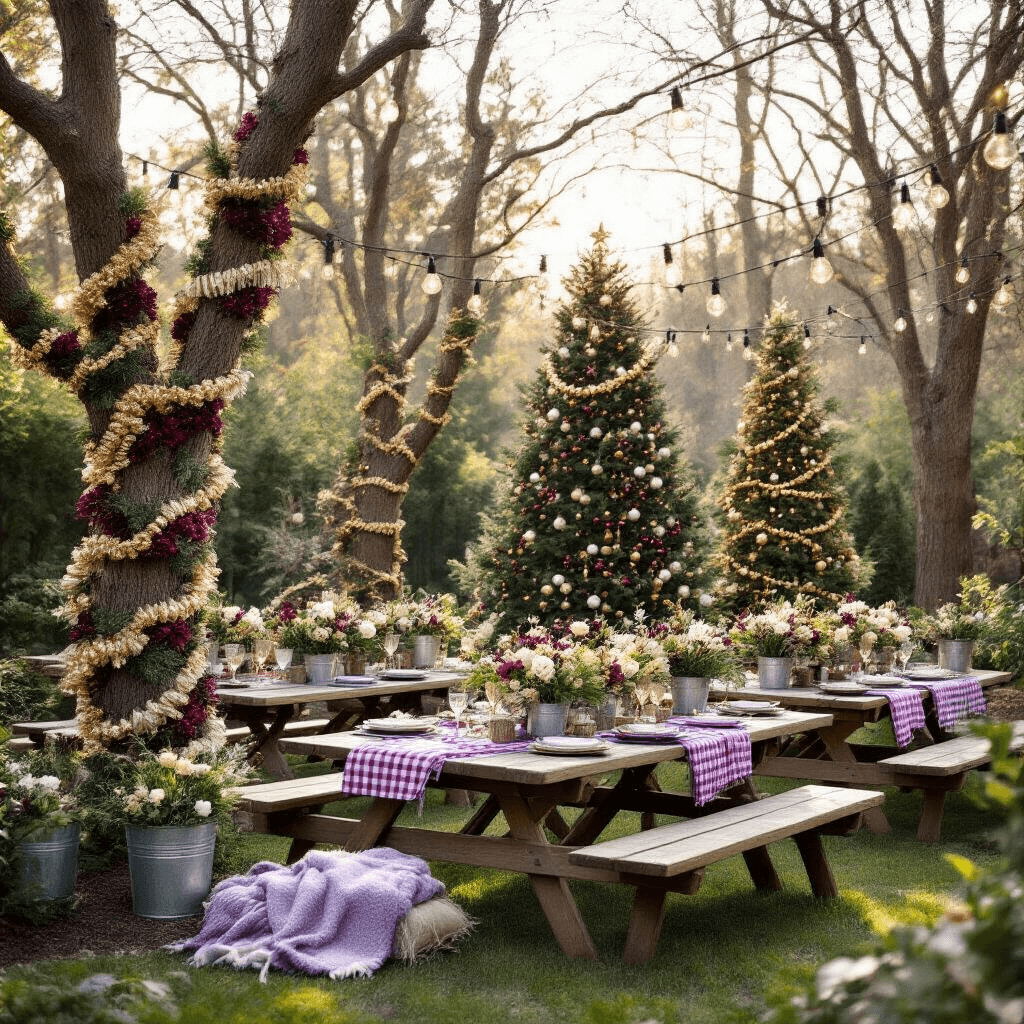
Advanced Layering Techniques for Show-Stopping Results
Ready to take your garland game to the next level?
Layer two or three different garlands for professional-looking texture
Want to keep this one?
We'll email you the link so you can find it again later.