The Dried Citrus Garland That Transformed My Holiday Decorating Forever
Why Your Store-Bought Garlands Feel So Blah
You know that feeling when you hang up expensive store-bought garland and it just looks… meh?
I spent years buying those plastic monstrosities that screamed “fake” from across the room. The colors looked wrong. The texture felt cheap. Nothing about them brought joy or warmth to my space.
Then I discovered dried citrus garlands, and everything changed.

What Makes Citrus Garland So Special
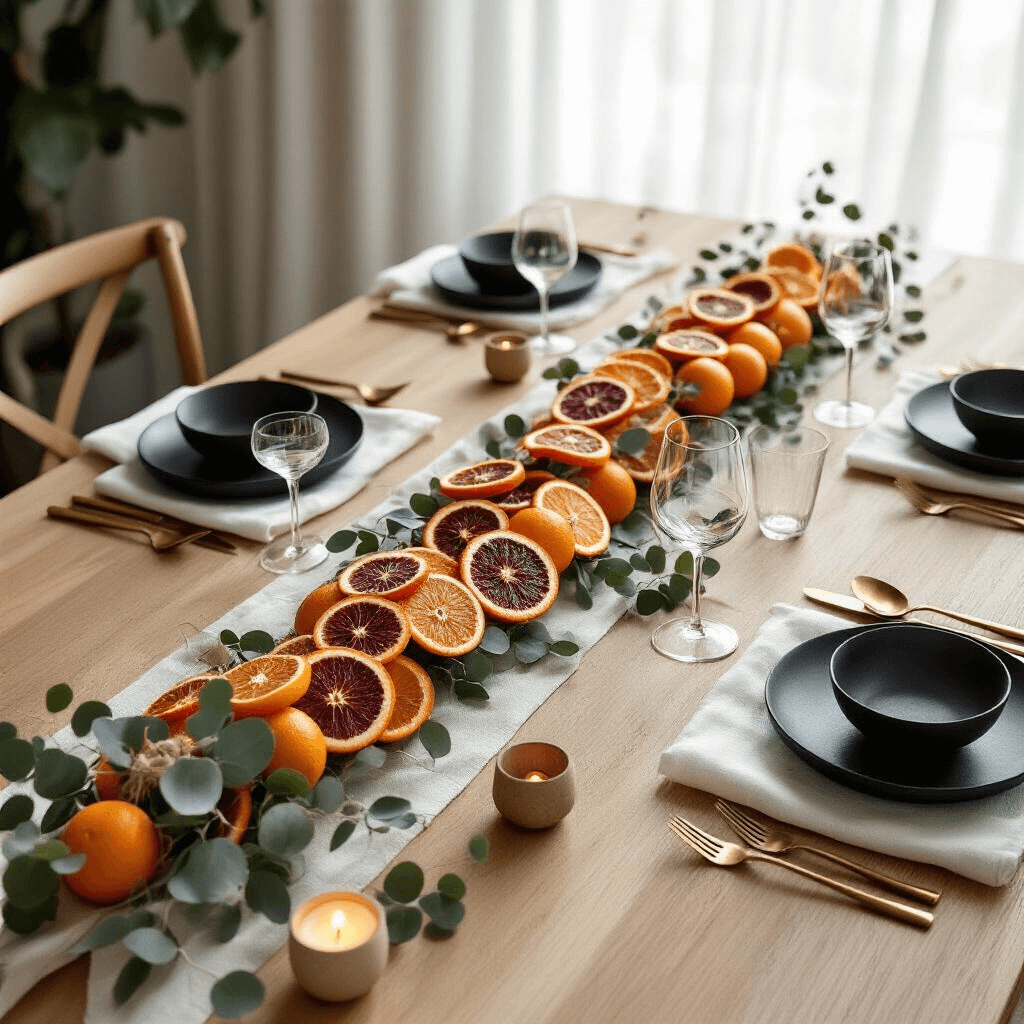
Natural beauty that costs pennies. Each slice becomes a tiny stained-glass window when light hits it. The subtle fragrance adds warmth without being overwhelming. Every garland looks completely unique because nature doesn’t do cookie-cutter.
I’ve hung these beauties on:
- Christmas trees (absolute game-changer)
- Mantels and fireplaces
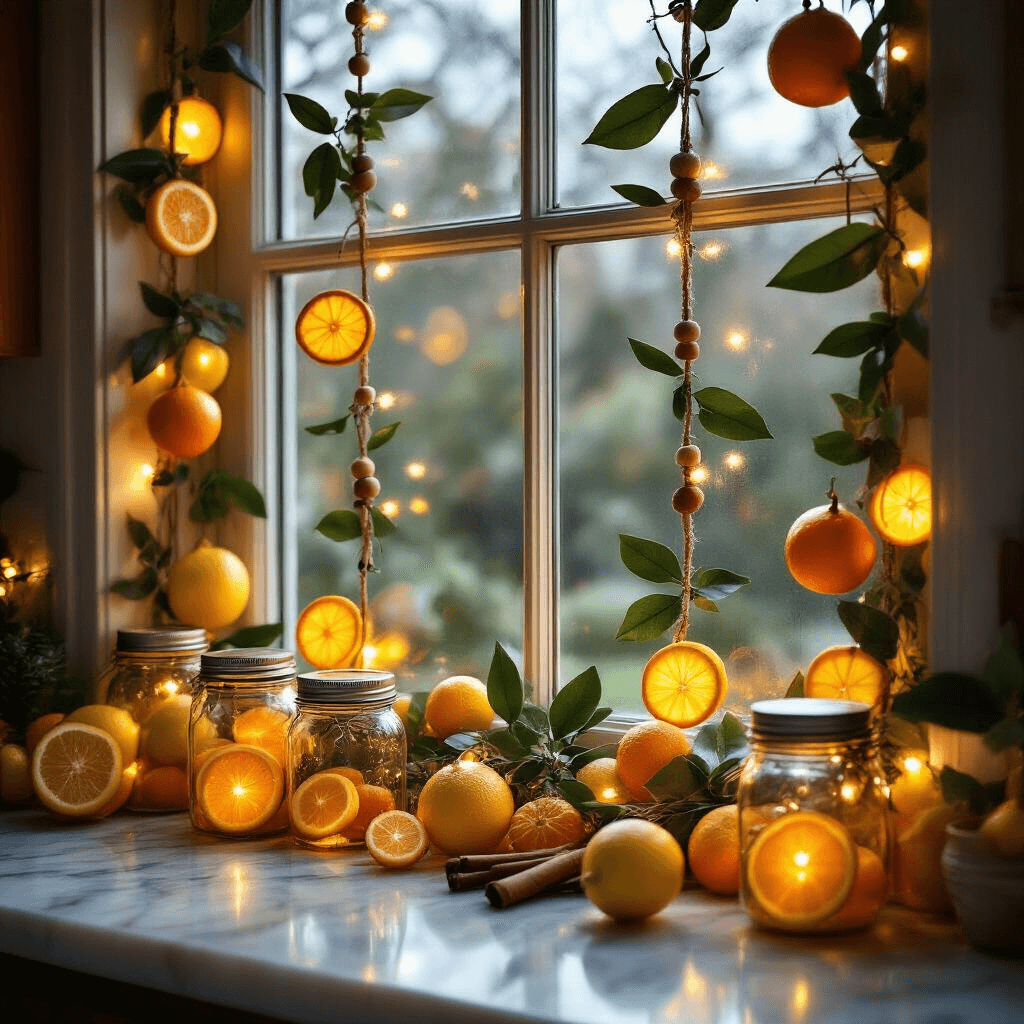
- Kitchen windows
- Stair railings
- Front doors mixed with evergreen sprigs
The Supplies You Actually Need
Skip the fancy equipment. I make gorgeous garlands with basic kitchen items:
Essential supplies:
- Fresh citrus (oranges, lemons, limes – whatever’s on sale)
- Sharp kitchen knife or mandoline slicer
- Parchment paper
- Natural twine or fishing line
- Large needle or toothpicks
Nice-to-have additions:
- Wooden beads for texture
- Cinnamon sticks
- Bay leaves or eucalyptus
My Foolproof Method That Works Every Time
Step 1: Slice Like You Mean It
Cut your citrus into ⅛ to ¼ inch slices. Thicker slices take forever to dry. Thinner ones fall apart.
Pro tip: Pat each slice with paper towels immediately after cutting. This removes excess juice and cuts drying time in half.
Step 2: The Low and Slow Oven Method
Forget the fancy dehydrator. Your regular oven works perfectly.
My foolproof settings:
- Temperature: 200°F (any hotter burns the edges)
- Time: 3-6 hours depending on thickness
- Position: Middle rack with silicone baking mats
What to watch for:
- Flip every hour for even drying
- Slices are done when they feel leathery, not crispy
- Edges should be slightly curled but not brown
Step 3: The Threading Technique That Prevents Tears
Let slices cool completely before handling. Warm citrus tears faster than wet tissue paper.
My stringing secrets:
- Poke holes near the rind, not through the center
- Use a thick needle to make clean holes
- Thread slowly – rushing leads to broken slices
- Leave 2-3 inches between each slice for movement
Design Patterns That Actually Look Professional
The Classic Mix
Alternate orange and lemon slices with small wooden beads. Simple but stunning.
The Monochrome Moment
Use only one citrus type for sophisticated, hotel-lobby vibes. Blood oranges create the most dramatic effect.
The Kitchen Garden Style
Mix citrus with bay leaves and small cinnamon sticks. Perfect for farmhouse kitchens.
The Minimalist Approach
Space slices 4-5 inches apart on thin fishing line. Each slice becomes a floating ornament.
Save this article
Enter your email and we'll send it straight to your inbox.
Storage Secrets That Keep Garlands Beautiful
I learned this the hard way after my first garland turned moldy.
Proper storage method:
- Wrap loosely in tissue paper
- Store in cool, dry place (not the basement)
- Check monthly for any soft spots
- Replace individual slices as needed
Well-made garlands last 2-3 years with proper care.
Common Mistakes That Ruin Garlands
Slicing too thick. Your slices will never fully dry and will mold within weeks.
Skipping the paper towel step. Excess moisture creates uneven drying and brown spots.
Using high heat. Anything over 225°F creates bitter, burnt-tasting garlands.
Threading immediately after drying. Hot citrus = broken citrus.
Storing in plastic bags. Trapped moisture equals moldy disappointment.

Creative Ways I Use Citrus Garlands Year-Round
December isn’t the only month for these beauties.
Spring: Mix with fresh pussy willow branches
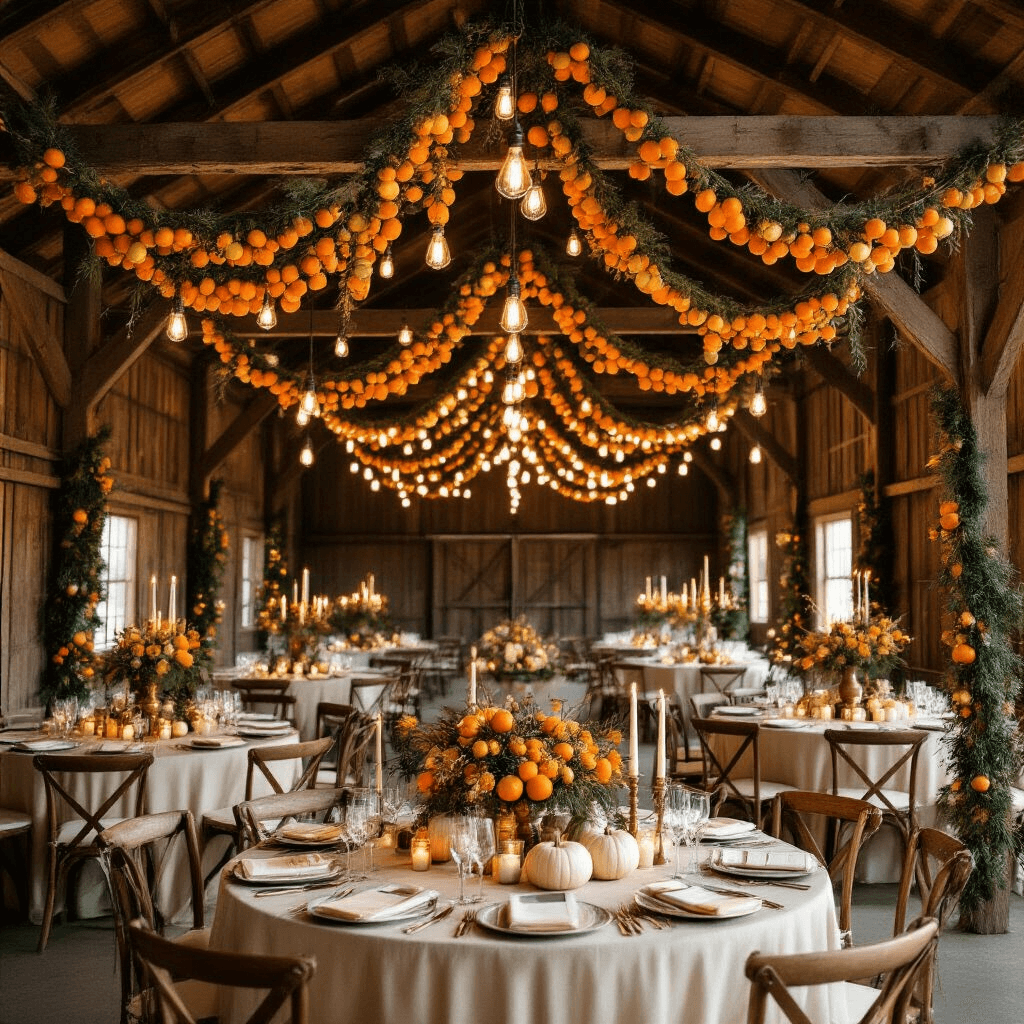
Summer: Drape around outdoor dining tables
Fall: Combine with mini pumpkins and gourds
Year-round: Kitchen window valances that smell amazing
The Investment That Pays for Itself
My first garland cost $4 in oranges and twine. The equivalent store-bought version? $35 minimum.
I now make garlands every October and give them as hostess gifts all season long. Each one costs under $3 to make but feels like a $50 present.
Why This Craft Became My Signature
There’s something magical about creating beauty from fruit that would otherwise end up in the compost. The slow process of slicing and drying becomes meditative. The final product brings warmth and natural beauty to any space.
Most importantly, every
Want to keep this one?
We'll email you the link so you can find it again later.