How I Learned to Keep My Wedding Dress Perfect for Decades (Without Breaking the Bank)
How I Learned to Keep My Wedding Dress Perfect for Decades (Without Breaking the Bank)
Storing your wedding dress properly can preserve it for generations, but most brides make costly mistakes that ruin their gown within just a few years.
I still remember staring at my wedding dress three months after my big day, wondering what the hell I was supposed to do with this massive, delicate, expensive thing.
It was hanging in my closet like some beautiful ghost, taking up half the space and making me nervous every time I reached for my work clothes.
Sound familiar?
You’re not alone if you feel completely overwhelmed about preserving your dress. Most of us spend months obsessing over every detail of our wedding but never think about what happens to that gorgeous gown afterward.
Here’s what I wish someone had told me right after I said “I do.”
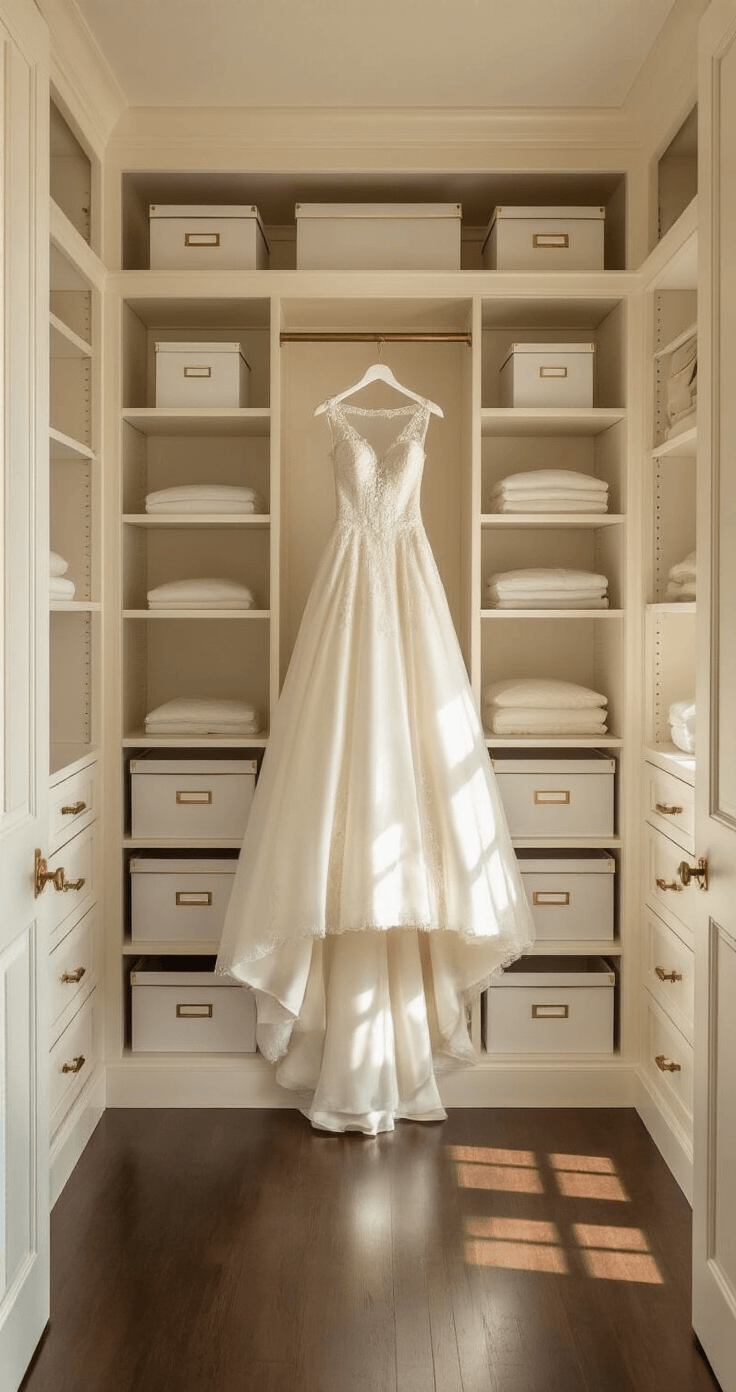
The Storage Location That Saved My Dress (And My Sanity)
Your wedding dress needs a cool, dry, dark place with stable temperature and humidity. I learned this the hard way when my friend stored hers in her parents’ attic. Two years later, she opened the box to find yellow stains and musty odors that no amount of cleaning could fix.
Perfect storage spots:
- Your bedroom closet (temperature-controlled)
- Under a guest bed in a spare room
- A climate-controlled storage unit
- Your parents’ main floor closet
Places that will destroy your dress:
- Basements (too humid)
- Attics (temperature swings)
- Garages (moisture and pests)
- Anywhere with direct sunlight
I keep mine under our guest bed now. It’s dark, dry, and I can check on it whenever I want without hauling boxes around.

Lay It Flat or Hang It Up? Here’s What Actually Works
This was my biggest dilemma. Everyone had different opinions, and I was terrified of making the wrong choice.
Laying flat wins every time – especially for heavy or beaded dresses.
Wedding dresses weigh way more than your average outfit. Mine had so much beading and layers that hanging it was like asking the fabric to hold a small child for years. No thank you.
Here’s my foolproof flat-storage method:
- Spread a clean white sheet on your guest bed
- Lay the dress out carefully
- Place acid-free tissue paper between folds
- Fold the sheet ends over the dress
- Close the door and check it once a year
If you absolutely must hang it:
Save this article
Enter your email and we'll send it straight to your inbox.
- Use a padded wedding dress hanger
- Find those built-in hanger loops your designer hopefully included
- Give it plenty of space in a large garment bag
- Check on it every six months for stretching

The Materials That Make or Break Your Preservation
I made a rookie mistake with my first storage attempt. I grabbed regular tissue paper and a plastic garment bag from the dry cleaner. Big mistake.
Six months later, I noticed weird spots on my bodice. Turns out regular tissue paper contains acids that literally eat away at wedding dress fabric. Who knew?
Your wedding dress survival kit:
- Acid-free tissue paper – This stuff is magic for preventing yellowing
- Breathable cotton garment bag – Lets air circulate without trapping moisture
- Acid-free storage box – Built specifically for long-term dress storage
- Clean white cotton gloves – For handling delicate fabrics
Materials that will ruin everything:
- Regular tissue paper (contains acids)
- Plastic garment bags (create moisture buildup)
- Cardboard boxes (acidic and attract bugs)
- Vacuum-sealed bags (flatten details permanently)
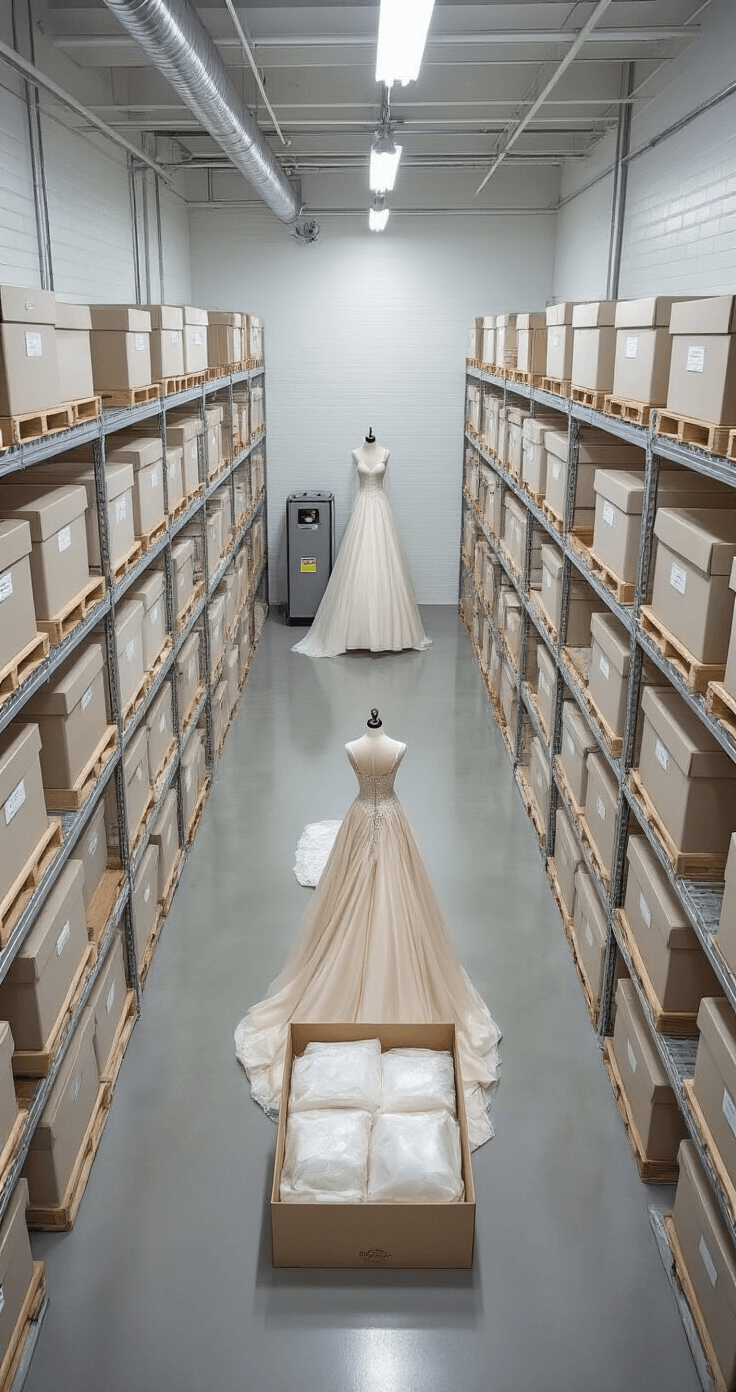
Storage Mistakes That Cost My Friends Thousands
Sarah vacuum-sealed her dress thinking she was being smart about space. When she opened it five years later, all the delicate pleating was permanently flattened. The alteration cost to fix it? More than her original dress.
Lisa stored hers in her basement “just temporarily.” Temporarily turned into three years. Mold had started growing on the train, and the entire bottom had to be cut off and re-hemmed.
Mike’s wife (yes, some grooms care about dress storage too) hung her heavy ballgown on a regular hanger. The shoulder seams stretched so much that the whole bodice lost its shape.
Don’t make their mistakes:
- Never use vacuum storage
- Skip the basement or attic storage
- Don’t cram it into too-small spaces
- Avoid plastic bags that trap moisture
- Don’t forget to clean it first
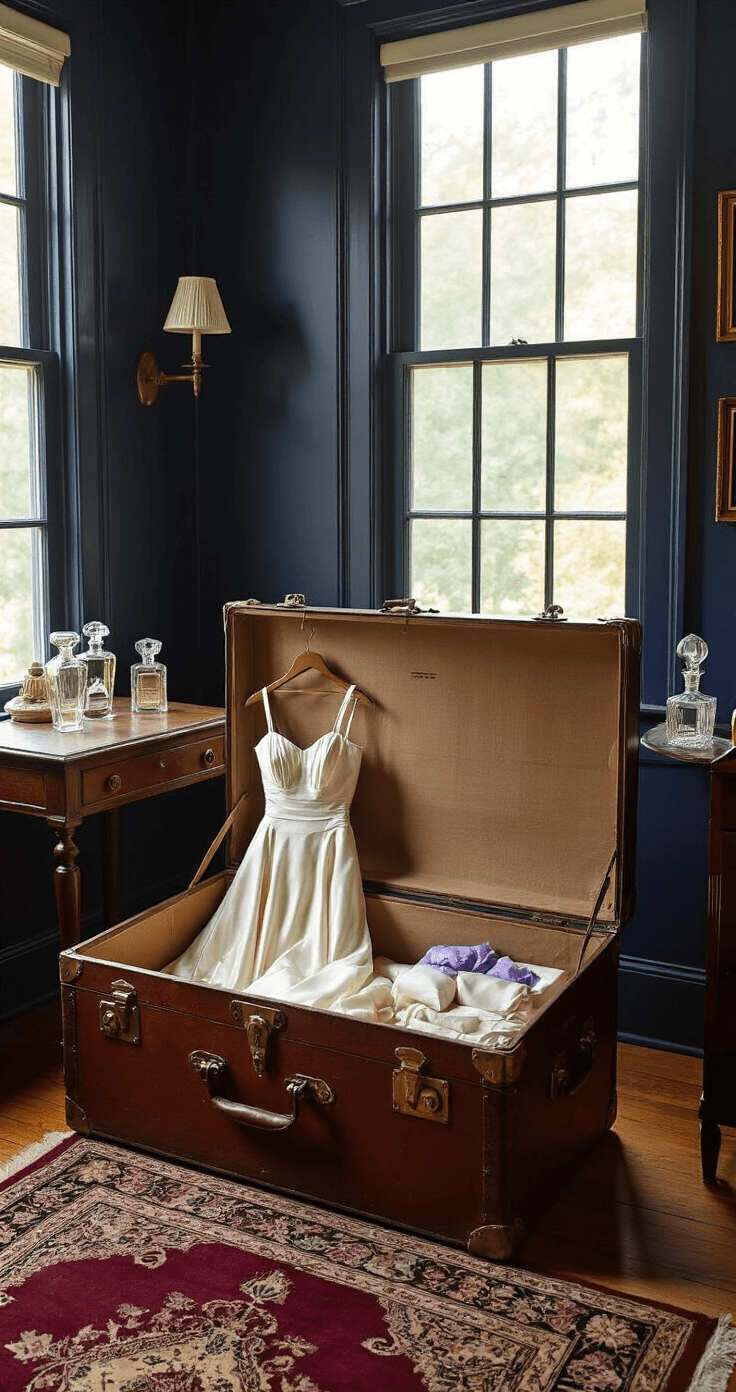
The Professional Route: Worth It or Waste of Money?
Professional preservation services charge between $299-$400. I debated this decision for months.
Here’s what you actually get for that money:
The good:
- Expert cleaning removes invisible stains
- Museum-quality storage materials
- Proper pH-neutral environment
- Professional folding techniques
- Usually includes a viewing window
The reality check:
- You can’t check on
Want to keep this one?
We'll email you the link so you can find it again later.