How to Transform Your Space with Architectural Photography: A Complete Guide to Capturing Your Home’s Best Angles
How to Transform Your Space with Architectural Photography: A Complete Guide to Capturing Your Home’s Best Angles
Architectural photography tips can make the difference between a house that looks like a cramped box and a space that feels like it belongs in a design magazine.
I’ve spent years trying to capture my own home in photos that actually do it justice, and let me tell you—it’s harder than it looks.
You know that feeling when you walk into a room and it takes your breath away, but when you snap a photo, it looks like a glorified closet?
That’s the problem I’m solving today.
Why Your Home Photos Look Nothing Like What Your Eyes See
Your eyes are sophisticated pieces of equipment.
They adjust to light, perceive depth, and take in a room’s atmosphere in ways your smartphone camera simply cannot.
I learned this the hard way when I tried to sell my first apartment.
Every photo made my beautifully styled living room look like a dungeon with furniture.
The issue wasn’t my home—it was how I was capturing it.
Here’s what goes wrong in most home photos:
- Wrong angles make rooms look smaller
- Poor lighting creates dark, uninviting spaces
- Clutter distracts from architectural features
- Bad composition confuses the eye
- Wrong camera settings flatten the space
The Equipment You Actually Need (And What You Don’t)
Forget the expensive DSLR for now.
I started with my iPhone and got results that shocked my real estate agent friends.
The bare minimum:
- A smartphone with a decent camera
- A sturdy tripod to eliminate shake
- Natural light (it’s free!)
- Patience
If you’re ready to level up:
- A wide-angle lens attachment for your phone
- A basic ring light for those darker corners
- Photo editing software like Lightroom (mobile version works great)
I spent hundreds on gear I didn’t need before realizing composition matters more than equipment.
Declutter Like Your Life Depends On It
This sounds obvious until you actually do it.
I thought my home was tidy.
Then I looked through the camera lens.
What your eye forgives that the camera won’t:
- Mail on the counter
- Charging cables snaking across surfaces
- Personal photos that create visual noise
- Magnets and notes on the fridge
- Dish soap by the sink
- Toilet paper visible in bathroom shots
Remove 50% more than you think you need to.
The camera amplifies clutter in ways that will make you question your entire organizational system.
I once spent an hour photographing my kitchen before realizing you could see my embarrassing collection of takeout menus stuck to the fridge in every single shot.
The Golden Hour Is Actually Golden
Photographers won’t shut up about golden hour for good reason.
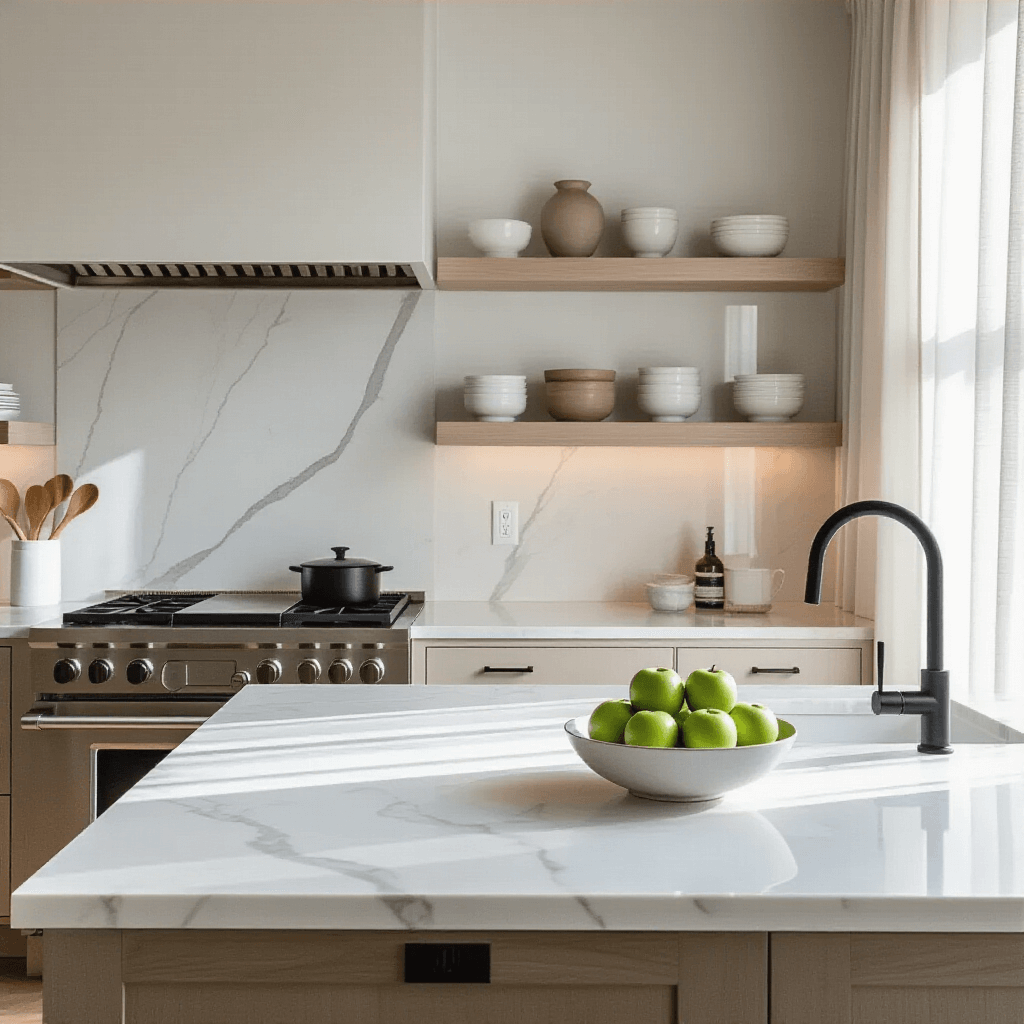
It’s that magical time right after sunrise or before sunset when light becomes soft, warm, and forgiving.
I used to think this was pretentious nonsense until I photographed the same room at 2pm and then at 6pm.
The difference was staggering.
Save this article
Enter your email and we'll send it straight to your inbox.
Best times to shoot:
- Early morning: 7-9am (soft, cool light)
- Late afternoon: 4-6pm (warm, dimensional light)
- Overcast days (even, diffused light throughout)
Worst times:
- Midday (harsh shadows, blown-out windows)
- Evening with only artificial lights (creates yellow color casts)
I now plan my photo sessions around the sun like I’m some sort of ancient astronomer.
Worth it.
Master the Corner Shot
Stand in the corner of a room and point your camera toward the opposite corner.
This single technique transformed my photography overnight.
Corner-to-corner shots capture two walls instead of one, showing how spaces connect and flow.
They make rooms look larger and more interesting.
The corner shot technique:
- Find the corner farthest from the room’s focal point
- Position your tripod about chest height
- Angle toward the opposite corner
- Keep your camera level (this is crucial)
- Capture two walls and as much ceiling as possible
I photographed my tiny bedroom this way and suddenly it looked like it could accommodate a family of four.
Okay, maybe not that dramatic, but the difference was significant.
Straighten Your Lines or Drive Viewers Crazy
Tilted vertical lines make people feel seasick.
Your walls, door frames, and windows should be perfectly vertical in your photos.
I ignored this advice initially because it seemed fussy.
Then someone pointed out that my photos looked like my house was sinking.
How to get straight lines:
- Use your camera’s grid feature
- Align vertical lines with the grid
- Keep your camera level (use a bubble level if needed)
- Correct any distortion in editing
Most phones have built-in tools to fix perspective after the fact.
Use them religiously.
Nothing screams amateur like a leaning doorframe.
Work With Windows, Not Against Them
Windows are both your best friend and your worst enemy.
Point your camera directly at a bright window and everything else goes black.
Turn your back to windows and you lose that gorgeous natural light.
The window strategy:
- Shoot parallel to windows when possible
- Use sheer curtains to diffuse harsh light
- Bracket your exposures (take multiple shots at different brightness levels)
- Never position yourself so the window is directly behind you or directly in front
I spent an entire afternoon figuring out why my living room photos looked either like a cave or like I was photographing a witness protection program participant.
The answer was window positioning.
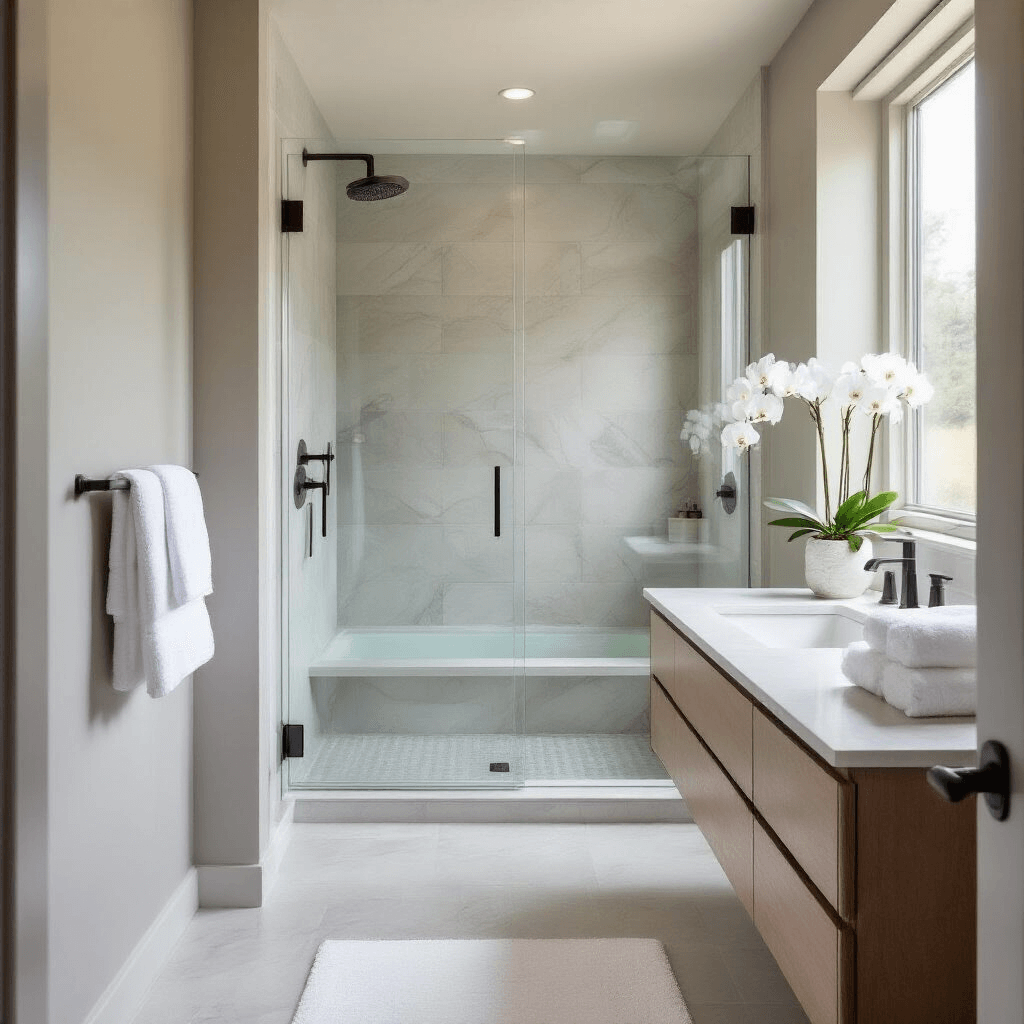 baby shower ideas, floating vanity, large marble tiles, and soft natural light, all enhanced by a neutral color palette of grays and whites.” "max-width /p title=””>
Want to keep this one?
We'll email you the link so you can find it again later.